Install a Temporary Cofferdam Up to 5x Faster
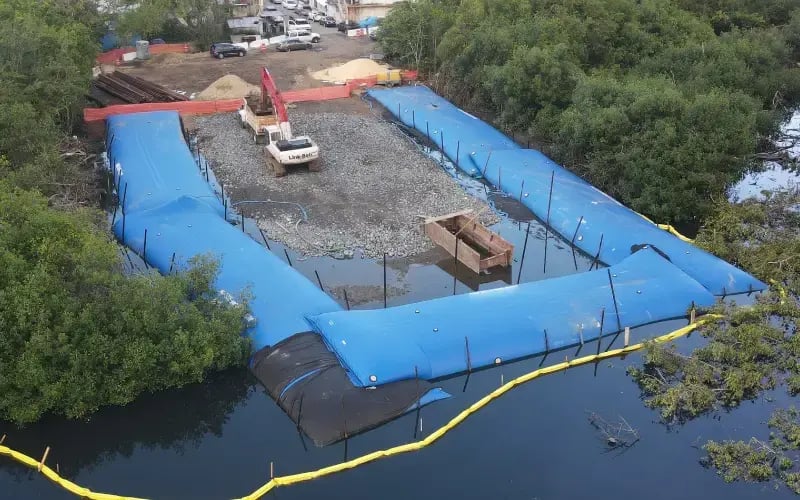
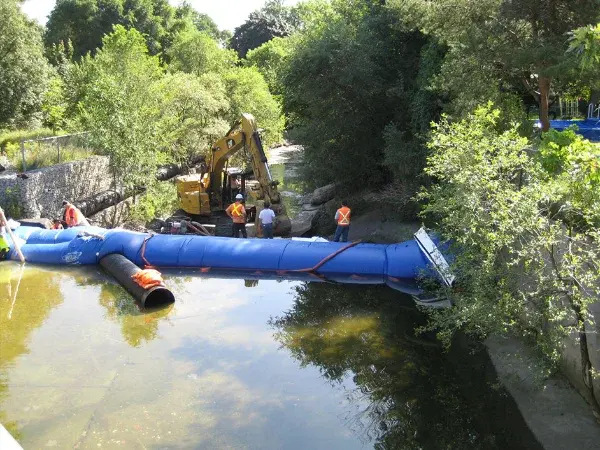
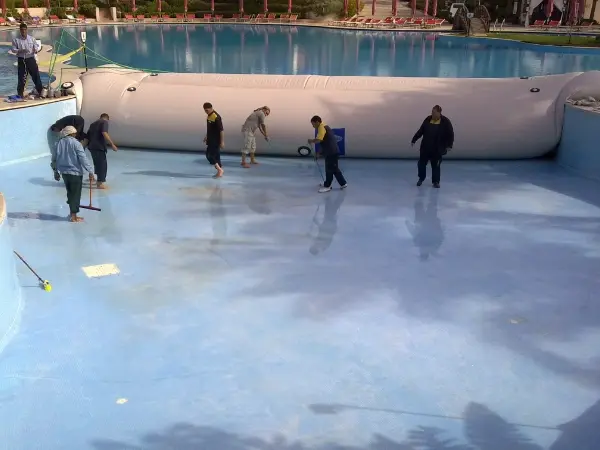
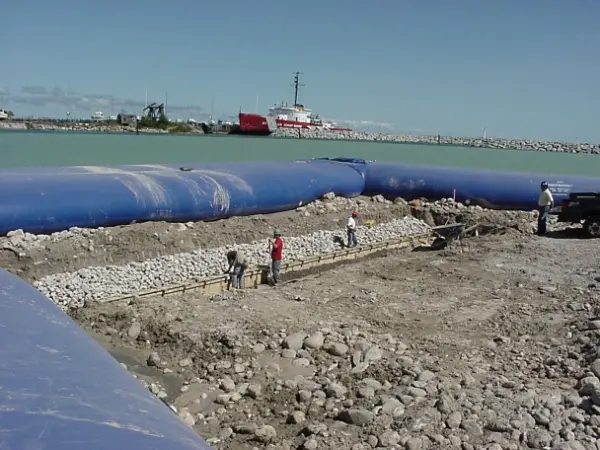
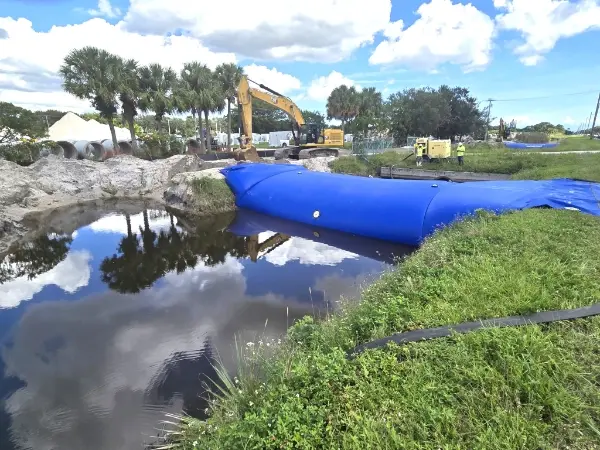
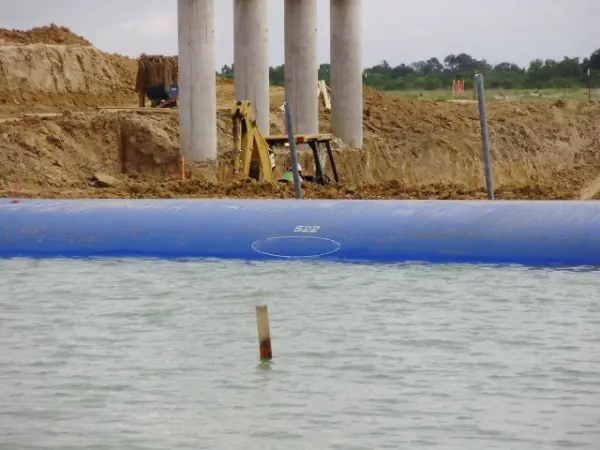
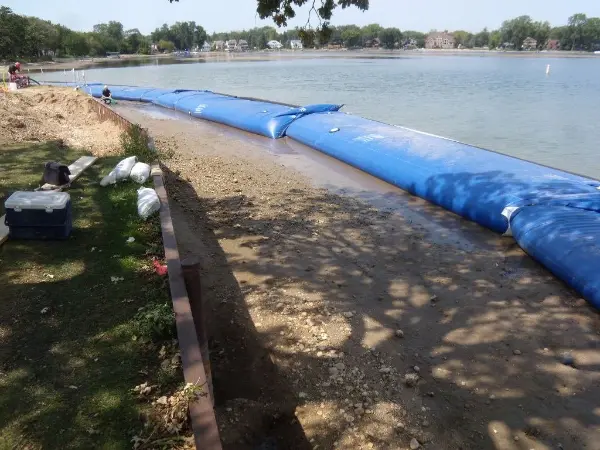
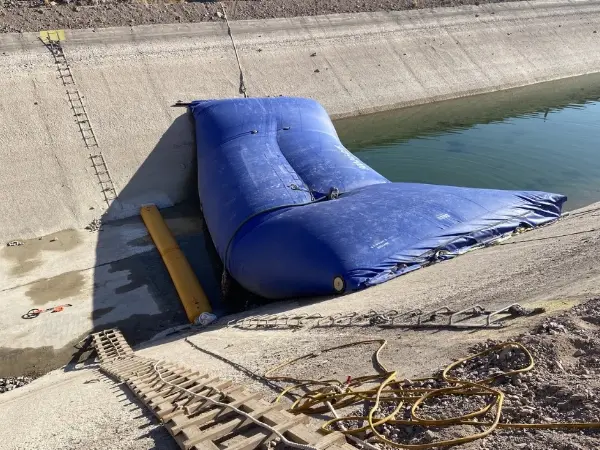
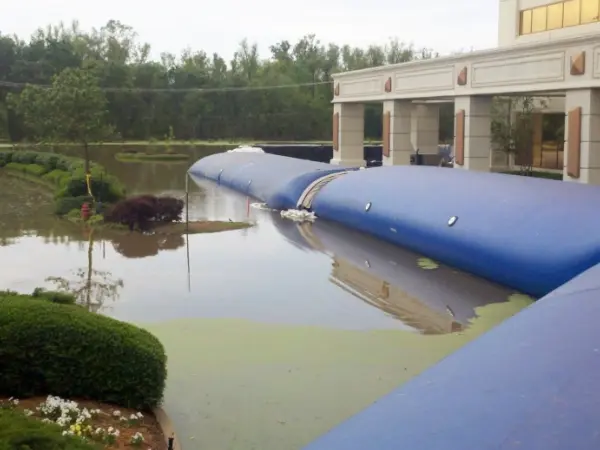
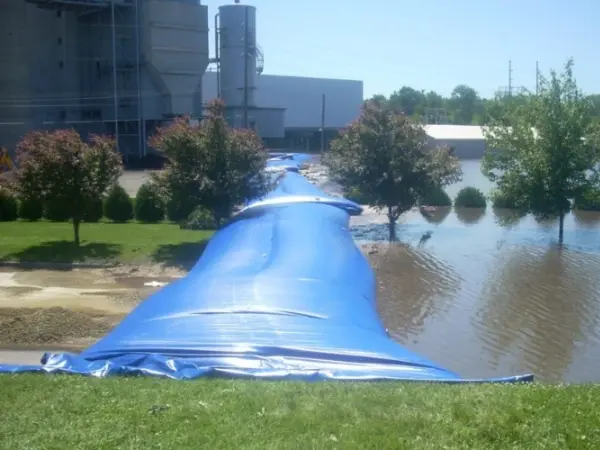
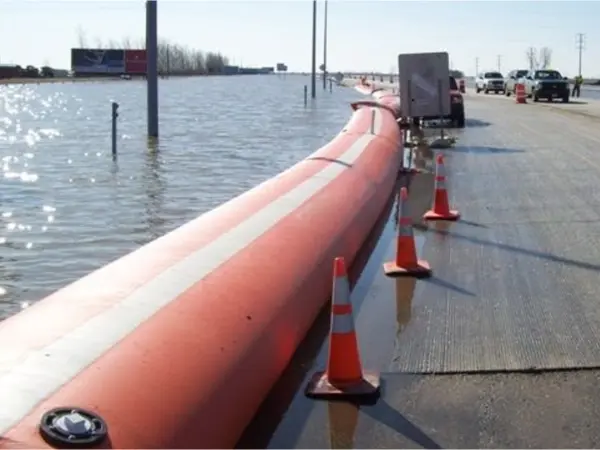
Water-inflated cofferdams create a controlled dry work area for construction, maintenance, flood defense, and environmental projects. Replace labor-intensive sandbags, sheet pile, and earthen berms with a reusable system designed for rapid deployment, minimal site disturbance, and lower total project cost.
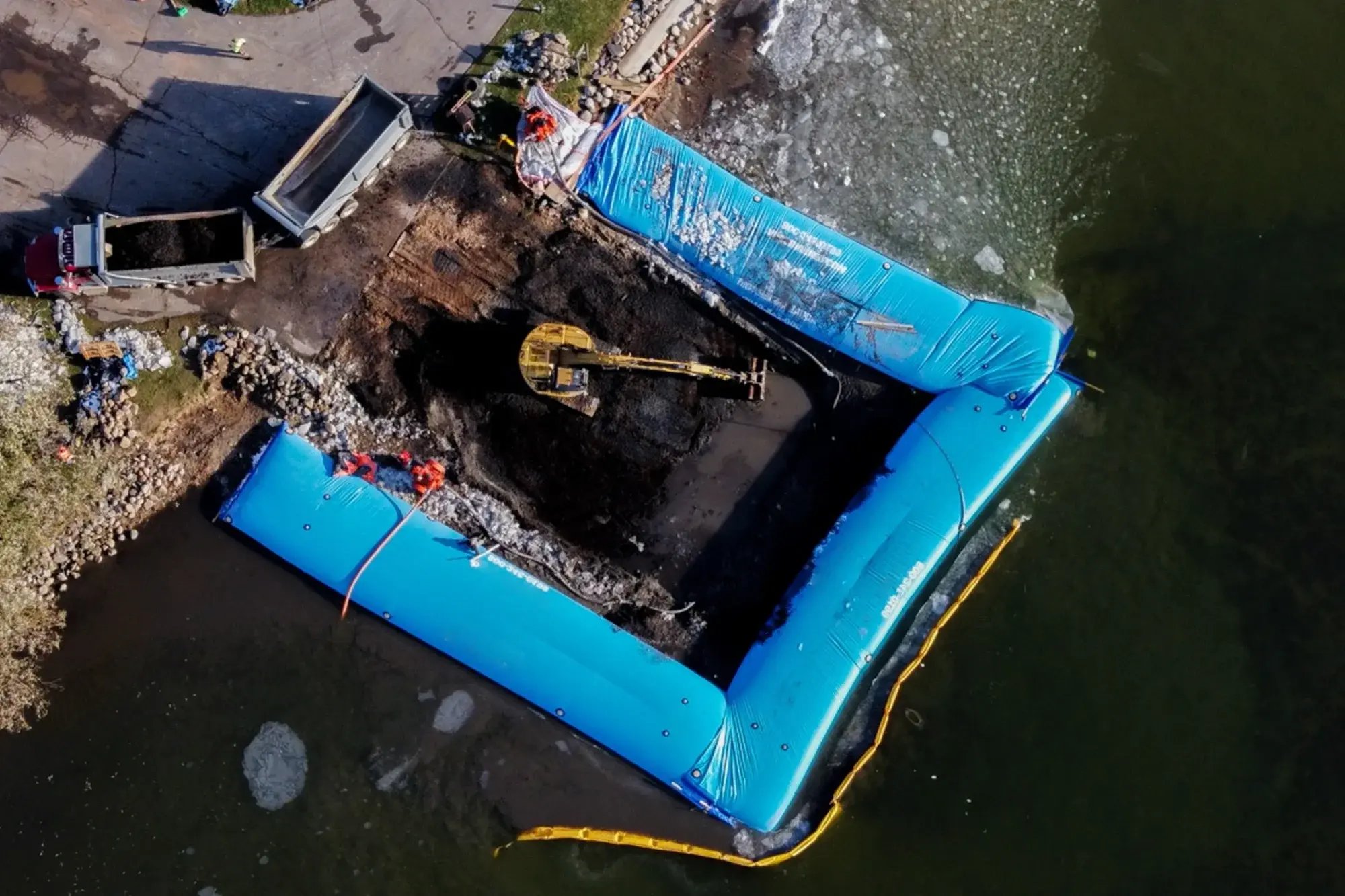
Construction
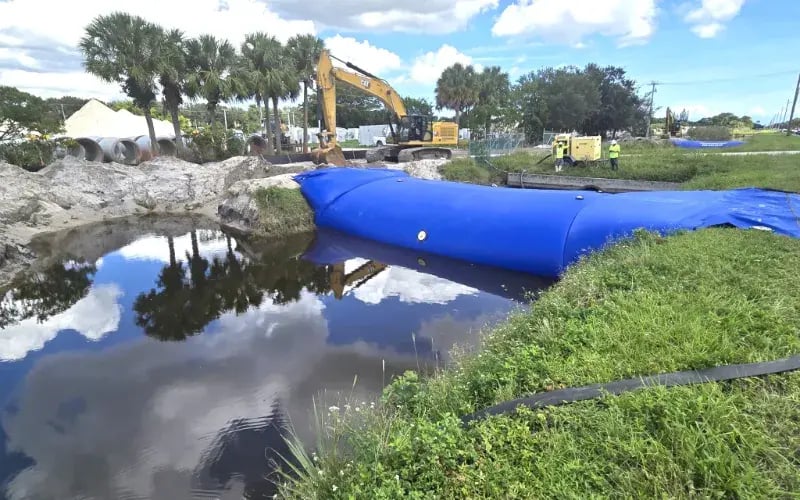
Water Diversion
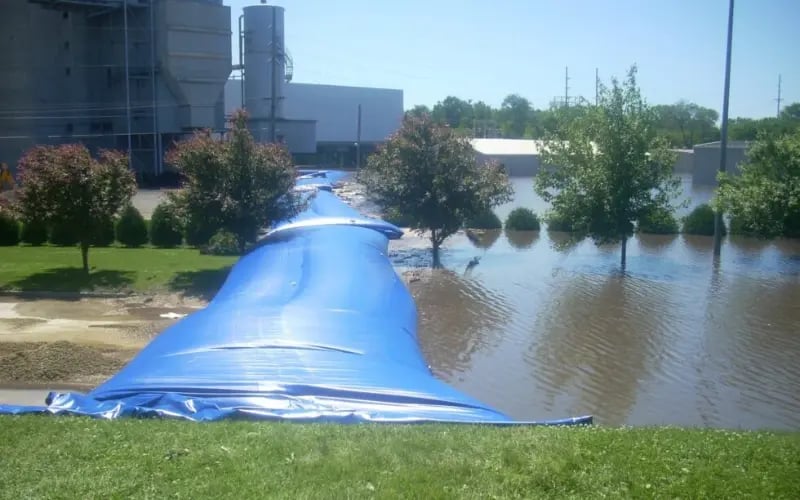
Flooding
Sandbags, Sheet Pile, and Earthen Berms Slow Every Project
Three risks that compound on every traditional cofferdam, from the first day of mobilization through site restoration.
Schedule Slip
Sheet pile installs at roughly 30 feet per day. Sandbag walls take a 10-person crew 21 hours to build 100 linear feet. Weather, labor availability, and equipment scheduling compound every delay.
Budget Overrun
Imported fill, haul-out, turbidity curtains, pile-driving equipment, and disposal stack quickly. Documented total cost on traditional methods can run up to 80% higher than a single reusable cofferdam unit.
Sandbags Per 100 Feet
Replacing one 100-foot cofferdam takes 2,100 sandbags, sand, a filling machine, and manual stacking. Post-flood disposal adds environmental risk and landfill costs.
Four Steps from Pallet to Dewatered Work Zone
No sandbag filling. No pile driving. No imported fill. The system inflates with the same water it dams back.
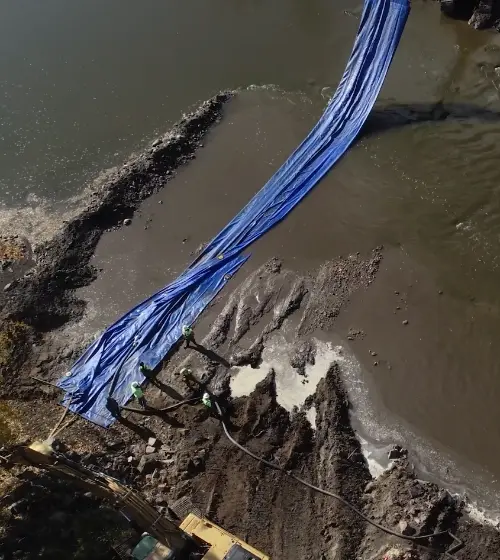
Position
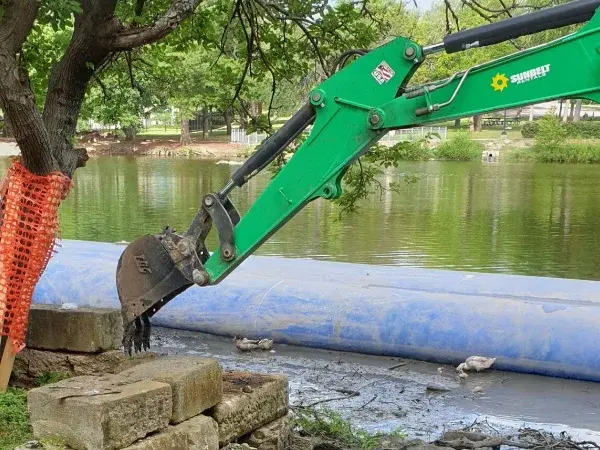
Unroll the deflated barrier in the work area. Units are buoyant when empty and can be floated into place by crew in waders or moved with a track hoe using the patented end pipe-loops.
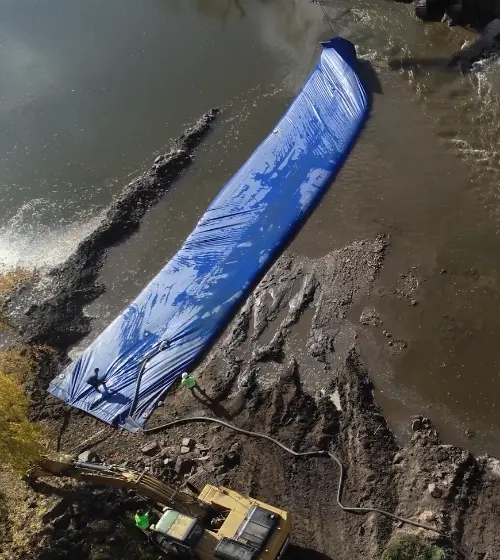
Inflate
Fill from any available water source, including the same water being dammed back. Two 4-inch / 8 HP pumps complete a 100-foot unit in approximately 30 minutes.
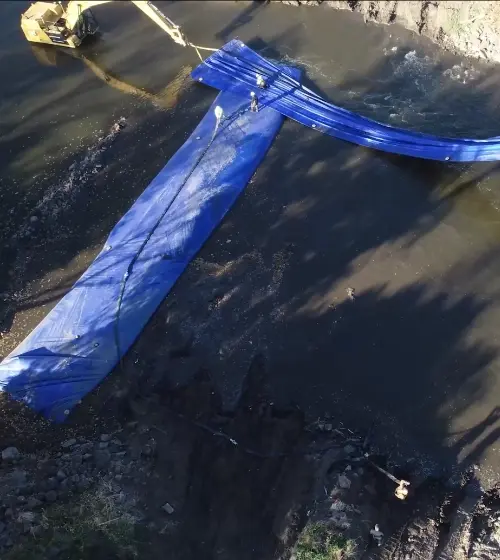
Stabilize
The internal baffle shifts and locks once a minimum 25% freeboard is reached. The unit is anchored by its own water weight; no external anchoring required.
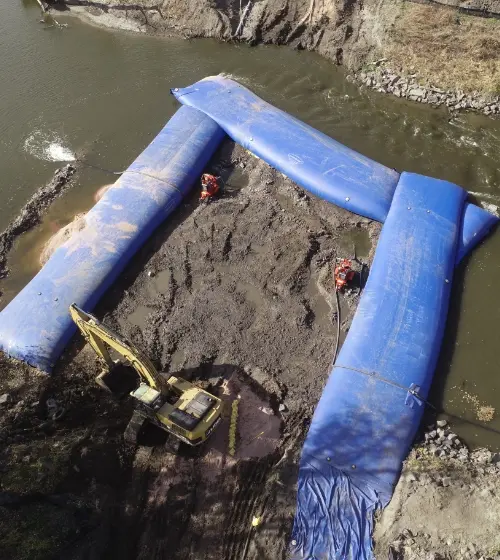
Dewater and Work
Pump out the isolated zone and begin construction, repair, or maintenance work in a dry environment. Drain, roll, and store for the next deployment.
Engineered for Site Conditions, Built for Reuse
Every spec is verified against engineer-stamped designs and ISO 9001:2015 manufacturing controls.
Working Heights
2 ft to 8 ft tall configurations available. Custom builds and standard rental stock in common heights.
Section Lengths
Single units from 25 ft to 105 ft. Overlap ends at any angle for unlimited continuous runs and shaped configurations.
Water Containment
Controls up to 6 ft of combined water and sediment depth with a 25% freeboard margin.
Reusable 15 to 20 Times
Scrim-reinforced PVC; three-layer vinyl-polyester-vinyl construction. In-field repairable with vinyl cement patches in minutes.
Certification
ISO 9001:2015 manufacturing. Engineer-stamped designs available for project submittal packages.
Patented Features
Internal stabilizing baffle for single-port inflation. End pipe-loop lifting and connection system for fast deployment.
The Engineering Specs You Need Before Submitting an RFQ
Verified parameters for project review packages, hydraulic analyses, and pre-submittal sizing checks.
| Maximum Water + Sediment Depth | 6 ft combined |
|---|---|
| Maximum Sustained Current Velocity | Approximately 3 ft/s (2 mph) before enhanced freeboard is required |
| Minimum Freeboard | 25% above water line at all times |
| Cold Weather Operating Range | Functional down to -22°F; material becomes brittle below |
| Fill Water Compatibility | Any available water source, including brackish, salt water, and dammed water |
| Continuous Run Capability | Single sections to 105 ft; overlap at any angle for shaped configurations and unlimited length |
| Stacking | Not supported. For water deeper than 6 ft, build a graded base to extend effective freeboard. |
| Pump Requirement | Two 4-inch / 8 HP pumps recommended for standard installations |
| Fill Port Sizes | 4-inch FNPT primary; additional 1-inch, 2-inch, and 8-inch FNPT available |
| Shipping | 4 by 4 or 4 by 5 pallets via commercial truck line |
Inflatable Cofferdam vs. Sandbags, Earthen Berm, and Sheet Pile
Apples-to-apples comparison for a 100 ft by 2 ft deployment.
Swipe left to see full comparison →
| Factor | Water-Inflated Cofferdam | Sandbag Walls | Earthen Berm | Sheet Pile |
|---|---|---|---|---|
| Install Time (100 ft × 2 ft) | 2 hours or less | 21 hours | 1 to 3 days | ~3.3 days at 30 ft/day |
| Build Method | Unroll, fill from any water source | Fill, stack, layer 2,100 bags by hand | Haul, dump, compact imported fill | Drive sections with specialized equipment |
| Crew Size | 1 to 2 (small) or 5 with heavy equipment | 8 to 15 workers | Heavy equipment crew | Specialized pile-driving crew |
| Reusability | 15 to 20 deployments | None (contaminated after use) | None | Salvageable with significant effort |
| Turbidity Controls Required | None | Sediment risk during placement | Floating curtain required | Floating curtain required |
| Site Restoration | None | Cleanup of spilled sand | Excavation and regrade | Excavation and regrade |
| Disposal | None | High (contaminated bag waste) | Moderate (excess fill) | Moderate |
| Labor + Equipment Cost | Baseline | Up to 80% higher | Up to 80% higher | Up to 80% higher |
Comparison based on equivalent 100-foot linear coverage at 2-foot working height. Documented from manufacturer specifications and field installation data.
Built for Permit-Sensitive Sites and Risk-Conscious Crews
Environmental Benefits
- No imported fill or borrow material required
- No floating turbidity curtain required for routine deployments
- Minimal disturbance to benthic habitat and shoreline vegetation
- Supports NPDES, USACE Section 404, and state-level erosion and sediment control conditions
- Reusable design eliminates landfill waste from spent sandbags and excess fill
- Fill water can include brackish, salt water, or the same water being dammed back
Safety and Compliance
- ISO 9001:2015 manufacturing certification for submittal documentation
- Engineer-stamped designs available for project review packages
- Eliminates manual lifting and stacking injuries associated with sandbag walls
- Reduces in-water crew hours and pile-driving exposure
- Single-port inflation simplifies deployment-day crew complexity
- In-field repairable with vinyl cement patches in minutes, wet or dry
Where Inflatable Cofferdams Outperform Traditional Methods
Twelve documented application categories across construction, infrastructure, environmental, and emergency response.
A Complete Project Quote Within One Business Day
Submit your project details below. A Sales Specialist will return a quote that includes everything you need to evaluate the project.
- Sizing recommendation based on your hydraulic conditions
- Rental and purchase pricing options
- Lead time on stock and custom configurations
- Freight estimate to your job site
- Warranty coverage and standard terms
- Equipment checklist for deployment day
Project Details
A Sales Specialist will respond within one business day.
Frequently Asked Questions
The eight questions specifying engineers and project managers ask most often before submitting an RFQ.
What is the maximum water depth a single unit will control?
Six feet of combined water and sediment depth, maintaining a minimum 25% freeboard at all times.
What current velocity can the system handle?
Approximately 3 ft/s (2 mph) of sustained current before enhanced freeboard is required. Higher velocities are addressed by stepping up to a taller unit.
What pumps and equipment do I need to inflate one?
Two 4-inch / 8 HP pumps for standard installations. We supply 4-inch PVC elbows and recommend camlock valves to streamline the fill process. An equipment checklist is provided with every order.
Can a unit bend or curve to follow shoreline geometry?
A single unit straightens during inflation and cannot be bent. To follow curves or shape configurations, overlap individual units at any angle.
How is the system shipped?
Each unit ships on a 4 by 4 or 4 by 5 pallet via commercial truck line. Freight estimates are included with every quote.
Can units be stacked to control deeper water?
No. For water deeper than 6 feet, the recommended approach is a graded base that effectively raises the deployment line to extend freeboard. Our team will work through the configuration during sizing.
Do you require long-term contracts?
Not necessarily — we believe in flexibility. Most of our clients start with project-based agreements, which clearly define the scope, deliverables, and timeline. This approach allows you to test our services and see tangible results without being locked into a long-term commitment.
Can I fill it with the same water I am damming back?
Yes. Any available water source works, including brackish water, salt water, and the water you are dewatering.
What is the cold-weather operating limit?
The material remains functional down to -22°F. Below that, it becomes brittle. Contact a Sales Specialist for guidance on extreme-cold deployments.