Fire Protection Water Storage
This page covers fire protection water storage requirements, NFPA 22-related planning considerations, and the site and specification factors that shape tank selection for dedicated fire-water supply.
What are Fire Protection Storage Tanks?
Fire protection water storage refers to dedicated, onsite water supply systems designed to serve fire suppression equipment. These systems provide the stored volume needed to support sprinkler lines, standpipe systems, and private fire service connections where municipal supply alone cannot guarantee the flow rate or duration a project requires. NFPA 22 is the most commonly referenced standard for water tanks used in private fire protection, but it is not the only code that may apply. Depending on the project, teams may also need to account for NFPA 13 sprinkler system requirements, NFPA 20 fire pump provisions, local fire code amendments, and AHJ-specific documentation expectations. Understanding which codes apply early in the process helps avoid specification gaps and submittal delays.
Selecting fire protection water storage tanks is not a capacity-only decision. The right system depends on the project-defined storage volume, site footprint and height constraints, aboveground or underground placement, and access for both installation equipment and long-term inspection. Climate and freeze exposure influence tank materials, insulation, and piping, while corrosion protection requirements, including coatings and linings, vary by tank type and environment. Refill approach, overflow and drain routing, and connection and fitting requirements must all be coordinated with the broader fire protection design. Evaluating these variables before selecting a tank type helps ensure the final system aligns with the fire protection design, the project site, and the documentation requirements that follow.
Who Works In This Field
Fire-water storage projects are managed across industrial facilities, warehouses, commercial campuses, municipal infrastructure, and power and energy sites. The teams involved typically include fire protection designers, engineers, facility managers, project managers, contractors, maintenance and inspection crews, and procurement or specification teams. The storage requirement may originate from a fire protection design, a facility expansion, an insurance review, or a code-driven upgrade.
The Problem They Face
Fitting the required fire-water volume into a constrained site while coordinating tank layout with design documents and submittal requirements is one of the most common challenges. Project teams must also account for climate and freeze exposure, plan access for installation and long-term inspection, align coatings and linings with environmental conditions, and coordinate refill, overflow, and drain routing with site utilities. Selecting the wrong tank type, or the right type without accounting for site access and installation conditions, leads to delays, rework, and avoidable maintenance issues.
Explore Our Solutions
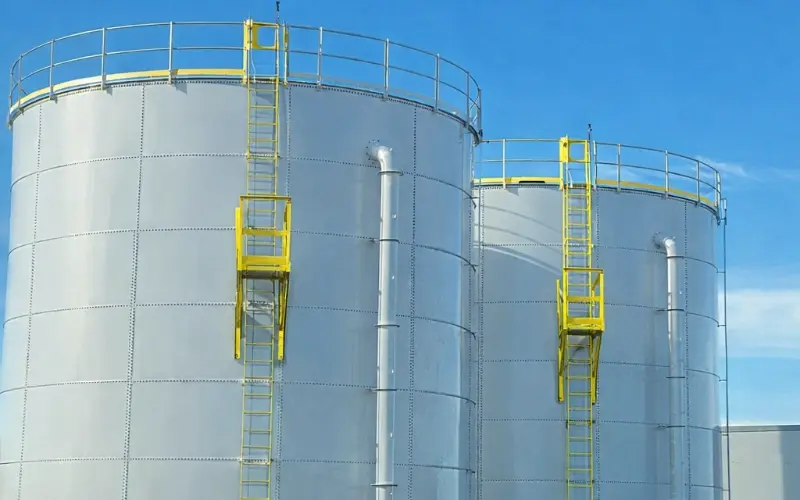
Bolted Steel Tanks
Bolted steel tanks are engineered, field-assembled fire protection storage tanks that give project teams control over diameter, height, and footprint, making them a practical fit when site space is limited or the layout must work around existing infrastructure. Coatings and linings are matched to climate and environmental exposure, addressing freeze and corrosion concerns that engineers and facility managers need to resolve before specification. Access hatches, ladders, and manways support the long-term inspection and maintenance access that fire protection water storage systems require. Because bolted tanks are configured to project-specific dimensions and documentation standards, submittal packages can be aligned with AHJ and design-team requirements from the start.
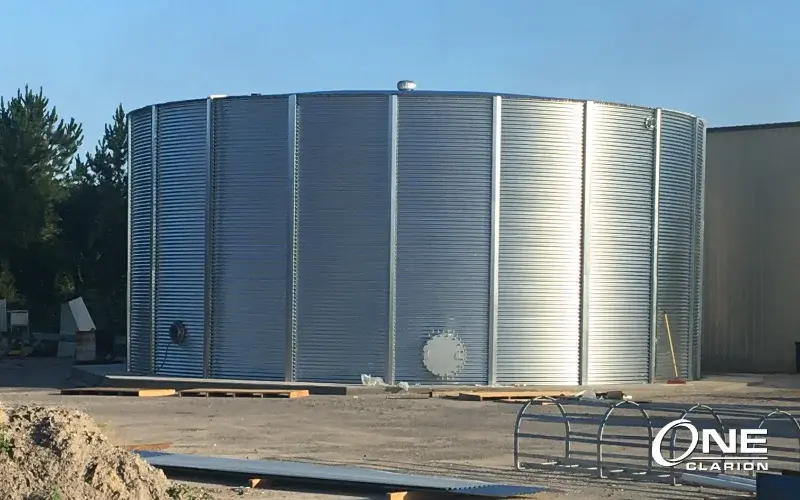
Corrugated Tanks
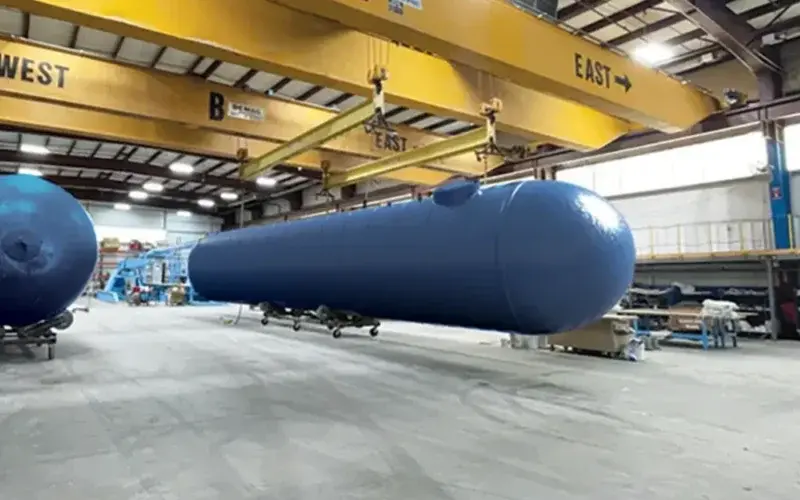
Underground FRP Tanks
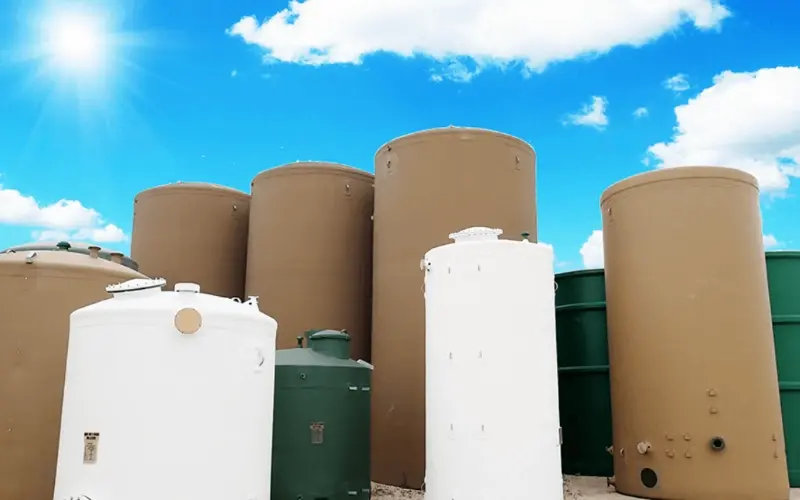
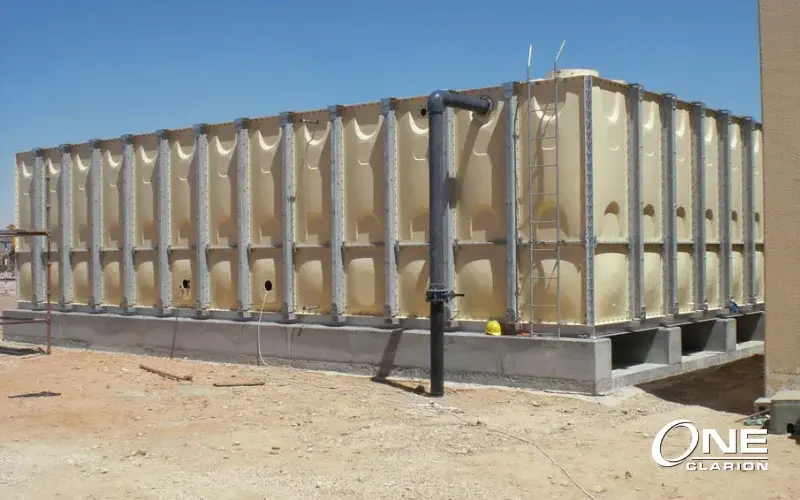
Aboveground FRP Tanks
HISHI Tanks
Regulations, Codes, & Compliance
Fire protection water storage projects typically involve multiple overlapping codes and standards. The specific requirements that apply depend on the project type, location, AHJ interpretation, and which fire protection systems the tank will serve. The following codes are commonly referenced during specification, design, and submittal review for fire-water storage installations.
-
NFPA 22: Governs design, construction, installation, and maintenance of private fire protection tanks.
-
NFPA 13: Defines sprinkler system design, water demand, and hydraulic calculation requirements.
-
NFPA 14: Covers standpipe and hose system design and water supply requirements.
-
NFPA 20: Addresses fire pump installation, suction conditions, and system integration requirements.
-
NFPA 25: Establishes inspection, testing, and maintenance standards for water-based fire protection systems.
-
NFPA 1142: Guides water supply planning for rural and suburban fire protection projects.
Specialist Support for Your Storage Project
Talk with a specialist for practical guidance and equipment recommendations.
Frequently Asked Questions
Common questions about sizing, placement, water quality, and tank selection for Fire Protection Storage applications.
How is the required fire-water storage volume determined?
The required volume is defined by the fire protection design, not the tank supplier. It is calculated based on the system's fire flow demand in gallons per minute, the required duration in minutes, and any refill credit from a reliable water source. A fire protection engineer sizes the tank to meet the hydraulic requirements of the sprinkler, standpipe, or combined system the tank will serve. Your Sales Specialist can help translate those specifications into the right tank configuration.
What are the tradeoffs between aboveground and underground fire-water storage?
Aboveground tanks are generally easier to install, inspect, and maintain, but they require available surface footprint and may be exposed to climate and freeze conditions. Underground tanks free up site space and are protected from weather, but they involve excavation, backfill coordination, and access risers for inspection. The right choice depends on site layout, soil conditions, local code requirements, and how the tank fits into the broader project design.
How does the fire pump connect to the storage tank?
The fire pump draws from the storage tank through a suction connection sized and positioned to meet the pump's flow and pressure requirements. Tank outlet location, pipe diameter, anti-vortex provisions, and clearance between the outlet and the tank floor all factor into the design. These details are coordinated between the fire protection engineer, the pump supplier, and the tank specification to ensure the system performs as designed under demand.
How do you maintain a reliable stored water supply over time?
Reliable long-term supply depends on regular inspection, a functioning refill system, and accessible tank features that make maintenance practical rather than disruptive. Water level monitoring, overflow and drain routing, and freeze protection all need to be maintained after installation. Coatings and linings should be inspected on a schedule appropriate to the tank type and environment. Planning for these requirements during specification helps avoid deferred maintenance that can compromise the system when it is needed most.