<img height="1" width="1" style="display:none;" alt="" src="https://px.ads.linkedin.com/collect/?pid=5375274&amp;fmt=gif">

Agriculture & Aquaculture Tanks

Agriculture & Aquaculture Tanks

This page covers the water storage application for agriculture and aquaculture operations. It explains how storage systems are used across farms, irrigation setups, livestock facilities, and aquaculture sites, what factors influence storage planning, and what users should evaluate before selecting a tank type. It also introduces the storage solutions One Clarion offers for these use cases.

Design is how your brand speaks before you say a word. I make sure it speaks with clarity and confidence.

What is Agriculture & Aquaculture Tanks?


Agriculture and aquaculture operations depend on reliable, on-site water availability. A properly designed rainwater collection system captures precipitation from rooftops, collection surfaces, or natural runoff and routes it into storage for irrigation scheduling, livestock watering, aquaculture management, facility washdown, or nutrient delivery in controlled growing environments. Storage needs vary significantly across these use cases. A row crop operation may need tens of thousands of gallons in reserve to carry through dry cycles. A greenhouse may need a compact plastic water storage tank near growing areas. An aquaculture facility may run multiple tanks managing different water quality conditions simultaneously.
 

System selection depends on several planning factors: required capacity relative to peak seasonal demand, available site footprint, and whether aboveground or underground water storage tanks fit the location. Source water quality matters when stored water will contact livestock, aquatic life, or food production. Fittings, overflow routing, and distribution connections should be addressed in the initial design, not retrofitted later. Access for inspection, cleaning, and maintenance needs to be built into the plan from the start, along with any site constraints related to terrain or existing infrastructure.


There is no universal configuration for this application. The right system depends on how water is sourced, how it is used, and what the site can accommodate.


Who is the Audience?

Water storage decisions in agriculture and aquaculture involve a range of operations and personnel. Farm owners and irrigation managers balance seasonal demand against available supply. Greenhouse and nursery operators need consistent water access to maintain growing schedules. Livestock facility managers require dependable supply for watering systems and sanitation.

Aquaculture operators and hatchery personnel manage water quality and system continuity as a core operational requirement. Agricultural processing facilities depend on washdown water for food safety and routine maintenance. Engineers, project planners, and procurement teams are typically involved in the initial system design and sourcing process, particularly for larger or multi-site installations.

The Problem

These operations share a consistent set of storage-related challenges. Maintaining reliable water availability through peak demand periods is a recurring pressure when source supply cannot keep pace. Inconsistent rainfall and seasonal variation create gaps that improperly sized systems cannot cover.

Matching required capacity to available site footprint, preserving water quality for the intended use, and planning overflow and distribution connections all require decisions made early in the design process. Installation constraints, access limitations for maintenance, and the operational cost of downtime during system changes compound the difficulty of getting the storage configuration right from the start.

Something Powerful

Understanding the codes and standards that apply to your storage system is one of the more practical things you can do early in the planning process. Compliance requirements inform tank material selection, placement, foundation design, and how stored water can be used. Getting ahead of these requirements prevents costly redesigns, permitting delays, and situations where a tank is installed but cannot legally or safely serve its intended purpose. The standards below represent the general code environment for agriculture and aquaculture water storage. Applicability depends on your specific tank type, water use, and jurisdiction. Confirm requirements against the relevant product documentation and your local authority having jurisdiction before finalizing system design.


  •  NSF/ANSI 61 - Covers drinking water system components. Relevant when stored water will be used for potable applications, livestock watering, or any use where water contact with tank materials requires safety verification. 


  •  NSF/ANSI 372 - Addresses lead content in water system components. Often required alongside NSF/ANSI 61 for potable and food-contact water applications. 


  •  AWWA D103Applies to factory-coated bolted steel tanks. Relevant for larger-volume agricultural storage installations using bolted steel construction. 


  •  AWWA D120 - Applies to thermosetting fiberglass pressure vessels. Relevant for FRP tank types used in water storage and aquaculture applications. 


  •  FDA 21 CFR - Federal regulation governing materials that contact food or water in food production environments. 


  •  Local AHJ Requirements - Authority having jurisdiction requirements for tank placement, setbacks, anchoring, and foundation design apply in most jurisdictions. 


Specialist Support for Your Storage Project

Talk with a specialist for practical guidance and equipment recommendations.

Frequently Asked Questions

Common questions about sizing, placement, water quality, and tank selection for farm and aquaculture water storage applications.

Can I use a storage tank as part of a rainwater collection system on my farm?

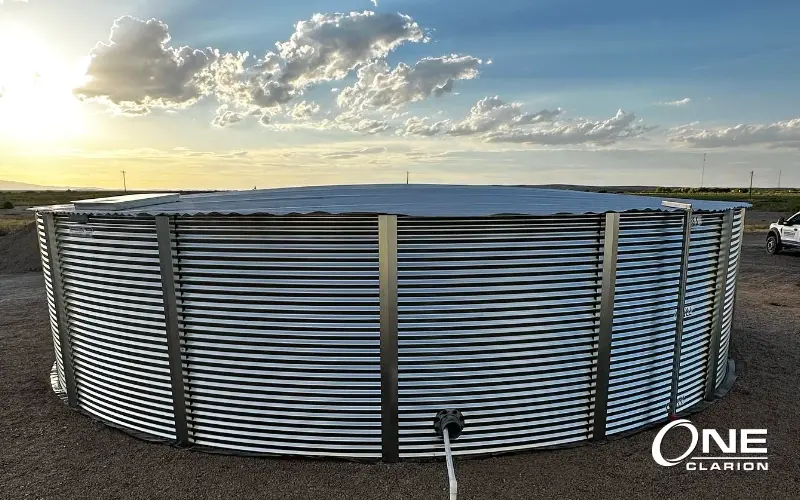
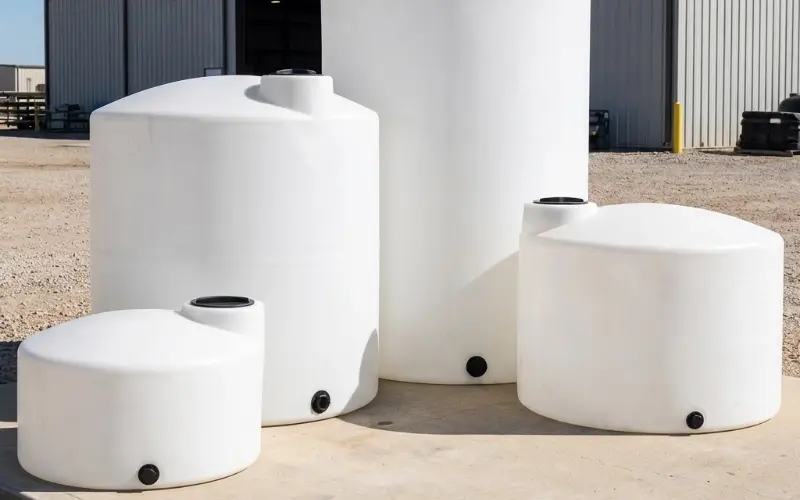
Yes. Corrugated and poly tanks are both used in agricultural rainwater collection system installations to hold captured precipitation for irrigation, livestock watering, and washdown use. Tank sizing, inlet configuration, overflow management, and first-flush diversion are system-level decisions that should be addressed during planning. Local regulations on rainwater harvesting vary by state and county and should be confirmed before installation.

Are there regulations on rainwater harvesting for agricultural use?

Rainwater harvesting regulations vary significantly by state, county, and water district. Some jurisdictions have no restrictions while others limit collection volume or require permits. Confirm applicable rules with your local authority before finalizing a rainwater collection system design.

What tanks are suitable for potable water storage on a farm?

Tanks used for potable water supply need to be confirmed for potable-water compliance at the product level. Review NSF/ANSI 61 listing status for any tank being used for drinking water supply for humans or food-contact applications. Contact a specialist to confirm compliance requirements before specifying.

What is the difference between corrugated, poly, HISHI, and Sitetanks for farm water storage?

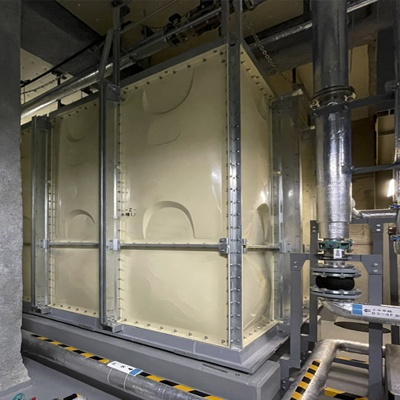
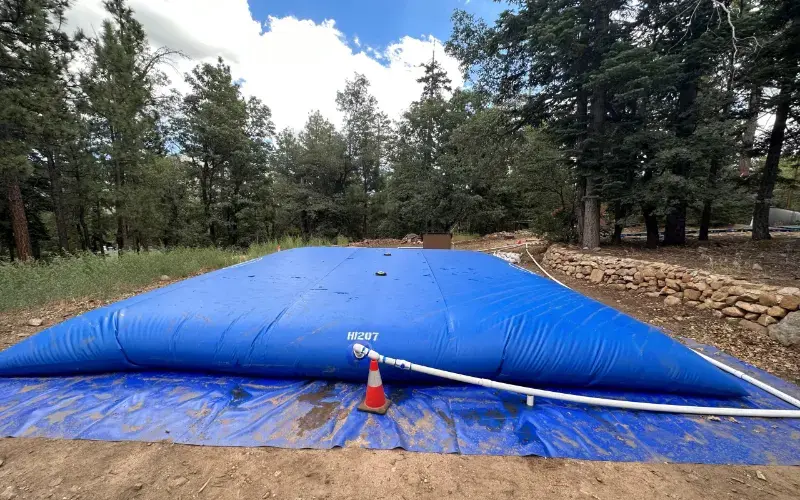
Each option addresses a different set of site and operational requirements. Corrugated tanks are suited to large-volume, site-built installations where capacity needs to scale. Poly tanks offer corrosion resistance and simpler placement for mid-range storage needs. HISHI tanks are a modular option where footprint is constrained but capacity still needs to grow. Sitetanks are suited to temporary or relocatable storage. The right fit depends on your volume, site access, installation timeline, and whether storage is permanent or seasonal.