Fuel, Oil & Lubricant Storage
Containment, compliance, and dispensing configurations matched to your site, your product, and your operating requirements.
What is Fuel, Oil & Lubricant Storage ?
Fuel, oil, and lubricant storage goes beyond placing a tank on a pad. It is about maintaining fuel integrity, ensuring dispense-ready access, and meeting containment requirements from day one through end of service life. Whether the application involves diesel backup for standby generators, heating oil for a commercial facility, or bulk lubricant management across a multi-bay maintenance operation, the storage system has to align with the product, the site conditions, and the regulatory framework before the first delivery.
That alignment starts with understanding how the stored product behaves, how it will be dispensed, what secondary containment is required, and how the system will be accessed, serviced, and inspected over time. When those factors are addressed early, the result is a system that supports day-to-day operations without creating downstream maintenance problems, compliance gaps, or operational bottlenecks.
Who Works In This Field?
Whether you are a Facility Manager keeping a heating oil system running through peak season, an EHS lead developing an SPCC plan for a multi-tank fuel farm, or a Project Engineer coordinating a generator fuel supply installation on a compressed schedule, your storage decision is shaped by the same core pressures: product compatibility, regulatory compliance, site constraints, and long-term serviceability. Fleet operations, industrial maintenance shops, construction sites, and municipal fueling depots all face variations of this same equation. The difference between a system that performs and one that creates ongoing problems comes down to how well those variables are defined before procurement begins.
The Problem They Face
Fuel, oil, and lubricant storage decisions carry consequences that compound over the life of the system. An undersized diesel tank means your backup generator runs short during an extended outage. A tank configuration that ignores dispensing workflow creates bottlenecks in maintenance bays that handle multiple fluid types. Secondary containment that is treated as an afterthought triggers SPCC compliance issues that are expensive to remediate after installation. And a storage system that was selected on price alone often leads to corrosion failures, access problems, and premature replacement in environments where weather exposure, soil conditions, or product chemistry demand more from the equipment. The real risk is not choosing the wrong tank. It is specifying the system without fully defining the operating conditions it needs to support.
Explore Our Solutions
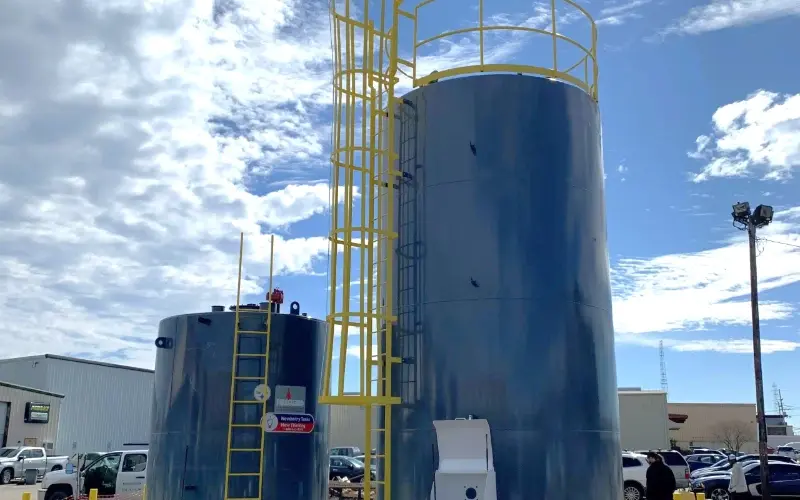
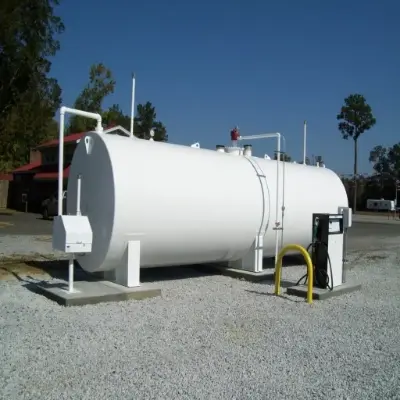
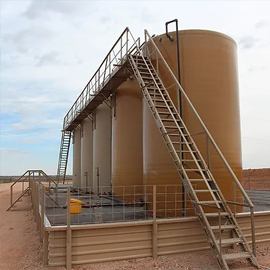
Welded Tanks (Fuel / Oil Storage)
Welded (Shop Built)
Fiber Above (Aboveground FRP)
Aboveground fiberglass tanks address one of the more common long-term concerns in fuel and oil storage: corrosion. In environments where soil conditions, stored product chemistry, or atmospheric exposure create maintenance challenges for metal tanks, fiberglass construction reduces ongoing corrosion-related upkeep. Our Sales Specialists can help determine whether an aboveground FRP option is the right fit for your placement conditions and stored product.
Fiber Under (Underground FRP)
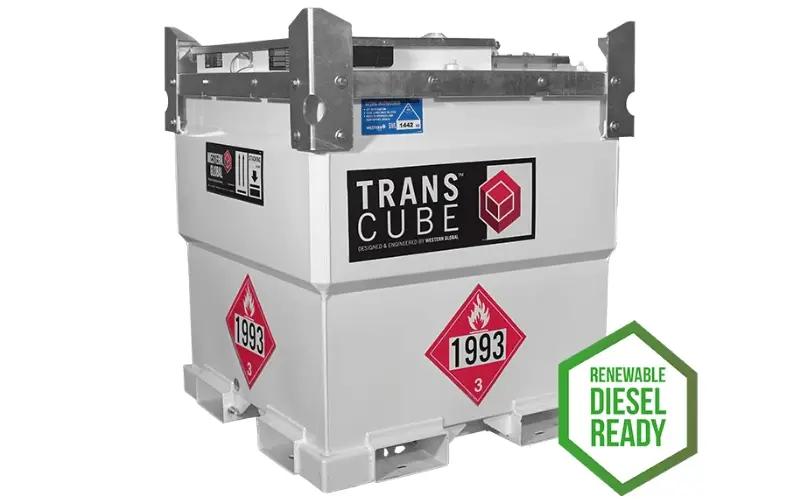
TransCube
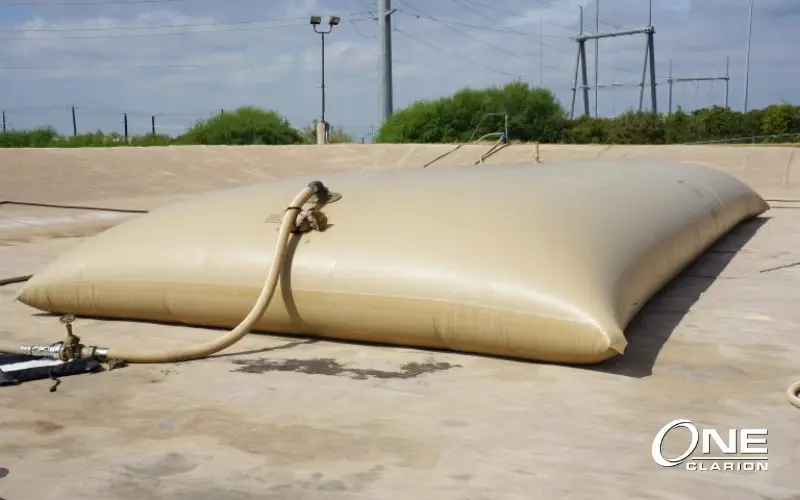
Sitetanks
Helpful Codes & Regulations
Fuel, oil, and lubricant storage installations are subject to a range of codes, standards, and regulatory requirements that vary by stored product, installation type, volume thresholds, and jurisdiction. The standards listed below represent commonly referenced guidelines across this application area. Applicable requirements for any specific project should be confirmed with your local authority having jurisdiction and reviewed as part of the project planning process. A Sales Specialist can help you identify the relevant considerations for your application early in the process.
-
NFPA 30 - Flammable and Combustible Liquids Code. Covers storage, tank design, containment, and installation requirements for flammable and combustible liquids.
-
NFPA 31 - Standard for the Installation of Oil-Burning Equipment. Directly relevant to heating oil storage and installation.
-
EPA 40 CFR Part 112 (SPCC) - Spill Prevention, Control, and Countermeasure rule. Applies to facilities storing oil above certain volume thresholds.
-
EPA 40 CFR Part 280 - Federal Underground Storage Tank regulations. Relevant to any underground fuel storage installation.
-
UL 142 - Steel aboveground tanks for flammable and combustible liquids.
-
UL 58 - Steel underground tanks for flammable and combustible liquids.
-
UL 1316 - Fiberglass underground storage tanks for petroleum products.
Specialist Support for Your Storage Project
Talk with a specialist for practical guidance and equipment recommendations.
Frequently Asked Questions
Common questions about Fuel, Oil & Lubricant storage requirements, tank selection, and project planning.
How do I determine the right storage capacity for my fuel or oil system?
Capacity planning depends on your consumption rate, delivery frequency, operational reserve target, and any run-time continuity requirements for equipment like standby generators. Sizing for a backup power application, for example, works differently than sizing for a heating oil system or a bulk lubricant store. A Sales Specialist can help you work through those variables to land on the right volume for your operation.
Do I need secondary containment for a fuel or oil storage tank?
Secondary containment requirements depend on the stored product, storage volume, site classification, and local regulatory jurisdiction. Containment planning is typically addressed as part of the overall project scope rather than determined by tank selection alone. Confirming applicable requirements with your local AHJ or environmental authority early in the planning process is the recommended starting point.
What is the difference between aboveground and underground fuel storage?
Aboveground tanks are accessible for inspection, simpler to install, and generally involve lower upfront installation costs. Underground storage removes the tank from the surface footprint and reduces certain site exposure concerns, but involves excavation, installation coordination, and regulatory considerations that need to be addressed early. The right choice depends on your site conditions, space availability, and applicable local requirements.
Can the same tank type work for both diesel fuel and bulk lubricants?
It depends on the tank material, fitting configuration, and dispensing setup. Some tank types handle multiple petroleum-based products with the right configuration, while others are better suited to a specific application. A Sales Specialist can help match the right storage type to your product mix and for a more precise view of your tank see our Chemical Compatibility Chart.