Rain Water Collection Systems
Match your catchment area, storage volume, and site constraints to the right tank configuration from One Clarion
What is Rain Water Collection ?
Rainwater collection goes beyond capturing runoff. Rainwater collection captures runoff from roof surfaces and other catchment areas, directing it into storage for later use across commercial, industrial, agricultural, and municipal sites. Stored water may support irrigation, washdown, cooling, process use, and other non-potable demands depending on the operation and site requirements. Systems can range from a single tank installation to a larger-capacity rainwater storage system serving a facility, campus, or municipal site.
Storage selection depends on more than tank capacity alone. Required hold volume between rainfall events, available site space, delivery and installation access, inlet and overflow planning, material compatibility, and long-term maintenance expectations all affect the right configuration. Defining these conditions early helps avoid costly changes later and leads to a storage system that fits the site, the application, and the intended water use.
Who Works In This Field?
Facility managers may evaluate water reuse to reduce utility costs. Civil engineers may size catchment-to-storage ratios for campus or site plans. Municipal planners may review storage needs against stormwater ordinances and local compliance requirements. Across these roles, storage decisions usually come down to the same core factors: volume between rain events, available site footprint, material longevity, and code-compliant overflow routing.
The Problem They Face
Rainfall is inconsistent, but demand is not. Systems sized without accurate catchment data or local rainfall modeling either overflow during high-volume events or fall short between storms. Limited site footprints force compromises on tank placement and access, and if inlet routing, overflow management, and long-term maintenance clearances are not planned from the start, the installed system becomes harder to service and less effective over time.
Explore Our Solutions
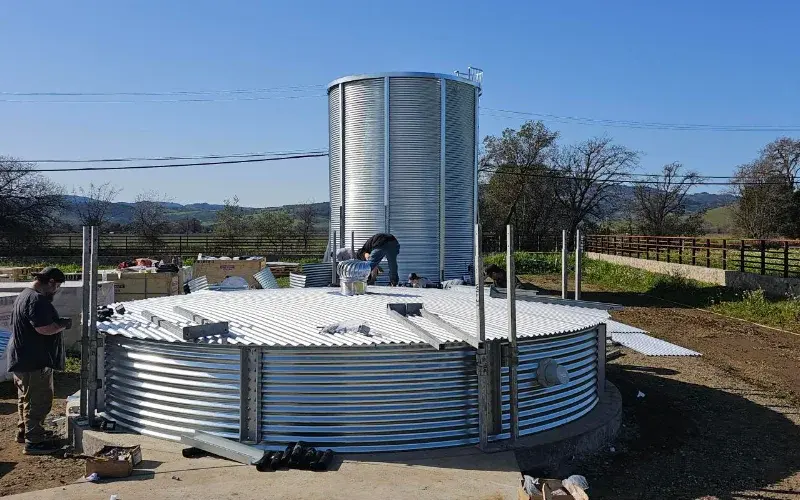
Corrugated Steel Tanks
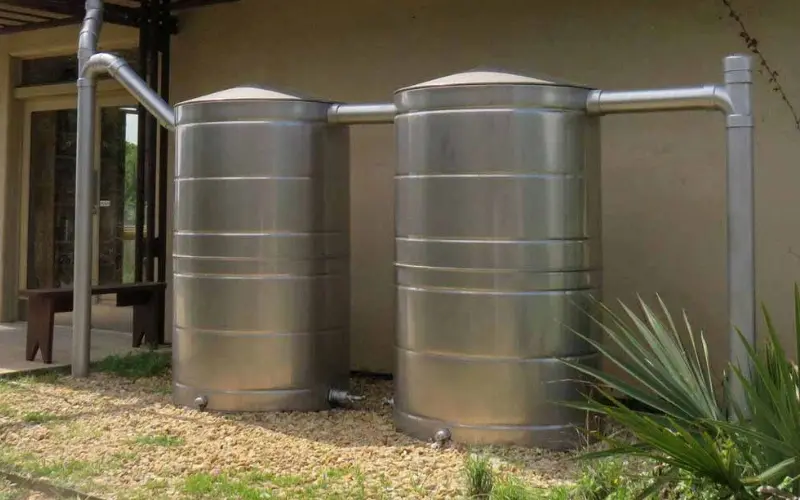
Stainless Steel Tanks
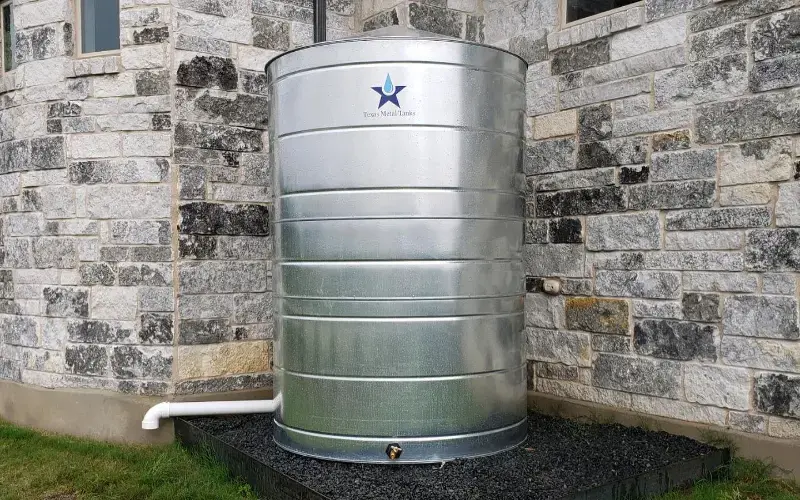
Galvanized Steel Tanks
Galvanized steel tanks offer durable, coated construction for outdoor rain water storage systems that need to hold up over time. Their design supports straightforward access for maintenance, along with clear connection and overflow planning from the start. For projects where reliable rain water collection tank performance and simple upkeep matter, galvanized steel is a practical choice.
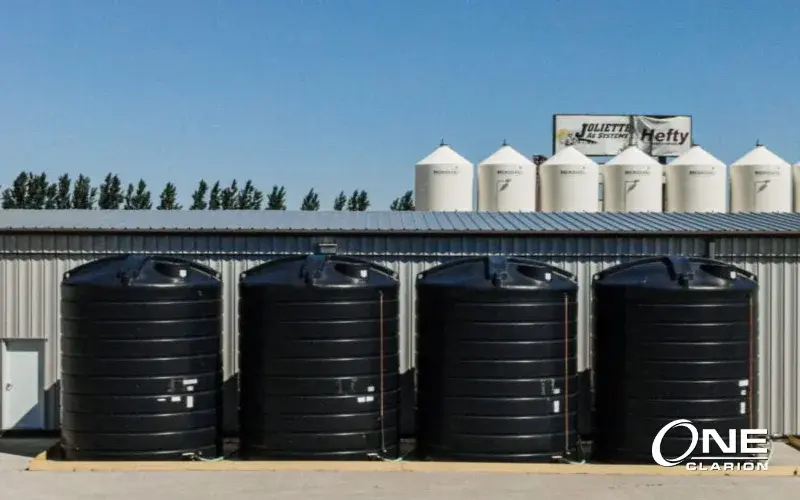
Poly Vertical Storage Tanks
Helpful Codes & Regulations
Rain water collection systems may be subject to local, state, or national codes depending on the application, jurisdiction, and intended end use of the stored water. The standards below are commonly referenced during system planning and tank selection. Not every standard applies to every project. A Sales Specialist can help determine which codes are relevant to your installation.
-
NSF/ANSI 61: Establishes health and safety requirements for materials and components that contact drinking water. Applies when stored rainwater may connect to or supplement a potable water system.
-
AWWA D100: Covers minimum requirements for the design, construction, inspection, and testing of welded carbon steel tanks used for water storage at atmospheric pressure.
-
AWWA D103: Covers minimum requirements for factory-coated, bolted carbon steel tanks used for water storage. Commonly referenced for field-assembled bolted steel installations.
-
ASTM D1998: The standard specification for polyethylene upright storage tanks, covering materials, design, construction, and testing for rotationally molded poly tanks.
-
Local stormwater and building codes: Many jurisdictions have their own ordinances governing rainwater collection, overflow management, and allowable end uses. These vary by state and municipality and should be confirmed early in the project.
Specialist Support for Your Storage Project
Talk with a specialist for practical guidance and equipment recommendations.
Frequently Asked Questions
Common questions about Rain Water Collection and what you need to know!
How do I size a tank for a rain water collection system?
Tank sizing depends on your catchment area, local rainfall averages, and how much water you plan to use between rain events. A Sales Specialist can help you estimate the right capacity based on your site data and intended use.
Can rain water collection tanks be installed on tight sites?
Yes. Some tank types are better suited for constrained footprints than others. Poly vertical tanks and certain steel configurations can be sized to fit limited spaces while still providing useful storage volume.
What tank material works best for rain water storage?
Material selection depends on the site environment, volume requirements, and how the water will be used. Corrugated steel and stainless steel handle large volumes well, while poly tanks work for smaller, standalone systems. Your Sales Specialist can help match material to your project conditions.
What maintenance should I plan for with rain water storage?
Routine maintenance typically includes inspecting inlets, screens, and overflow outlets, along with periodic checks for sediment buildup inside the tank. Frequency depends on the tank type and local conditions, but annual inspections are a reasonable baseline for most installations.