Process & Cooling Water Storage
Engineered storage for thermal management, process supply, and industrial water systems.
What is Process & Cooling Tanks?
In industrial operations, process and cooling water storage is the critical buffer between system demand and reliable supply. Whether feeding chillers, heat exchangers, cooling towers, or production lines, these tanks help maintain flow continuity during peak loads, offset evaporation and blowdown losses, and reduce the risk of unplanned downtime. They also support more stable system performance by giving facilities added operating flexibility when demand shifts, maintenance is required, or supply conditions are less predictable. Getting the specification right means evaluating capacity, operating temperature range, water chemistry, turnover rate, and site constraints together from the start.
Who Works In This Field?
Whether you are a mechanical engineer specifying a cooling loop replacement, a plant manager keeping a process water system online during expansion, or a contractor planning installation around active operations, your storage decision is driven by system reliability, water chemistry compatibility, and project timeline. The right tank has to match your operating conditions, fit your site, and arrive with documentation ready for owner review. In many cases, these decisions also involve facility managers, project managers, and owners who need the system to align with budget, schedule, and long-term operational goals.
The Problem They Face
Undersized or poorly specified storage tanks put cooling loops and process lines at risk during peak demand, and recovery from an unplanned shutdown is never just a maintenance issue. Aggressive water chemistry and temperature cycling degrade standard coatings faster than expected, turning what looked like a 15-year asset into a 5-year liability. Add constrained footprints, misaligned nozzle layouts, and incomplete submittals, and the project stalls before the tank ever ships.
Explore Our Solutions
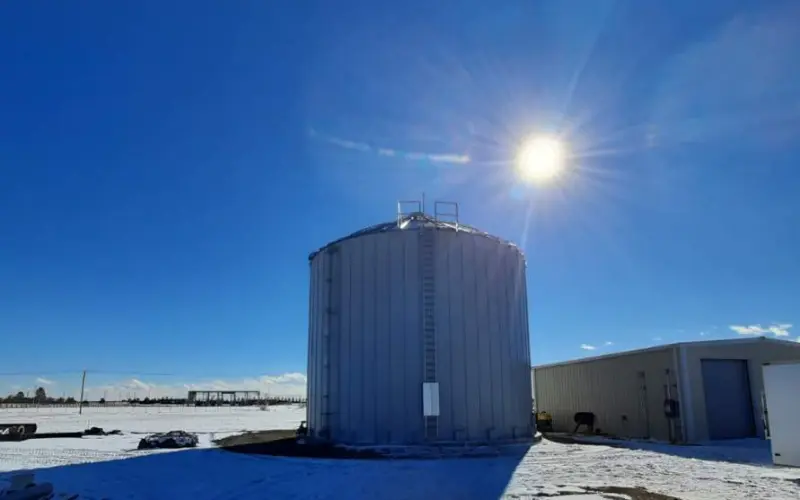
Bolted Steel Tanks
Bolted steel tanks are delivered as factory-manufactured panels and assembled on-site, reducing installation time and heavy equipment requirements compared to field-welded alternatives. Panel material, coating type, roof style, and access features are all specified to match your operating conditions, water chemistry, and site constraints. A Sales Specialist can help you configure the right combination for your system.
Regulations, Codes, & Compliance
Process and cooling water storage projects typically fall under a combination of tank design, coating, access safety, and structural standards. The specific codes that apply depend on the tank type, installation environment, and local jurisdiction. Below are some of the most commonly referenced standards for bolted steel tank installations in industrial process and cooling water applications.
-
AWWA D103: Design, construction, inspection, and coating standard for factory-coated bolted steel tanks.
-
OSHA 29 CFR 1910.28 / 1910.29: Fixed ladder, platform, guardrail, and fall protection requirements for tank access.
-
IBC / ASCE 7: Structural, seismic, and wind load requirements for tank foundations and anchorage.
-
Local Building and Mechanical Codes: Permitting, foundation, and site-specific requirements that vary by jurisdiction.
Specialist Support for Your Storage Project
Talk with a specialist for practical guidance and equipment recommendations.
Frequently Asked Questions
Common questions about sizing, placement, water quality, and tank selection for Process & Cooling water storage applications.
How do I determine the right tank size for my process or cooling water system?
Tank sizing is based on system demand, peak draw, buffer requirements, and make-up water needs. A Sales Specialist can help you evaluate these variables and identify the capacity that fits your operating conditions.
How are nozzle and fitting layouts coordinated with existing system piping?
Nozzle size, placement, orientation, and fitting type are specified during the design phase to align with your system's inlet, outlet, overflow, drain, and instrumentation connections. This coordination happens before fabrication so the tank is ready to tie in on arrival.
How does water chemistry affect coating or lining selection?
Factors like pH, dissolved solids, treatment chemical residuals, and operating temperature all influence how coatings and linings perform over time. Matching the interior lining to your specific water chemistry helps avoid premature degradation and unplanned maintenance.
What access features are available for inspection and maintenance?
Bolted tanks can be configured with manways, roof hatches, ladders, platforms, and guardrails to support safe inspection and routine maintenance. These features are planned during the specification process based on tank height, site conditions, and applicable safety requirements.