<img height="1" width="1" style="display:none;" alt="" src="https://px.ads.linkedin.com/collect/?pid=5375274&amp;fmt=gif">

Industry Leader In Storage Solutions

We build bold brands that spark obsession.

From strategy to storytelling, we meticulously craft magnetic brand identities that not only connect with audiences but also convert them into loyal customers and endure the test of time.

Design is how your brand speaks before you say a word. I make sure it speaks with clarity and confidence.

What is Dry Bulk Storage Tanks?


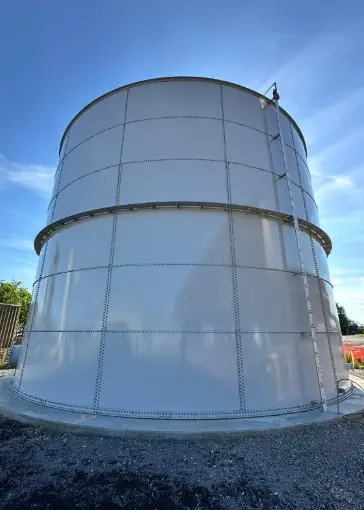
Dry bulk tanks and bulk storage silos are engineered storage vessels designed to hold powders and granular materials in solid, free-flowing, or semi-flowable form. Common stored materials include cementitious products, aggregates, polymers, plastic pellets, feed ingredients, and industrial minerals. Applications span batch process staging, bulk delivery receiving, and in-process buffer storage across manufacturing, agriculture, construction, and industrial operations.


Unlike liquid storage, dry bulk storage requires careful attention to material flow behavior. Particle size, bulk density, moisture sensitivity, and abrasiveness all influence how a tank or silo must be configured. Discharge geometry, roof style, venting provisions, and interior surface treatment are each selected based on the specific material being stored and how it needs to be moved in and out of the vessel.

Applications and Industries Served

 Dry bulk tanks and silos are used wherever powders or granular materials need to be received, staged, or stored between process steps. Common applications include: 
  • Bulk delivery receiving at manufacturing and processing facilities
  • Batch ingredient staging in food, feed, and agricultural operations
  • Aggregate and cementitious material storage at construction and batch plant sites
  • Buffer storage in industrial utilities and plant operations
  • Materials storage in municipal and public works applications

The Issue with Dry Bulk Storage

Dry bulk materials do not behave like liquids. A vessel that is not configured around the material's flow characteristics will create problems at every stage of operation.

Bridging and ratholing at the discharge outlet occur when cone angles or outlet dimensions do not match material flow behavior. Moisture intrusion through poorly sealed roofs or venting points causes caking and material degradation. Abrasive materials accelerate interior wear when the correct liner is not specified. Improperly located venting interfaces create dust generation at fill and transfer points, adding both a housekeeping burden and a potential safety concern.

Specialist Support for Your Storage Project

Talk with a specialist for practical guidance and equipment recommendations.

Frequently Asked Questions

Not sure where to start? These questions cover the most common specification and selection considerations for dry bulk storage projects.

What is the difference between a dry bulk tank and a dry bulk silo?

The terms are sometimes used interchangeably, but they generally describe different configurations. Silos are tall and narrow with hopper or cone bottoms designed for gravity or auger discharge. Tanks tend to be wider and lower profile with more flexibility in bottom and discharge configuration. The right choice depends on your required capacity, discharge method, and site footprint constraints.

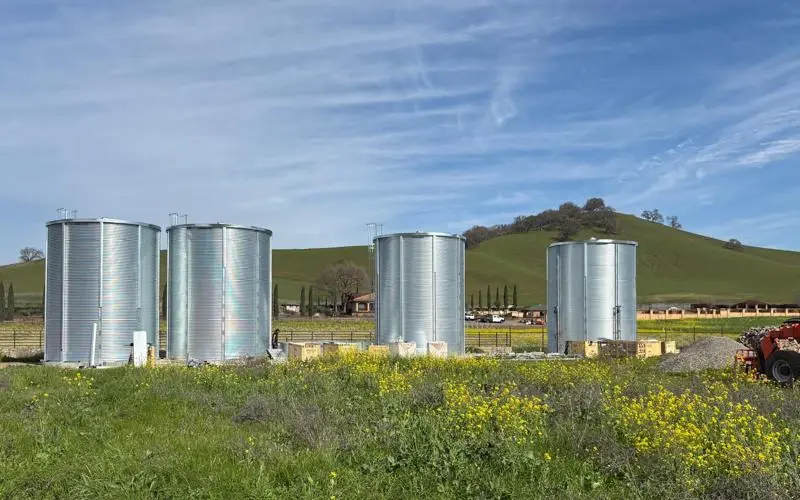
Can bolted and corrugated steel tanks be used outdoors for dry bulk storage?

Yes. Both configurations are commonly installed outdoors. Key considerations for outdoor installations include roof style selection for weather protection, liner or coating selection for moisture-sensitive materials, and venting provisions to manage condensation and pressure equalization at fill and discharge points.

How do I know which discharge configuration is right for my material?

Discharge selection is driven by material flow characteristics. Free-flowing granular materials often work with flat-bottom sweep auger arrangements. Powders or materials with bridging or ratholing risk typically require steeper cone or hopper angles to maintain consistent flow. Your material's particle size, density, and flow behavior should be confirmed before specifying discharge geometry.

What provisions are needed for dust control on dry bulk tanks?

Fill and discharge connections should include interface points for venting and dust collection. Sizing and location of those interfaces should be confirmed at the specification stage based on fill method, material characteristics, and applicable facility requirements. Dust collection equipment itself is typically specified separately from the tank.