<img height="1" width="1" style="display:none;" alt="" src="https://px.ads.linkedin.com/collect/?pid=5375274&amp;fmt=gif">

Wastewater Applications

Wastewater Storage & Treatment Support

Whether you are evaluating equalization capacity, planning a holding system for process wastewater, or specifying treatment-adjacent storage for a municipal or industrial site, the decisions that drive tank selection go well beyond volume alone. This page explains how wastewater storage systems are used, what factors shape selection, and which storage solutions One Clarion offers for these requirements.

Design is how your brand speaks before you say a word. I make sure it speaks with clarity and confidence.

What is Wastewater Storage & Treatment Support ?


Wastewater storage tanks are used across municipal, industrial, commercial, and decentralized system applications to hold, buffer, collect, or support treatment of domestic sewage, process wastewater, and other non-potable liquid streams. These systems serve distinct functions depending on where they sit in the treatment process and what the wastewater contains. Common uses include equalization and flow buffering ahead of treatment systems, collection and holding prior to pump-out or conveyance, pretreatment staging, onsite wastewater management, and treatment-adjacent storage that supports downstream operations.


Selecting the right wastewater storage tank requires more than a volume calculation. The variables that determine fit include required capacity and influent flow variability, solids loading, wastewater chemistry where corrosion or chemical attack is a concern, odor-control provisions, coating and lining selection appropriate to the influent characteristics, access requirements for inspection and cleaning, above-grade or below-grade installation conditions, footprint and placement constraints, and documentation expectations from the AHJ or engineer of record. A tank that performs well in one wastewater context may not be the right fit in another, which is why understanding the influent, the site conditions, and the long-term maintenance requirements is the starting point for any proper evaluation. 

Who is the Audience?

Wastewater storage projects involve a wide range of professionals, including municipal utility managers and plant operators managing equalization and treatment-adjacent systems, industrial facility teams handling process wastewater with specific chemistry and discharge requirements, facility managers and EHS personnel at commercial and institutional sites, engineers and contractors designing onsite or decentralized wastewater systems, and project managers and procurement teams coordinating specifications and submittals across complex installations. 

The Problem

Regardless of the environment, the operational challenges tend to overlap: variable influent flow and solids loading that complicates sizing, wastewater chemistry that can degrade improperly specified materials, maintenance access that is frequently under planned, odor control that becomes a site issue when overlooked, constrained footprints or buried installation conditions that add design complexity, and documentation requirements that require accurate drawings and spec sheets to satisfy AHJ review or owner submittals. 

Helpful Codes & Regulations

Wastewater storage projects touch a range of fabrication standards, certification frameworks, and local requirements that vary by tank type, construction method, and installation context. The references below represent commonly encountered standards across the tank types offered for this application. For product-specific certifications and documentation, visit the relevant product page or contact a Sales Specialist who can provide the appropriate spec sheets and submittal support for your project.


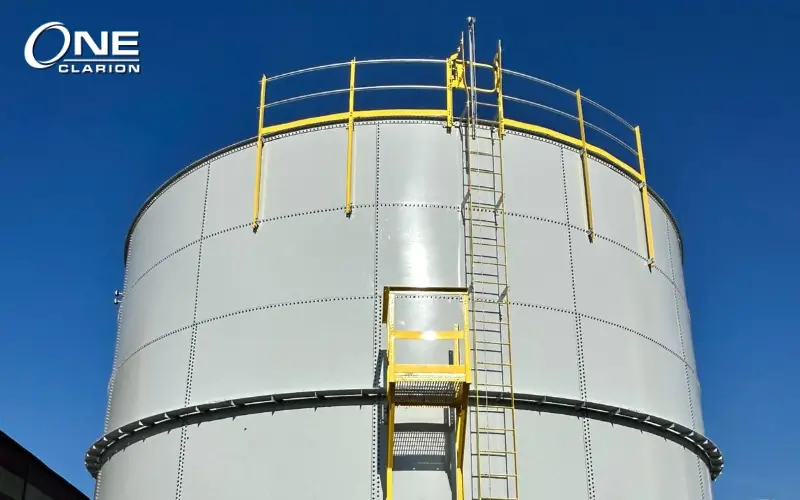
  •  AWWA D103  - Covers design, construction, inspection, and testing of factory-coated bolted carbon steel tanks.  


  •  API 650 -  The primary standard for welded steel tank design and construction. 


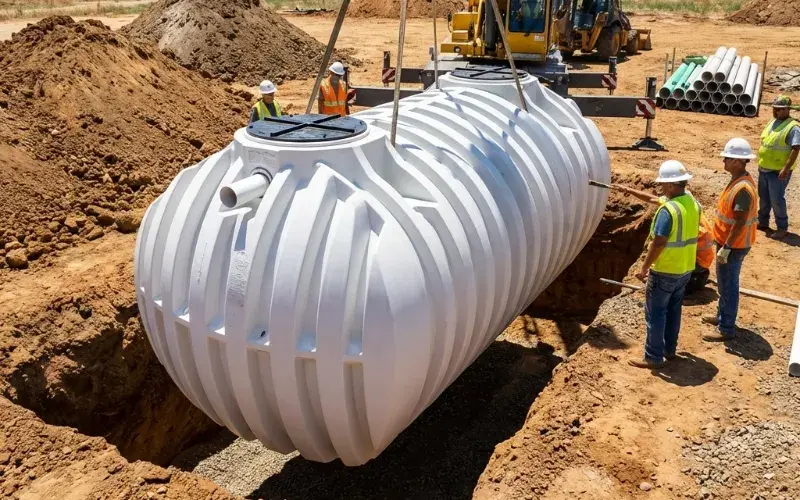
  •  IAPMO PS-1 - Covers design, material, and manufacturing requirements for prefabricated polyethylene septic tanks.  


  •  CSA B66 -  The Canadian Standards Association standard for prefabricated septic tank design and construction. 


Specialist Support for Your Storage Project

Talk with a specialist for practical guidance and equipment recommendations.

Frequently Asked Questions

Common questions about wastewater storage requirements, tank selection, and project planning.

How do I know which tank type is right for my wastewater application?

The right fit depends on your installation conditions, required volume, wastewater characteristics, and access requirements rather than any single factor alone. A Sales Specialist can help evaluate those variables and match you with the appropriate solution for your project.

What access provisions should be planned for a wastewater storage tank?

Manway size and placement, riser height for below-grade installations, and pump-out and cleaning connections should all be resolved during the design phase rather than addressed after the tank is in the ground. These decisions affect long-term maintenance cost and operational practicality more than almost any other specification detail.

What role does wastewater chemistry play in tank selection?

Wastewater chemistry directly affects coating, lining, and material selection, and a tank specified without accounting for the actual influent characteristics can degrade prematurely or fail to meet service expectations. Understanding the chemistry of what the tank will hold is a starting point for any proper specification conversation. For more information see our Chemical Compatibility Chart

What documentation is typically required for a wastewater storage tank procurement?

Most projects require some combination of drawings, spec sheets, and certification documentation to satisfy AHJ review or owner submittal requirements. A Sales Specialist can pull together the appropriate product documentation and submittal support once the tank type and configuration are confirmed.