<img height="1" width="1" style="display:none;" alt="" src="https://px.ads.linkedin.com/collect/?pid=5375274&amp;fmt=gif">

✓ Built to Spec. Assembled on Site.

Bolted Steel Tanks

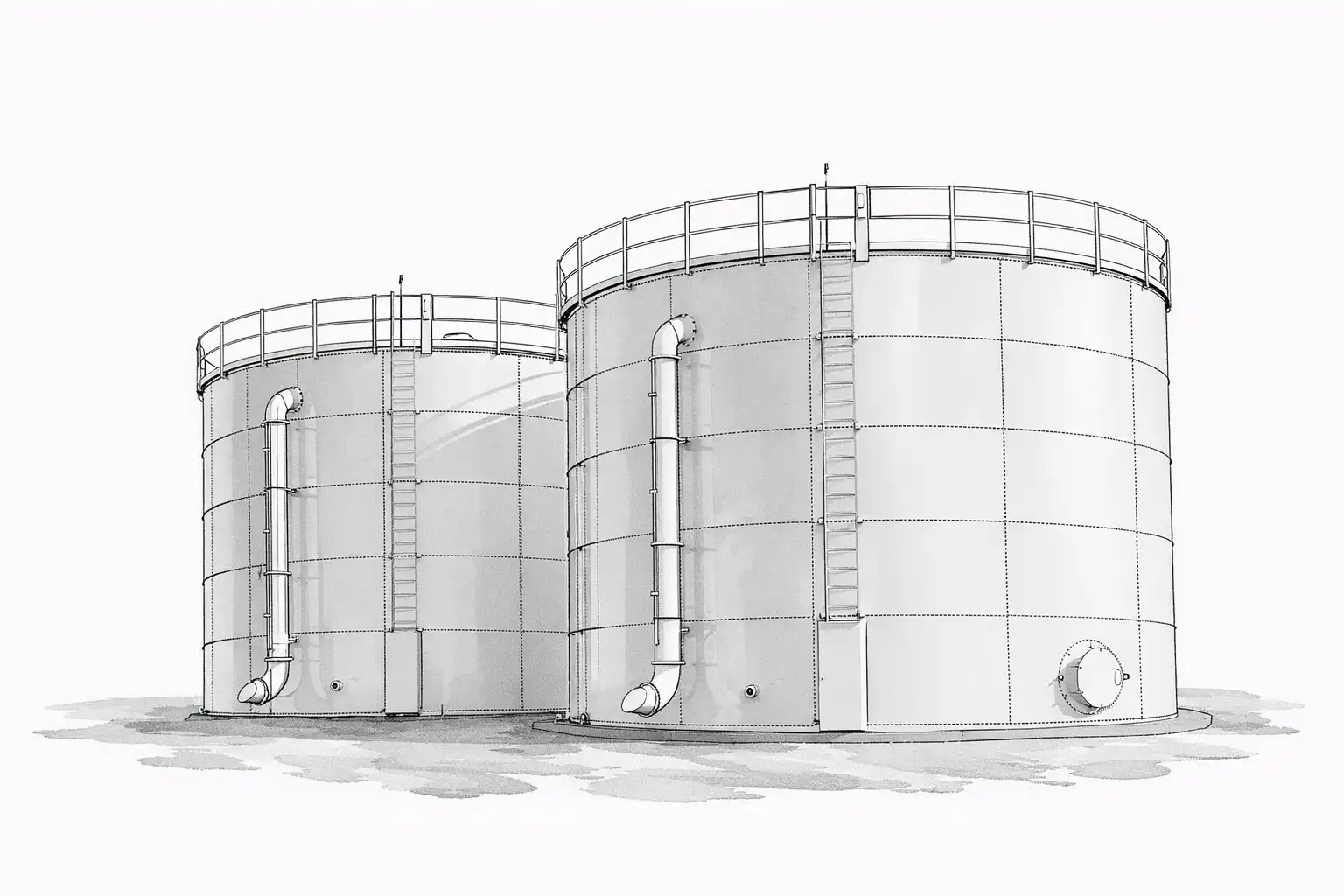
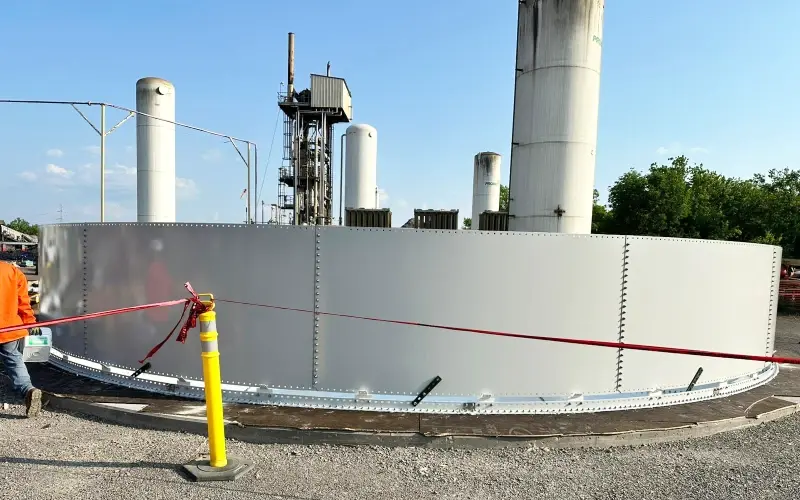
Bolted steel tanks are site-assembled storage systems made from factory-fabricated steel panels that are bolted together on location. They are a practical choice for projects where capacity needs, site access, or future expansion make field-erected construction a better fit than factory-built alternatives. Available in a range of configurations and capacities exceeding 2 million gallons, these tanks support municipal water supply, fire protection, dry flowable material storage, industrial process storage, and other infrastructure applications.
NSF/ANSI 61/ AWWA Certified

Download Spec Sheet

bolted-steel-tanks-2-installed

Spec List

  • Straight seam, flat panel; factory-fabricated and coated.
  • Carbon steel; factory powder epoxy coated.
  • Available with UV-protective exterior coating on upper rings.
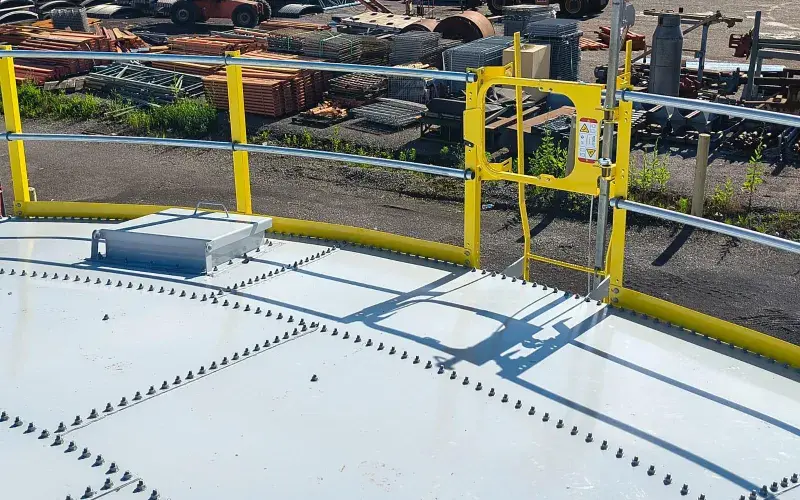
  • Aluminum Dome: Available for covered applications.
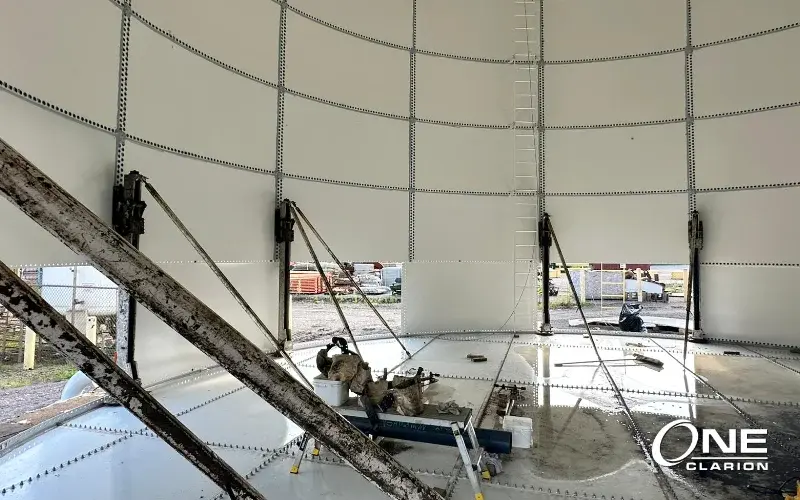
  • Site-assembled using building jacks; no scaffolding required.

Benefits

  • Site-assembled without scaffolding or field welding.
  • Flat panels ship by flatbed; viable for remote and access-restricted sites.
  • Panels arrive 100% factory-coated and shrink-wrapped, minimizing field touch-up.
  • Roof options include open-top and aluminum dome configurations.

Applications

  • Potable Water: Municipal supply, rural water districts, standpipes, reservoirs.
  • Fire Protection: Private fire suppression storage per NFPA 22.
  • Process: Equalization, sludge storage, thickeners, clarifiers, dewatering.
  • Dry Bulk Hoppers: Dry bulk material storage; hopper configurations available.
374-0521-bolted-steel-white-winery-inside-install-800x500-022026

Bolted Steel Tank Standards & Compliance

Potable water tanks are constructed per AWWA D103 with a powder epoxy coating carrying NSF/ANSI 61 approval for drinking water contact. Fire protection tanks are designed to NFPA 22 and AWWA, with Factory Mutual (FM) approval available where required. Wastewater configurations are engineered to applicable AWWA load requirements and can be adapted for equalization, digestion, sludge storage, and related treatment applications.

Our Sales specialists are available to assist with AHJ coordination, specification compliance review, and documentation packages required for municipal, industrial, and federal project approvals. Where projects require FM approval or specific design criteria beyond standard configurations, those requirements can be incorporated into the tank design at the time of quote.

Liquid Tank Capacity Chart

*Chart is an estimate please speak to a sales specialist for more information.

Diameter 3 Rings 6 Rings 10 Rings
9' - 2¾" 6,978 14,238 23,917
15' - 4⅝" 19,383 39,549 66,437
24' - 7⅜" 49,622 101,246 170,078
30' - 9¼" 77,534 158,197 265,747
40' 131,032 267,353 449,113
49' - 2¾" 198,487 404,984 680,313
61' - 6½" 310,135 632,787 1,062,990
76' - 11⅛" 484,586 988,730 1,660,922
92' - 3¾" 697,804 1,423,771 2,391,727

Installation Steps

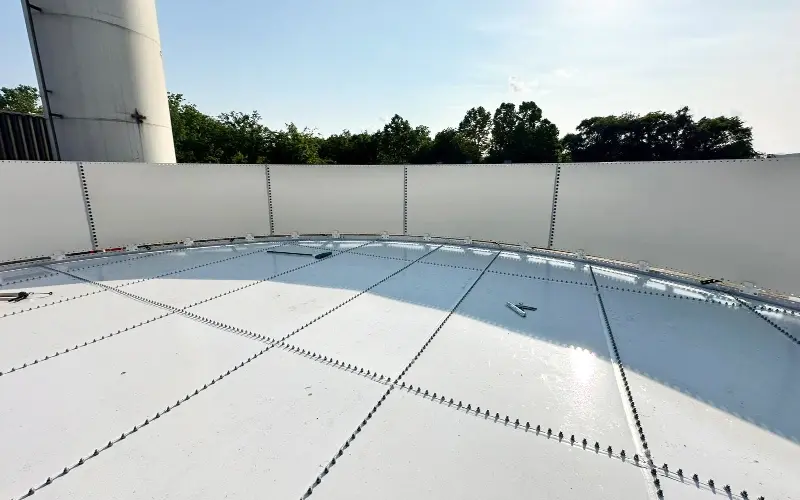
Foundation must be complete before panels arrive. Confirm site access for flatbed delivery and verify footprint, grade, and anchor bolt placement to spec prior to panel arrival.
374-0521-bolted-steel-white-first-ring-inside-800x500-022026

Step 1

Site & Foundation Prep
374-0521-bolted-steel-white-first-ring-800x500-022026

Step 2

Panel Assembly

Panels are unloaded from shrink-wrapped pallets and assembled using a building jack method. No scaffolding or field welding required.

Foundation must be complete before panels arrive. Confirm site access for flatbed delivery and verify footprint, grade, and anchor bolt placement to spec prior to panel arrival.
Specialist Support for Your Storage Project

Talk with a specialist for practical guidance and equipment recommendations.

Frequently Asked Questions

Common questions about bolted steel tank construction, coatings, and specifications.

How are bolted steel tanks assembled on-site?

Bolted steel tanks are commonly assembled using a building jack method that raises the structure in controlled stages as panels are installed. This process eliminates the need for field welding and reduces or avoids the need for scaffolding, which can be especially beneficial on restricted job sites. The panelized design also allows installation in tight spaces and near existing structures, making bolted steel tanks well suited for sites where access, layout, or surrounding infrastructure limit construction flexibility.

Do bolted steel tanks require cathodic protection?

Not in every case. Bolted steel tanks are manufactured with factory-applied coatings on all panel surfaces, including exposed edges and the underside of the floor, to provide corrosion resistance from the start. Depending on the application, site conditions, soil environment, water chemistry, and project requirements, cathodic protection may still be recommended or specified as an added safeguard. We can provide cathodic protection as an option, and our specialists are available to review your project and issue a separate quote upon request.

What coating is used on the interior of bolted steel tanks, and is it safe for drinking water?

The interior uses a powder epoxy coating that carries NSF/ANSI 61 approval for drinking water contact, applied per AWWA D103 requirements.

What bolted steel tank roof options are available?

Tanks are available with an aluminum dome cover or open top. Open top configurations include a UV-protective exterior coating on the upper rings.