✓ Metal Rainwater Tanks
Stainless & Galvanized Steel Tanks
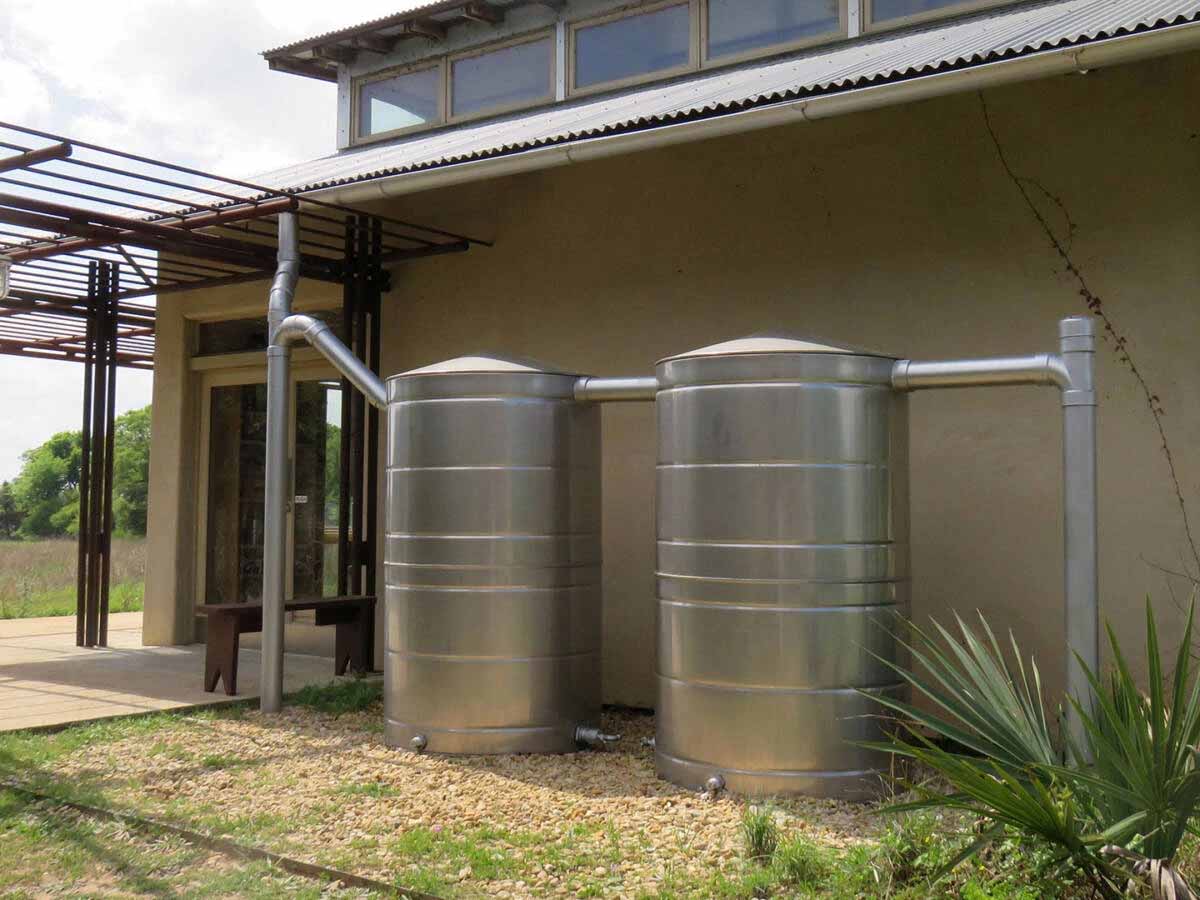
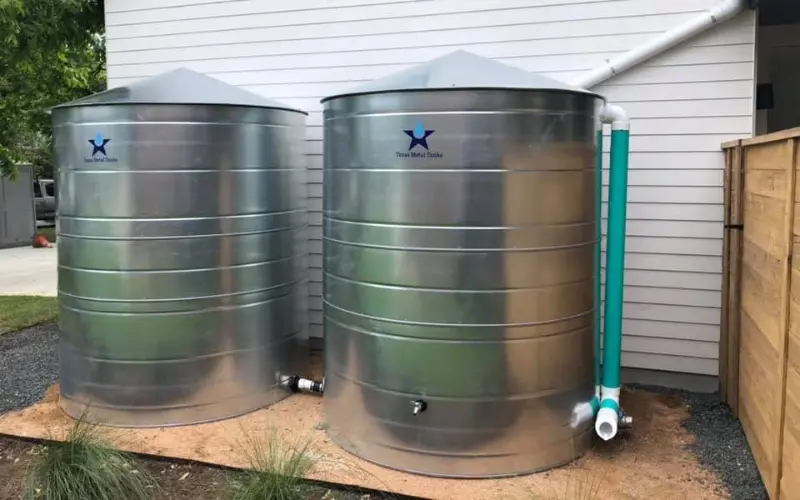
Stainless steel water storage tanks and galvanized steel tanks are used across a wide range of rainwater harvesting and water storage applications. Material type, site conditions, and project requirements all shape the right tank selection. Both stainless steel and galvanized steel configurations are common options depending on installation goals, expected service life, and jobsite conditions.
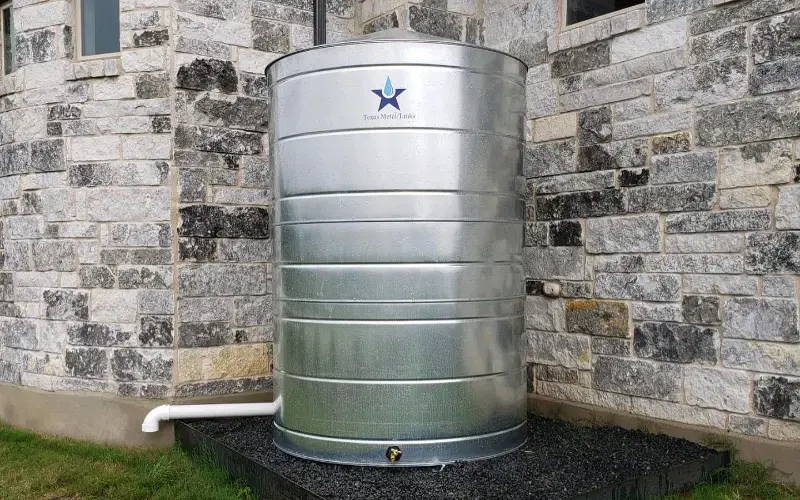
Key Specs
- Stainless steel (type 304) or galvanized (G-90 grade) construction
- 20 gauge sidewall and bottom, 22 gauge top
- Domestic US steel, no imported materials
- Capacities from 90 to 4,400 gallons, plus slimline options
- Inlet: 3 in or 4 in PVC adapter or basket style; Outlet: 3/4 in, 1-1/4 in, or 2 in bulkhead; Overflow: 3 in or 4 in PVC
- Custom sizes available
Features
- Stainless steel: NSF 61 certified sealant interior, stainless steel rivets, 50+ year lifespan, 5-year warranty
- Galvanized: FDA approved interior epoxy lining, ANSI/NSF 61 certified, 20 to 30 year lifespan, 1-year warranty
- Each tank is factory tested for watertight integrity before shipping
- Standard tanks include one outlet; additional fittings specified during ordering
Applications
- Rainwater harvesting systems
- Non-potable water storage
- Irrigation and agricultural water storage
- Facility and operational water reserves
- Commercial or site water collection systems
Browse Our Products
No products found in this category.
Metal Rainwater Tanks Details
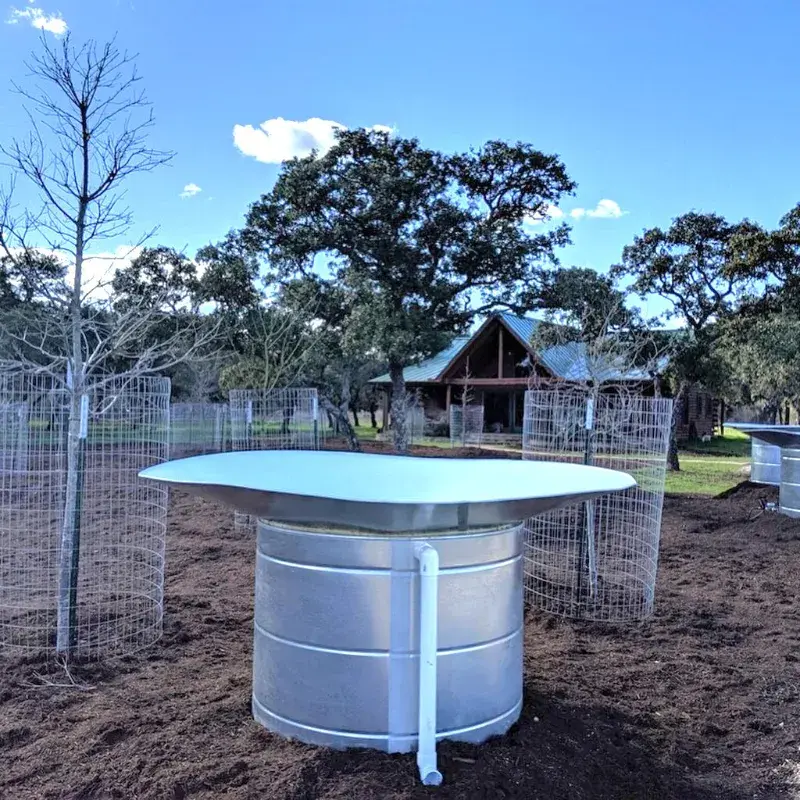
Metal rainwater tanks provide a durable, aboveground water storage option for residential, commercial, agricultural, and industrial applications. These tanks are constructed from either stainless steel or galvanized steel, with each material offering distinct characteristics that influence service life, maintenance, and project fit.
Stainless steel tanks are built from type 304 stainless steel. The chromium content in the alloy provides corrosion resistance, which means the tank resists rust, staining, and pitting over time. These tanks use an FDA approved, NSF 61 certified sealant on the interior. Stainless steel tanks generally maintain their appearance throughout their lifespan and are a common choice where long-term durability and minimal maintenance are priorities.
Galvanized steel tanks use G-90 grade steel with an interior epoxy lining that creates a barrier between the stored water and the metal. This product is FDA approved for potable (drinking) water applications and is ANSI/NSF 61 certified. Galvanized options are often selected where upfront cost is a consideration and the expected service life aligns with the project timeline.
Specialist Support for Your Storage Project
Talk with a specialist for practical guidance and equipment recommendations.
Frequently Asked Questions
Common questions about stainless steel and galvanized steel water storage tanks
What is a metal rainwater tank?
A metal rainwater tank is an aboveground water storage vessel constructed from stainless steel or galvanized steel. These tanks are designed for collecting, storing, and distributing rainwater for residential, commercial, agricultural, and industrial applications. Metal construction provides long-term durability and corrosion resistance depending on the material selected.
What site preparation is typically required?
Metal rainwater tanks require a level, structurally adequate base that supports the full bottom of the tank. Common base options include compacted crushed granite, limestone block, pavers, or a concrete pad. The base should be sized slightly wider than the tank diameter. Specific requirements depend on tank size and total weight when full.
What is the difference between stainless steel and galvanized steel tanks?
Stainless steel tanks use type 304 stainless steel, which resists rust and corrosion through the chromium content in the alloy. They carry a longer expected lifespan and typically maintain their appearance over time. Galvanized steel tanks use G-90 grade steel with an interior protective lining to keep stored water separated from the metal. Galvanized options are generally lower in initial cost but carry a shorter expected lifespan. Both types are available in similar size ranges.
What information is needed for a quote?
To provide an accurate quote, we typically need your intended use, target storage capacity, material preference (stainless or galvanized), placement location and site conditions, inlet and outlet connection requirements, and your project timeline. Providing as much detail as possible upfront helps streamline the quoting process.