<img height="1" width="1" style="display:none;" alt="" src="https://px.ads.linkedin.com/collect/?pid=5375274&amp;fmt=gif">

✓ Custom Tanks for Critical Storage

Custom Polypropylene & HDLPE Tanks

Custom fabricated rectangular and cylindrical tanks are primarily used for industrial, commercial, and municipal liquid storage. The custom plastic tanks come in high-density linear polyethylene (HDLPE) and polypropylene configurations. These tanks are built to withstand higher temperatures for compatible applications up to 200°F.

Each of the extrusion-wound plastic tanks are selected around chemical compatibility, working temperature, specific gravity, size, fitting, and site requirements.
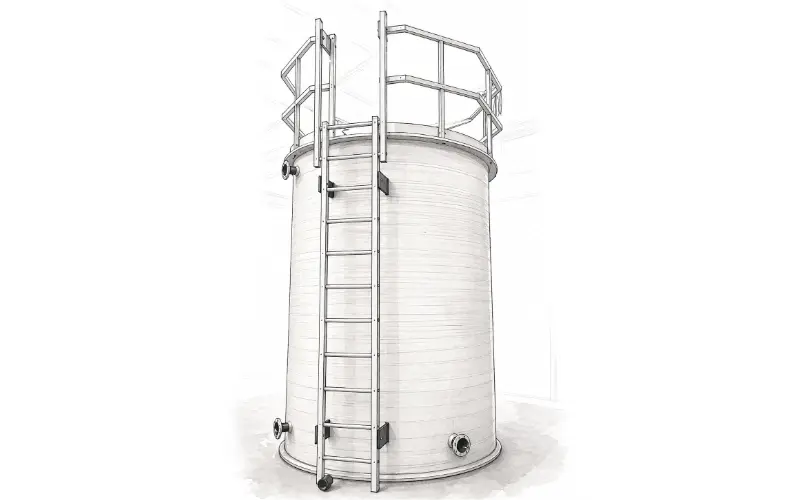
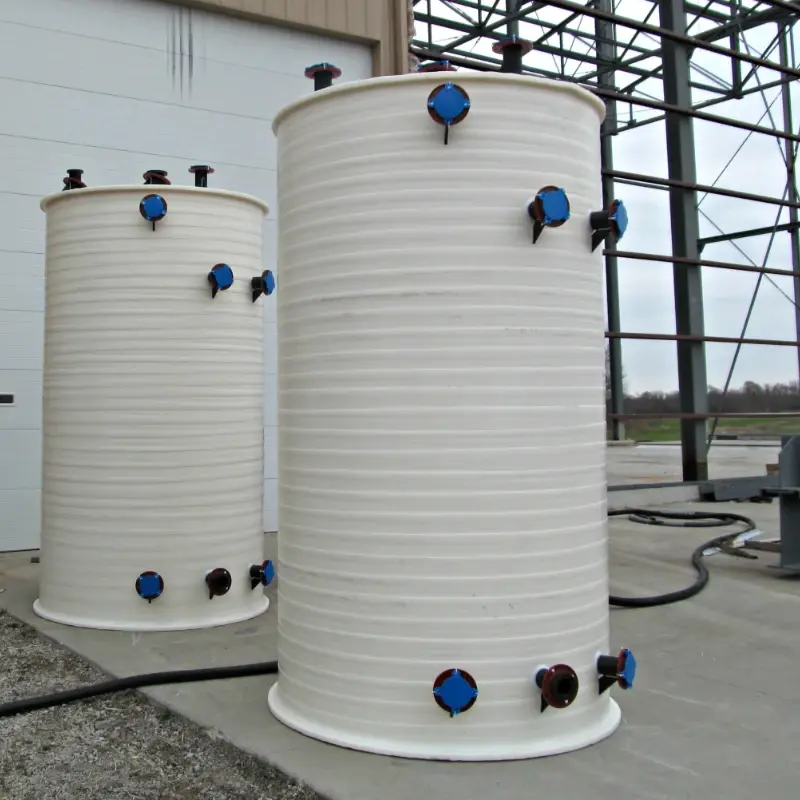
DVS 2205 Standard Tank

24-Hour Hydro Tested

Mockup

Specifications

  • Polypropylene or high-density linear polyethylene
  • Rectangular tanks up to 18,000 gallons
  • Cylindrical tanks from 50 - 50,000 gallons
  • Polyethylene rated up to 120°F
  • Polypropylene rated up to 180 - 200°F
  • Flat, cone, slope, dished, or recessed designs

Features

  • Custom extruded for project-specific requirements
  • Rectangular and cylindrical configurations available
  • Secondary containment and double-wall options
  • 150# and 300# ANSI flanges
  • Manways, fittings, vents, and accessories

Applications

  • Chemical and acid storage
  • Process and reactor tanks
  • Water and wastewater treatment
  • Flow battery energy storage
  • Municipal, mining, and industrial sites
  • Petroleum, food, pharmaceutical, and steel support
820-0518-multiple-site-tanks-installed-for-water-storage-3-800x500-022026

Custom Polypropylene & HDLPE Tank Details

Each custom rigid-wall tank is designed around the stored liquid, material, shape, capacity, temperature, fittings, and installation requirements. Rectangular and cylindrical polypropylene and HDLPE tanks are built for demanding liquid storage, chemical processing, wastewater treatment, reactor, and process applications.

Material and temperature capabilities vary by tank type. Tanks are available in polypropylene or high-density linear polyethylene, also known as HDLPE. HDLPE is listed for applications up to 120°F, while polypropylene is listed for higher-temperature applications up to 180°F. To help determine material suitability, visit our chemical compatibility page or speak with a specialist. Chemical compatibility should be confirmed for each stored liquid, concentration, temperature, and operating condition.

Rectangular tanks are available in capacities up to 18,000 gallons. These tanks are a good option for space-sensitive layouts, containerized systems, and shipping-critical projects. They can be used for water, wastewater, chemical storage, process tanks, and reactor tanks. For shipping and system convenience, rectangular tanks may be inserted into frac tanks, metal-caged trailer tanks, and standard shipping containers.

Cylindrical tanks are available in capacities from 50 to 50,000 gallons and are built using an extrusion-wound design. These tanks are available with open, flat, cone, and recessed top styles. Depending on the application, cylindrical tanks may also include single-wall or double-wall configurations, secondary containment options, and flat, slope, or cone bottom styles.

Both rectangular and cylindrical polypropylene and HDLPE tanks can be configured to fit your project needs. Some of our popular options include ANSI flanges, manways, mixer mounts, immersion heaters, sensors, risers, vents, level indicators, and OSHA-compliant ladders. Speak with a specialist to review chemical compatibility, foundation, unloading, site access, piping, and quote requirements.

Specialist Support for Your Storage Project

Talk with a specialist for practical guidance and equipment recommendations.

Frequently Asked Questions

Choosing the right custom polypropylene or HDLPE tank depends on more than capacity. Material compatibility, temperature range, specific gravity, tank shape, fittings, containment needs, and site access all affect the final design. Use the FAQs below to review the main factors before requesting a quote.

What material should I choose for my custom tank?

Material selection depends on the stored liquid, chemical concentration, operating temperature, specific gravity, and application. HDLPE is listed for applications up to 120°F, while polypropylene is listed for higher-temperature applications up to 180°F. Before selecting a tank, confirm chemical compatibility for the exact liquid, concentration, and operating conditions.

What capacities are available for these tanks?

Rectangular tanks are available in capacities up to 18,000 gallons. Cylindrical tanks are available in capacities from 50 to 50,000 gallons. Final sizing should account for usable volume, chemical type, specific gravity, fitting placement, freeboard needs, containment requirements, and available site space.

Are double-wall or secondary containment options available?

Depending on the tank style and application, secondary containment and double-wall configurations may be available. These options are commonly reviewed for chemical storage, wastewater treatment chemicals, and other industrial liquids where containment planning is part of the project. The final configuration should be selected based on the stored liquid, volume, site requirements, and applicable local requirements.

Should I choose a rectangular or cylindrical tank?

Rectangular tanks are a good option for space-sensitive layouts, containerized systems, and shipping-critical projects. Cylindrical tanks are better suited for projects that need a wider capacity range, extrusion-wound construction, secondary containment options, or custom top and bottom styles. The right choice depends on capacity, site layout, stored liquid, fittings, and installation access.

Can these tanks be used for chemical storage?

Yes, these tanks can be used for chemical storage applications when the material, temperature rating, concentration, and specific gravity are compatible with the stored liquid. Common project considerations include chemical resistance, secondary containment, fittings, vents, access points, and unloading requirements. Compatibility should always be confirmed before quoting or specifying the tank.

What information is needed to quote a custom polypropylene or HDLPE tank?

To quote the correct tank, provide the stored liquid, chemical concentration, operating temperature, specific gravity, required capacity, tank shape, fitting needs, containment requirements, site location, foundation status, unloading access, and installation details. These details help determine the material, tank configuration, accessories, and project documentation needed. To get assistance on these details, speak with our tank specialists who are equipped to help navigate these project needs.