The cost of not having a piece of equipment rarely appears on a budget, but the project pays it anyway. This post looks at three ways "not having it" shows up (absent, late, or wrong), where the construction delay costs land across regulatory, schedule, and operational lines, who ends up carrying them, why a quote price and a delivered project cost are different numbers, and the questions a project team can ask before any of it happens.
The line item that never appears on the budget
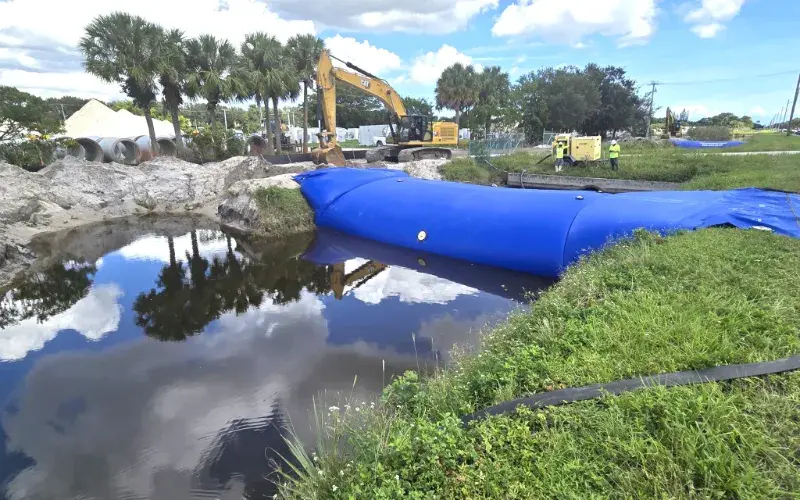
A contractor had a three-week window to complete a dewatered work area. The schedule was built around a promised delivery date for a water-inflated cofferdam, with the crew, the equipment, and the downstream trades sequenced to that date. Then the date slipped. The site shut down and sat idle for two weeks of the three-week schedule while revenue stopped. Nothing on the original budget had a line for that.
That is the shape of most construction delay costs: the equipment itself was priced, approved, and accounted for, but the cost of not having it on site was never written down anywhere. It surfaces later as standby, remobilization, a missed window, or a conversation with the owner that nobody wanted to have.
In that case, One Clarion delivered in about a week, the site reopened, and the project finished on time. That delivery duration was specific to one project and is not a standard lead time. The two idle weeks are the point: the price of the cofferdam was never the largest number in play.
This post is written for the people who carry that number: specifying engineers, general contractors and project managers, owners and owner's reps, facility and operations managers, and municipal directors. It frames "not having it" three ways, traces where the cost lands and who pays it, and closes with the questions worth asking while there is still time to act.
Three ways "not having it" shows up: absent, late, or wrong
"Not having it" is usually treated as a delivery problem, but on most projects it arrives in one of three forms, each with a different origin and a different fix.
The first is not having it at all. The equipment was never specified, it was value-engineered out during a budget pass, or each party assumed it sat in someone else's scope. Fire protection water supply is a common illustration: whether the available supply can meet the demand is answered late, after the site plan is fixed and the footprint for dedicated storage has been used for something else. The result is a permit, site, and schedule problem traceable to a line that never made it into the basis of design.
The second is not having it on time. The right equipment was specified and ordered, but it was ordered against the construction schedule rather than the procurement schedule, or it was delayed in production or freight. On a process or cooling water project, it looks like a tank still in fabrication when the pad is poured, the crane is booked, and the piping crew is waiting for a connection point that does not exist yet.
The third is not having it right. The unit arrived, but the material is wrong for the stored product, the capacity does not match the revised demand, the configuration does not fit the connections or the footprint, or a required certification is missing. Documentation belongs here too. A tank can be correct in every physical respect and still hold up a project because the submittal package is not in hand when the engineer or the authority having jurisdiction (AHJ) needs it. From the permit's point of view, a tank without its documentation is no tank at all.
Each form has its own cost profile. The useful habit is to ask, for every item on the critical path, which of the three it is most exposed to, and to plan for that one.
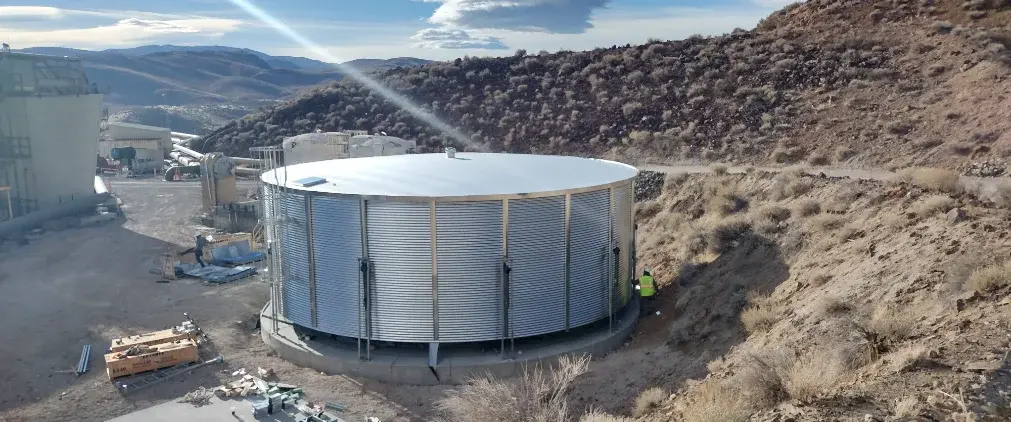
A tank can be correct in every physical respect and still hold up a project because the submittal package is not in hand when the AHJ needs it.
Regulatory and schedule costs: where construction delay costs first appear
The cost of not having it first becomes visible on the schedule, then on the inspection report. The two are connected, because a missing or non-conforming item tends to stall both at once.
The schedule costs are familiar to anyone who has managed a critical path. The project slips, and if the contract carries liquidated damages the slip has a daily price. Crews and cranes booked against the original date go on standby or are released and remobilized. Buying time back with expediting fees and rush freight moves the cost to the procurement line without removing it, and a late specification change, re-engineering, or a resubmittal adds a change order cycle on top.
A second cofferdam project shows how directly a delivery date and a shutdown are tied. On an intake installation, the cofferdam delivery date was pushed back, and the push triggered shutdowns on the project. One Clarion delivered in under a week and the work resumed. That duration also belongs to one project and is not a standard lead time. What carries over is the mechanics: the cofferdam was the item that gated the work, so its date was the project's date.
The regulatory costs are less predictable and often more consequential. A tank that is absent, undersized, or undocumented can produce a failed inspection, a re-inspection, a stop-work order, or a withheld Certificate of Occupancy. Fines and penalties are possible under some codes and permits; the amounts are set by the jurisdiction, not the supplier. For fire protection water storage, this is the cost most project teams know best, because the fire supply is often a condition of occupancy. It is also the category where the cost is not only financial: a building that opens without the fire water supply its design assumes is carrying a life safety exposure, and that deserves to be stated plainly.
For chemical storage, the regulatory exposure usually runs through secondary containment and the permits that depend on it. A tank on site without the containment its permit assumes is a tank that cannot be filled. Insurance coverage terms and claims can also be affected when required equipment or containment is missing or not as specified; the specifics belong to the policy.
One more cost is harder to quantify but easy to recognize: a failed inspection or a withdrawn submittal is remembered by the AHJ, the owner, and the general contractor, and that memory carries into the next bid.
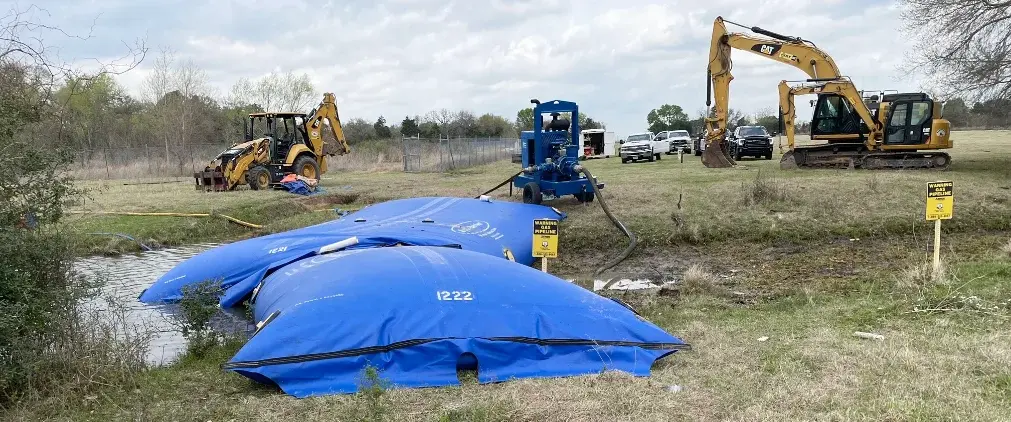
The cofferdam was the item that gated the work, so its date was the project's date.
Operational costs: what the facility pays after the project closes
Schedule and regulatory costs are paid during construction. Operational costs are paid by whoever runs the facility afterward, which is why "not having it" is a design question before it is a procurement question.
A data center project illustrates the design side. Cooling tower make-up water storage was designed to carry operations for roughly a full day if incoming water service is lost, because utility service alone was not sufficient. No stored water means no cooling, and no cooling means downtime on critical infrastructure. The same project also showed that documentation can hold up a project even when the tank is on schedule: for a period, the submittal package rather than the fabrication was the gating item. Both lessons apply across process and cooling water storage.
In other applications the operational cost takes a different form. For agricultural water storage, a tank that is not in service when the season opens means a missed irrigation window or an unprotected harvest, and seasonal windows do not reschedule. In food processing, lost production and spoilage follow a lost water or cooling supply. For potable water storage, a system that cannot meet demand has a service interruption to explain. For wastewater storage, missing holding or equalization capacity carries an environmental cost: a release, the reporting obligations that follow, cleanup, and in some cases remediation. The project page on a double wall holding tank for emergency spill containment shows equipment specified so that cost never has to be paid.
When the equipment is absent or late, the facility buys a stopgap: water hauling, rental tanks, temporary containment, or fire watch, all out of a budget that never planned for them. A stopgap that runs for weeks can cost more than the permanent equipment it is standing in for, and it buys nothing that lasts.
When the equipment is wrong, the cost is rework: the wrong unit is bought, delivered, and set, then replaced, and the project pays for the tank twice along with the labor around it. Material selection is where this most often starts. Bolted steel tanks, corrugated steel tanks (lined), and aboveground FRP tanks each suit a range of stored products, site conditions, and capacities, and the fit depends on the application rather than a general ranking, so it is a decision to settle early with the project engineer.
There is also an opportunity cost. An expansion or new location that cannot be permitted or opened because the water supply, the containment, or the storage was never resolved is measured in the revenue that location would have produced. It is the largest number in this section and the hardest to see in advance.
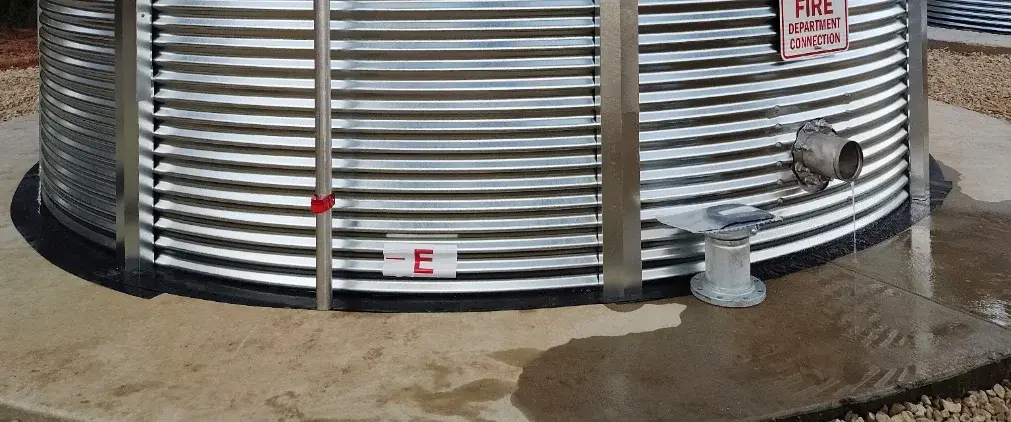
A stopgap that runs for weeks can cost more than the permanent equipment it is standing in for, and it buys nothing that lasts.
The cascade: who actually carries the cost
The cost of not having it is rarely paid by the party that caused it, and it is almost never paid once. It moves.
The owner carries the delayed opening, the stopgap, the lost production, and the opportunity cost of a facility that is not yet earning. Liquidated damages pass some of that to the general contractor, who carries the standby, the remobilization, the expediting, and the change orders needed to recover, and who passes what it can to the subcontractors carrying the idle crews and the resequenced work. The engineer carries the re-engineering and the resubmittals. The facility operator inherits whatever was not resolved when the project closed.
The compounding happens across trades. A tank that is not set on the scheduled date holds up the mechanical contractor waiting to pipe it, the electrical contractor waiting to wire the controls, the civil contractor who cannot backfill or pave around it, and the inspector who cannot sign off on any of them. The schedule does not slip by the length of the delay; it slips by the length of the delay plus the time it takes to get every affected trade back on site in the right order.
This is why a quote price and a delivered project cost are two different numbers. A bid comparison shows what each supplier will charge for the equipment. It does not show how likely the equipment is to arrive on the date quoted, in the configuration specified, with the documentation the approval needs, or what the project pays if it does not. Evaluating an equipment purchase on three terms rather than one (purchase price, likelihood of successful delivery, and cost of failure) is how the cascade above gets priced in before the order rather than after it.
Freight is part of lead time, and it belongs in the cascade. On one project, the trailer was overloaded at pickup and had to be left behind, and the load had to be recovered and rebooked. The delay was entirely in transit, and it moved the delivery date all the same. A procurement schedule that ends at "ships from the factory" is missing the last segment of the critical path.
Most equipment arrives, most inspections pass, and most schedules hold. The point is that the cost of a single missing item is a multiple of its price, and the multiple grows with the number of trades and approvals that depend on it.
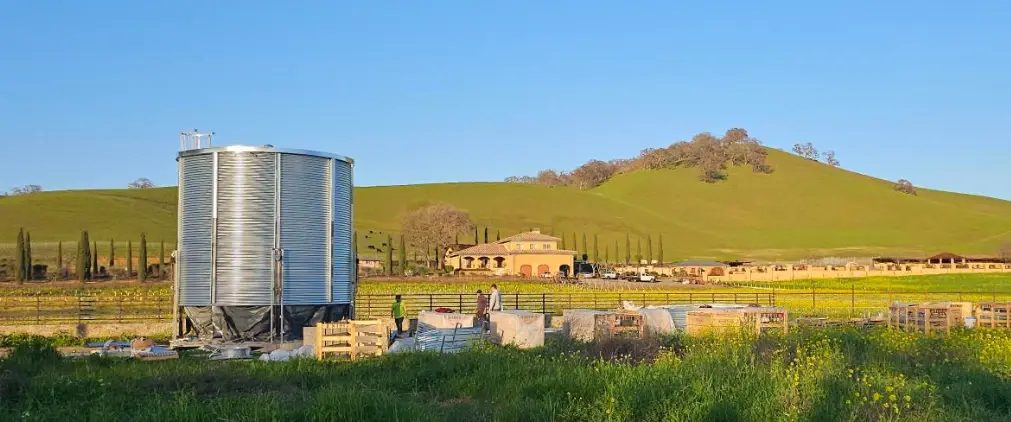
The schedule does not slip by the length of the delay; it slips by the length of the delay plus the time it takes to get every affected trade back on site in the right order.
Questions to ask before the cost shows up
Every cost described above was visible in advance to someone. These six questions surface it while there is still time to act.
Who owns the item? Not who will buy it, but who confirms it is in the basis of design, that its scope is assigned, and that its submittals are tracked. The items that get value-engineered out or assumed into someone else's scope are the ones with no name beside them. Who also covers the engineer of record and the AHJ, with whom final sizing, compliance, and design decisions rest, and whose approval may sit on the critical path.
What exactly is being ordered? Material, capacity, configuration, connections, coatings or liners, certifications, and the documentation that must accompany the unit for approval. A specification that names the application, the stored product, and the standards the tank is supplied against gives everyone something to check before fabrication rather than after delivery. The companion question during bid evaluation is whether the quotes being compared are pricing the same scope: engineering, anchors, freight, accessories, startup assistance, and whatever else the specification calls for. The cheapest time to identify a missing requirement is before the purchase order. Scope discovered after fabrication begins arrives as a change order.
When does it have to be on site, and what has to happen first? Working backward from the set date through freight, fabrication, submittal review, and the order itself produces a procurement schedule that can be laid against the construction schedule. A quoted lead time is only useful if it is a production assessment: the date the project can plan around, not the date that reads best on a proposal. The question is not what the lead time is in general but whether this order date, against a lead time that will hold, leaves room for this project's review cycle and freight.
Where is it going, and what does the site require to receive it? On one delivery, the truck reached a secured facility gate and the driver was refused entry because a credentialing requirement had never been communicated before dispatch. The options were an escort, an offload at the gate, or a return and re-dispatch with added charges, none of which existed as costs until the gate. Where covers access, credentialing, offloading equipment, laydown space, pad readiness, and whether the delivery window matches when the receiving crew will be present. For temporary works such as a water-inflated cofferdam [CONFIRM product name], it also covers the site conditions the unit will be installed against, which the page on cofferdams for dry work areas outlines.
Why is it there? This question protects the item during a budget pass. A tank with a stated purpose (make-up water through a service interruption, a fire water supply that is a condition of occupancy, holding capacity that keeps a release off the ground) is harder to cut than a tank that is simply on the equipment list. Writing the why into the basis of design is the cheapest insurance against the "absent" category.
How will it be handled if something moves? Dates slip, scopes change, and freight has its own risks. The useful version is procedural: who is told, how quickly, what the fallback is, and whether a stopgap has already been priced so it can be deployed without a second round of approvals. Teams that have answered this in advance treat a slip as a schedule event. Teams that have not treat it as a crisis.
If any of those questions is still open on a storage or containment item for a current project, that is a good time to talk with a One Clarion Sales Specialist about project timing. That conversation is about balancing the things that compete on every equipment purchase (price, specification, manufacturing capacity, lead time, freight and site logistics, documentation, and who is accountable when something moves), then sequencing the order, the submittals, and the delivery against the schedule the project actually has, so the cost of not having it stays where it belongs, off the budget, because it never happens.
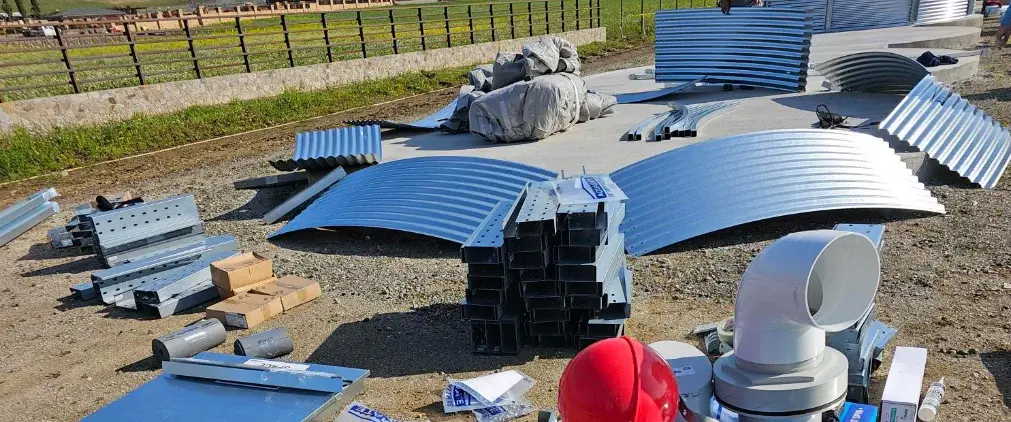
Teams that have answered this in advance treat a slip as a schedule event. Teams that have not treat it as a crisis.
.jpg)