✓ Passive Dewatering | Quoted From Project Data
Geotextile Dewatering Tubes
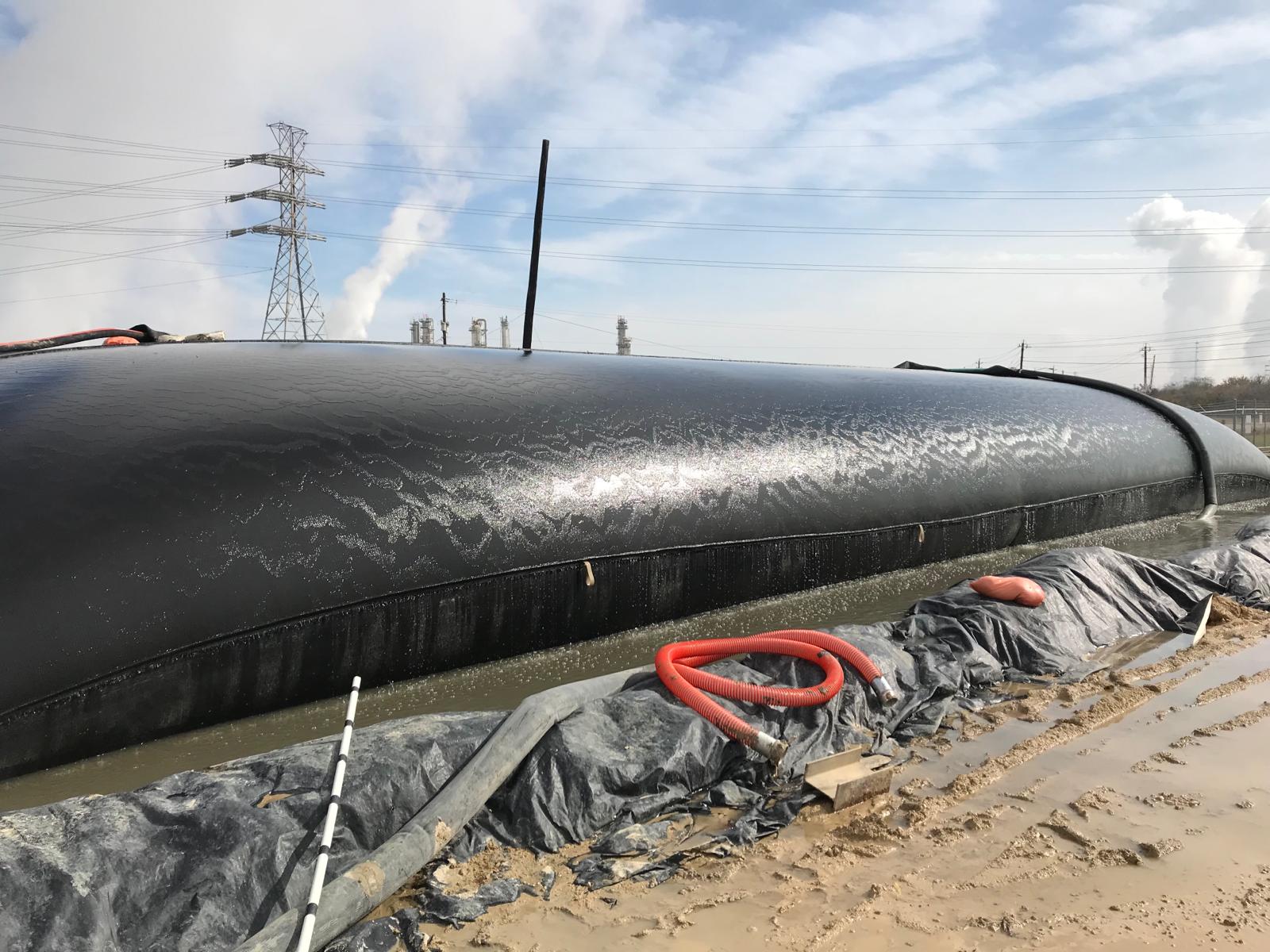
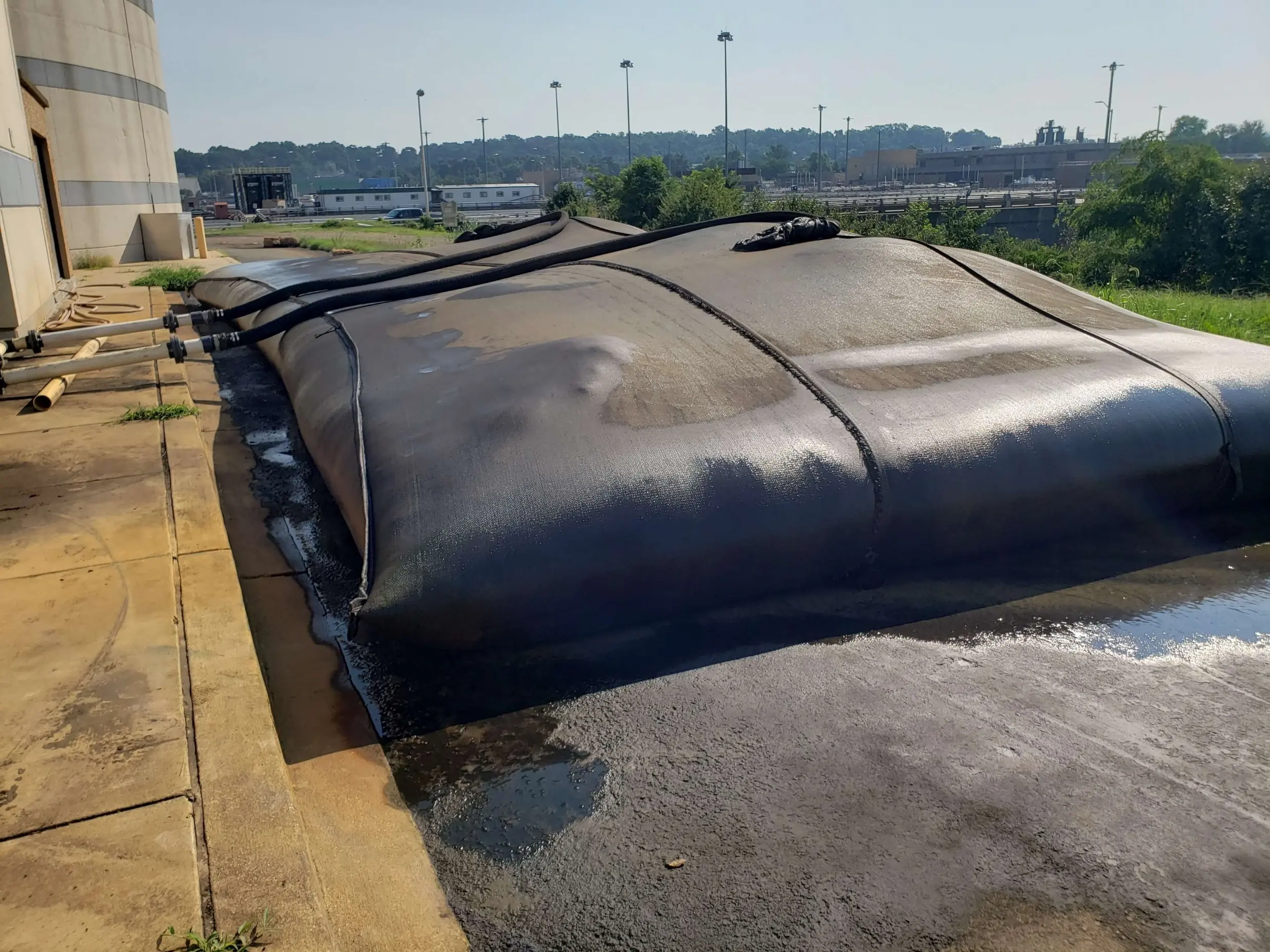
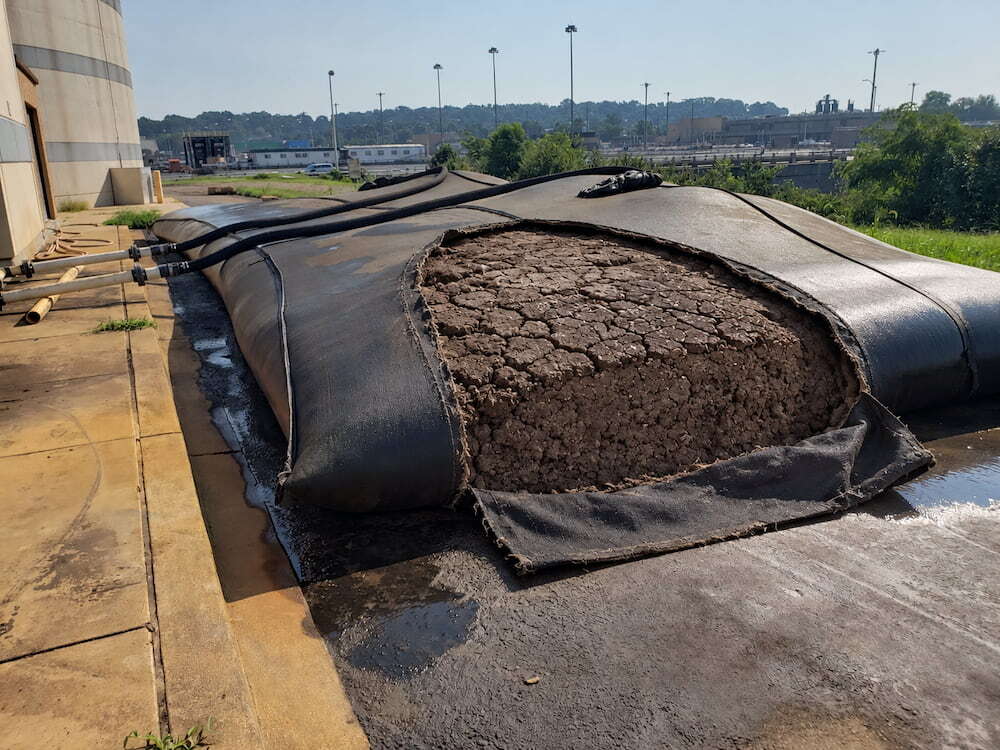
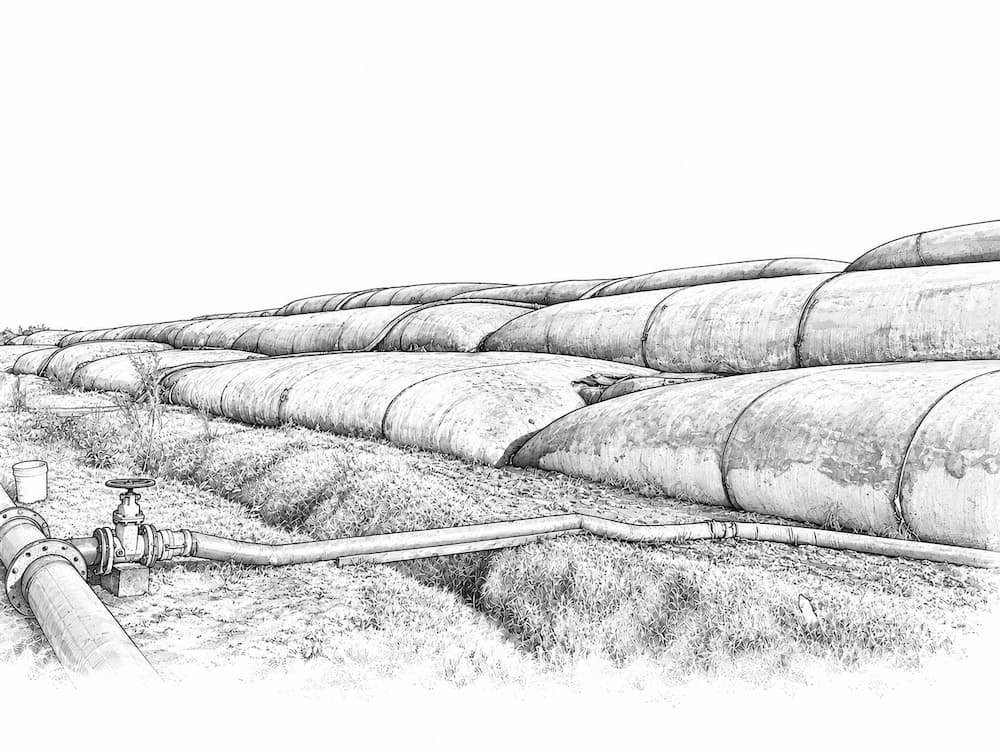
Geotextile dewatering tubes provide passive dewatering of sludge, dredged sediment and process residuals. Slurry, usually conditioned with polymer, is pumped into the tube, solids are retained and consolidate inside the woven geotextile, and filtrate drains through the fabric into a lined laydown cell.
Tube layout is planned from the project's material, quantity, percent solids and laydown area, so every quote starts with project data rather than a catalog pick.
Specs
- Material type (percent sand, silt, clay and organics) and any contamination
- In-situ volume in cubic yards, or lagoon dimensions
- Percent solids in-situ and target percent solids
- Laydown area dimensions, slope and distance from the source
- Dredge or pump rate and maximum time to dewater
- Polymer allowed on site (yes or no)
- Planned disposal of the dewatered material
Features
- High-strength woven geotextile, UV stabilized
- Circumferences of 22.5', 30', 45', 60' and 120'; custom sizes on request
- Lengths of 22', 50', 57' and 100'; up to 200' and other lengths by special order
- 1 to 3 fill ports, about one per 50' of tube length
- Maximum fill height tagged on every tube
- Multi-tube manifold and stacking options; options vary by project, confirm during quoting
Applications
- Biosolids dewatering for municipal wastewater treatment plant solids
- Sludge dewatering tubes for industrial lagoons and pulp and paper mill sludge
- Coal ash dewatering: fly ash and coal plant residuals
- Dredge dewatering for dredged sediment, harbors and dams
- Sediment dewatering for contaminated sediments and pond remediation
- Agricultural ponds, compost, process waste and aquaculture facilities
What We Need to Lay Out and Quote Your Project
Geotextile dewatering tubes are one part of a dewatering system. Tube circumference, length and quantity are matched to the material, the dry tons to be dewatered and the space available, so the layout starts with the same data the dewatering questionnaire asks for. For how tube sizing works, see our tube sizing guide; for the full process from source to disposal, see our overview of sludge dewatering.
- Material and contamination
- Quantity (in-situ cubic yards or source dimensions)
- Percent solids in-situ and target
- Laydown area size, slope and distance from the source
- Dredge or pump rate
- Polymer allowed (yes or no)
- Maximum time to dewater and project start window
- Disposal plan for the dewatered material
Dewatering Tube Basic Install Guidance
Basic geotextile tube dewatering guidance for planning, not an installation guide. Follow the operating manual and your engineer of record; site work and operation are by the contractor.
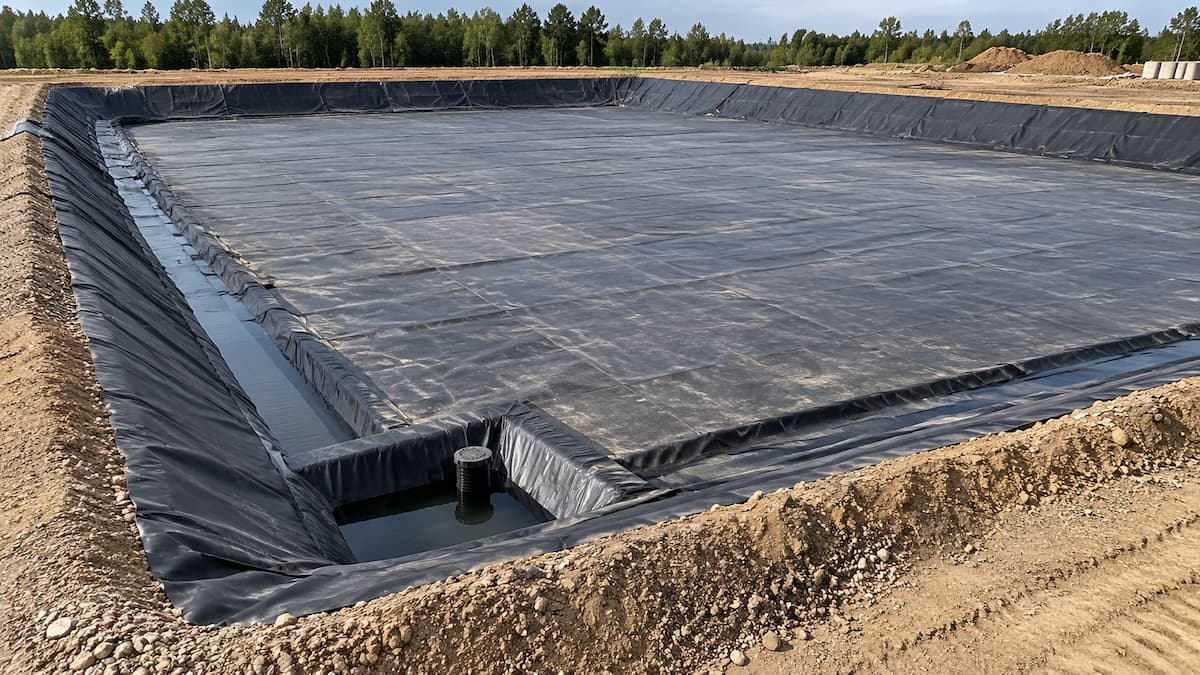
Level, bermed cell lined with an impermeable membrane, with a perimeter trench draining to a sump or gravity discharge.
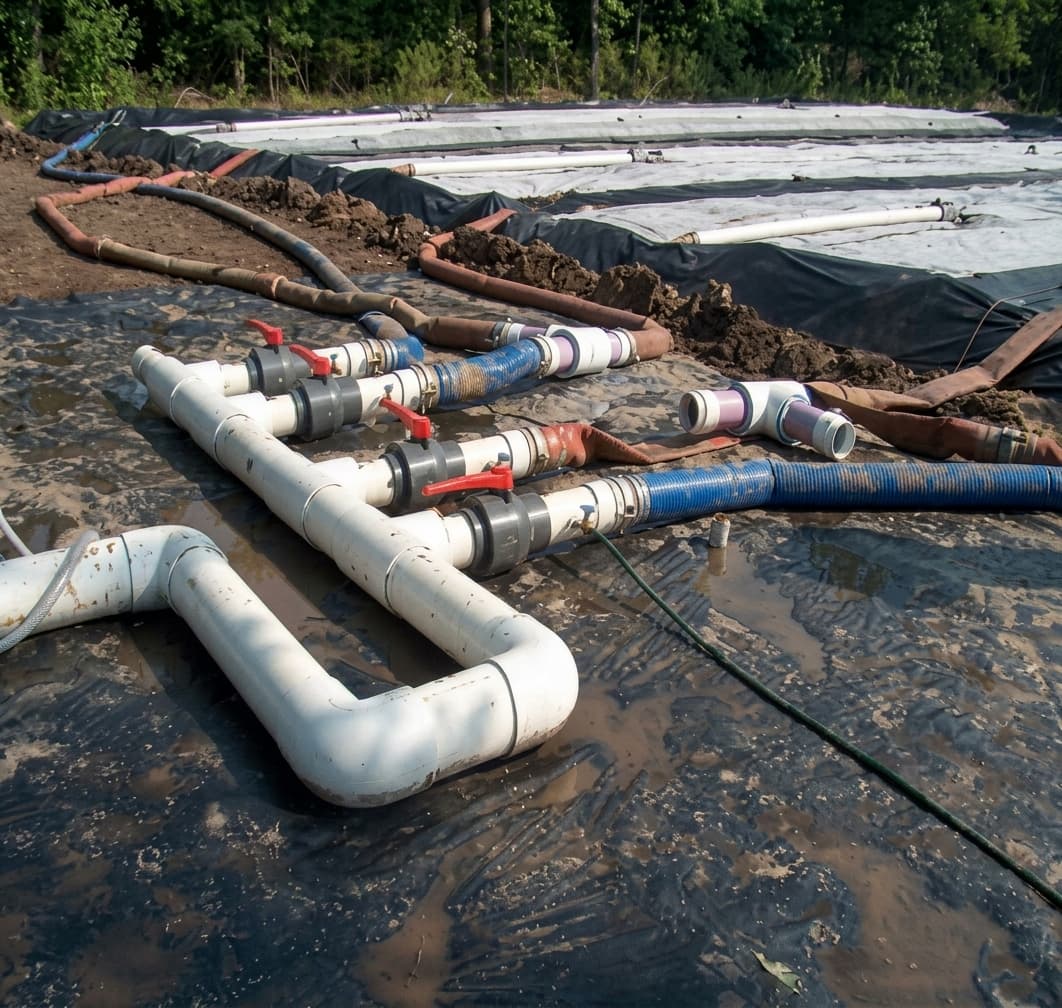
Size the discharge line to the tube, keep inlet pressure at or below 6 psi, and use a valved manifold.
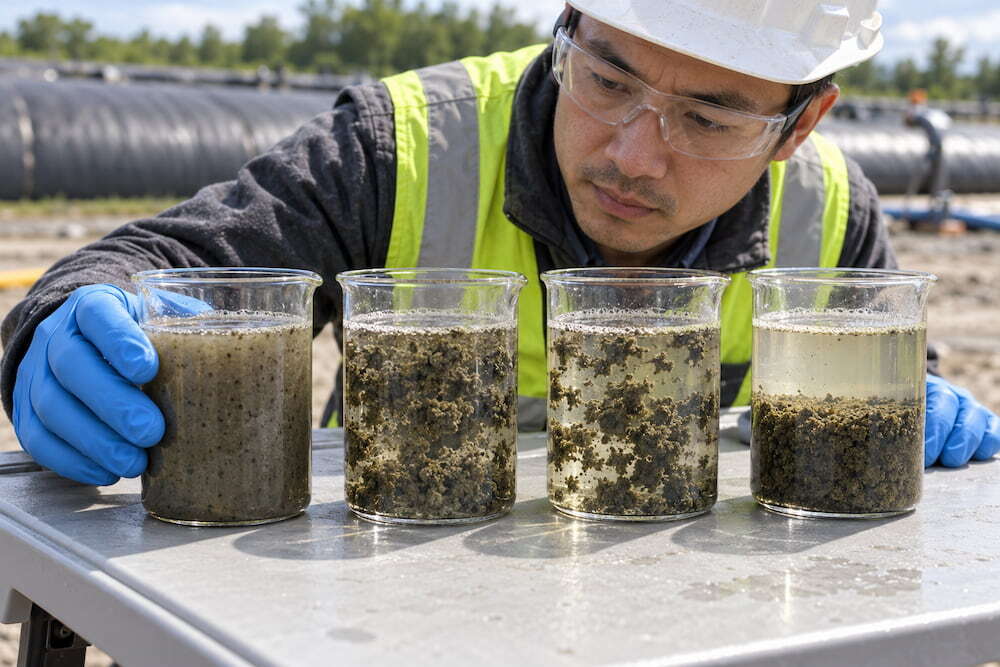
Most projects need polymer, except high-sand material. Bench and hanging bag testing set the dose; the site permit must allow it.
Fill, consolidate and refill to the tagged maximum height. Stack only after the lower layer can support the next.
Filtrate drains to a sump or discharge point; the site permit sets holding, return or discharge requirements. Cut tubes open and load out.
Basic geotextile tube dewatering guidance for planning, not an installation guide. Follow the operating manual and your engineer of record; site work and operation are by the contractor.
Level, bermed cell lined with an impermeable membrane, with a perimeter trench draining to a sump or gravity discharge.
Size the discharge line to the tube, keep inlet pressure at or below 6 psi, and use a valved manifold.
Most projects need polymer, except high-sand material. Bench and hanging bag testing set the dose; the site permit must allow it.
Fill, consolidate and refill to the tagged maximum height. Stack only after the lower layer can support the next.
Filtrate drains to a sump or discharge point; the site permit sets holding, return or discharge requirements. Cut tubes open and load out.
Basic geotextile tube dewatering guidance for planning, not an installation guide. Follow the operating manual and your engineer of record; site work and operation are by the contractor.
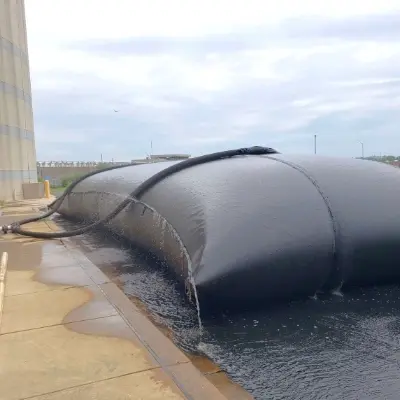
Level, bermed cell lined with an impermeable membrane, with a perimeter trench draining to a sump or gravity discharge.
Size the discharge line to the tube, keep inlet pressure at or below 6 psi, and use a valved manifold.
Most projects need polymer, except high-sand material. Bench and hanging bag testing set the dose; the site permit must allow it.
Fill, consolidate and refill to the tagged maximum height. Stack only after the lower layer can support the next.
Filtrate drains to a sump or discharge point; the site permit sets holding, return or discharge requirements. Cut tubes open and load out.
Specialist Support for Your Storage Project
Talk with a specialist for practical guidance and equipment recommendations.
Frequently Asked Questions
Common questions about geotextile dewatering tubes and what to expect when planning a dewatering project.
How are geotextile dewatering tubes sized for a project?
Sizing starts with the material and the dry tons to be dewatered, along with percent solids, pump or dredge rate and the available laydown area. Those inputs set tube circumference, length and quantity, whether the source is a lagoon cleanout or a dredge dewatering project. Options vary by project; confirm during quoting.
What does the laydown area need?
A cell graded level in all directions with puncture hazards removed, a perimeter containment berm, an impermeable membrane over the floor and berm, and a trench inside the perimeter that drains to a sump or gravity discharge.
What happens to the dewatered material?
The tube is cut open and the cake is loaded out. Landfill-bound material must pass the paint filter test. Onsite closure follows the project's closure plan and may require a membrane cap before topsoil.
Do I need polymer to dewater with geotextile tubes?
Most projects use polymer to flocculate solids before they enter the tube; high-sand material is the common exception. Bench and hanging bag testing set the polymer program, and polymer use must be allowed by the site permit.
Can tubes be stacked?
Yes. A second layer can be placed once the lower layer has dewatered enough to support it. Stacking helps where the laydown area is limited; whether it fits depends on the project layout.
Where does the filtrate go?
Filtrate drains through the fabric into the cell trench and on to a sump or discharge point. Whether it is held, returned or discharged is set by the site permit or receiving facility.