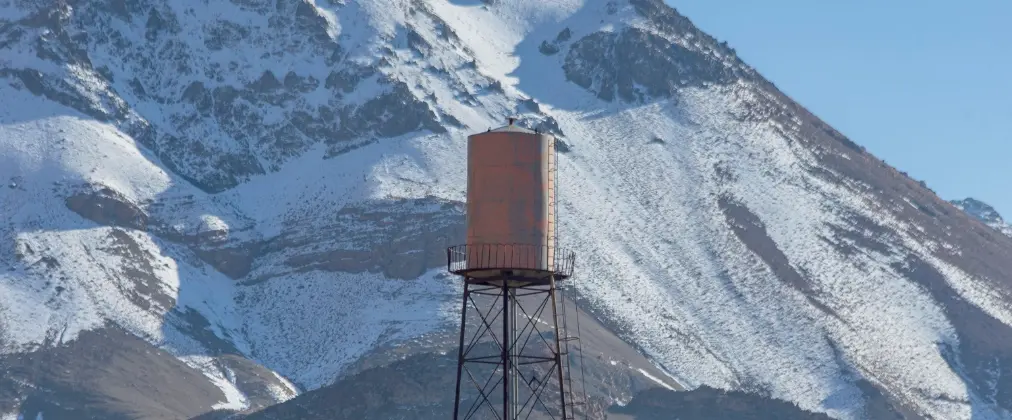
Fire water only counts if it can leave the tank the moment the system calls for it. In cold climates, the threat is rarely a tank frozen solid. It is a frozen nozzle, valve, or sensing line that blocks the water you spent good money to store. This guide walks through what actually freezes first, the protection approaches that work, how tank type changes the plan, and when to bring in a specialist. The takeaway: freeze protection is a system planning decision, not an accessory you bolt on later.
Why Freezing Matters for Fire Water Storage
A fire water tank has one job: hold the full design volume and deliver it on demand. Freezing threatens both halves of that job. Ice formation reduces the usable volume the system was hydraulically designed around, and a frozen outlet, valve, or suction line can block discharge entirely even when most of the tank is still liquid.
The timing makes it worse. Freeze events tend to coincide with the heating season, when space heaters, wood stoves, and overloaded circuits push fire risk up. They also coincide with winter storms and power outages, which can take electric freeze protection offline at exactly the wrong moment. A fire water system that fails in January is not a theoretical risk; it is the most predictable failure mode a cold-climate site has.
This is also a compliance issue. NFPA 22 addresses tank heating and minimum stored water temperature for tanks exposed to freezing, and the authority having jurisdiction (AHJ) and the property insurer will have expectations of their own. Specific temperature and heating requirements should always be confirmed against the current standard and your AHJ rather than a rule of thumb.
For sites planning fire protection water storage in a cold climate, the freeze plan belongs in the initial design conversation, alongside capacity and tank material, not in a change order after the first hard frost.
What Parts of the System Are Vulnerable
Large volumes of water freeze slowly. Small volumes freeze fast. That single fact explains almost every real-world fire water freeze failure: the stored water body is usually the last thing to go, while the small-diameter components around it fail first. Walk the system from the tank outward and the risk map looks like this.
Tank Shell
The shell itself rarely fails first, but it is where freeze damage becomes expensive. Surface ice forms as the water body loses heat, and floating ice sheets can damage internal fittings, liners, and roof supports as levels rise and fall. Repeated freeze and thaw cycles also stress seams, coatings, and shell penetrations over time.
Nozzles and Outlets
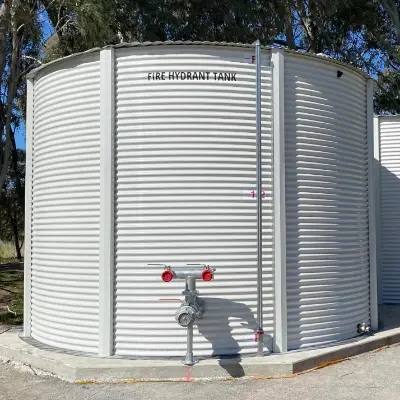
Every shell penetration holds a small, isolated pocket of water. Discharge nozzles, fill connections, and drain outlets freeze long before the tank does, and a frozen discharge nozzle takes the entire stored volume out of service.
Valves
Water trapped inside valve bodies expands as it freezes, and exposed isolation and control valves are among the most common casualties of a hard freeze. A cracked valve body may not announce itself until the system is pressurized or called on, which is the worst possible time to find a leak.
Piping
Suction lines, fill lines, and overflow piping all carry freeze risk, and the smaller the diameter, the faster it freezes. Buried piping that runs above the local frost line is a frequent hidden failure point, because it looks protected and is not.
Instrumentation
Level gauges, sight glasses, pressure switches, and their sensing lines contain the smallest water volumes in the whole system. A frozen sensing line can produce false level readings, mask a real problem, or disable the alarms that are supposed to warn you about everything else on this list.
Exposed Accessories
Vents and overflows can ice over, and a blocked vent risks drawing a vacuum on the tank during discharge. Ladders, platforms, and access hardware become safety hazards under ice, and heater and heat trace components themselves need to be checked, since freeze protection equipment that has failed quietly protects nothing.
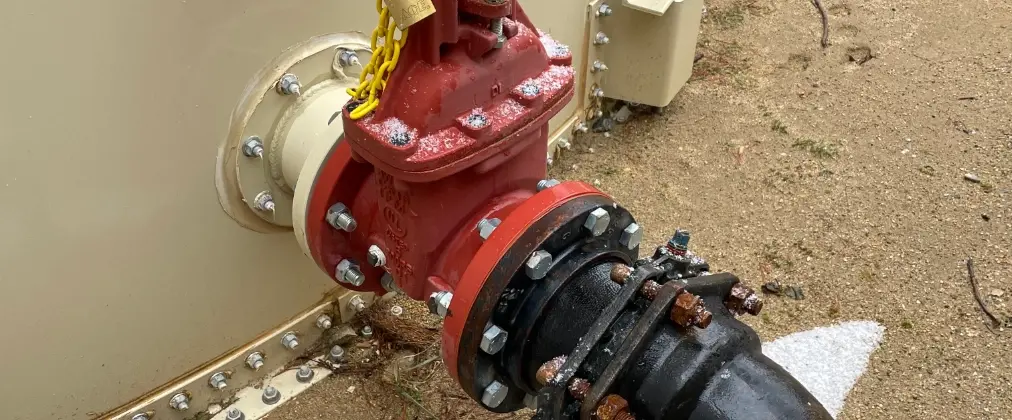
In most freeze events, the tank is fine. It is the small-diameter line beside it that takes the system down.
Common Freeze Protection Approaches
There is no single product that freeze-protects a fire water system. Effective protection is layered: something to hold heat in the stored water, something to protect the small components that freeze first, and something to tell you when either one has stopped working.
Stored Water Heating
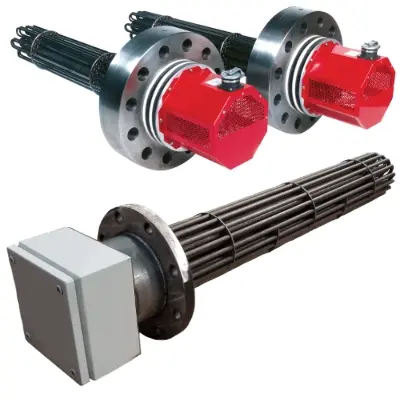
Immersion and circulation heaters maintain the stored water above the minimum temperature required for the tank. Heating is the active layer of the plan; it is typically sized to the tank volume, climate, and insulation level, with requirements confirmed against NFPA 22 and the AHJ. Because most heating systems are electric, power reliability during winter storms belongs in the same conversation.
Insulation
Shell and roof insulation slows heat loss, reduces the duty on the heating system, and lowers operating cost. Insulation alone adds no heat, so on its own it delays freezing rather than preventing it. It only works as designed while it is dry and intact, which is why it shows up again in the maintenance section below.
Heat Trace and Pipe Insulation
Heat trace cable paired with pipe insulation protects the components the tank heater cannot reach: nozzles, valves, sensing lines, and exposed runs of piping. Since these small volumes freeze first, heat trace often does more to keep a system operational than any other single measure.
Heated Enclosures and Tank Wraps
Valve houses and heated enclosures protect clustered assemblies like control valves and instrumentation. For smaller tanks and accessories, insulated heating blankets and wrap systems provide a practical combined layer of insulation and heat. Options for both are covered on our Tank Heaters & Freeze Protection page.
Siting and Burial
Sometimes the strongest freeze protection is the site plan itself. Indoor placement, wind sheltering, and burial below the local frost line all reduce exposure before a single watt of heating is applied. Burial in particular changes the entire risk profile, which is covered under tank types below.
Monitoring and Alarms
Temperature supervision and low-temperature alarms turn a quiet equipment failure into a maintenance call instead of a discovery during a fire event. Monitoring requirements vary, so confirm expectations with the AHJ and insurer.
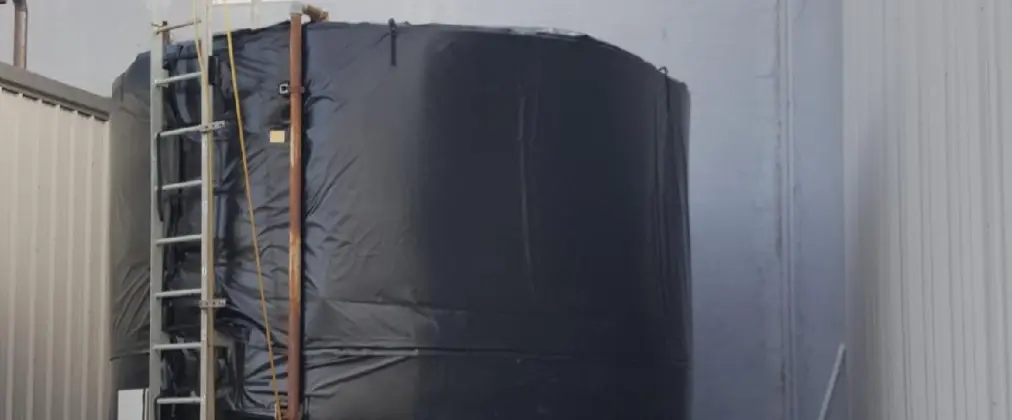
Insulation slows heat loss. Heating replaces it. Most cold-climate tanks need a plan for both.
How Tank Type Affects Freeze Planning
Freeze planning is not one-size-fits-all, because tank material and configuration change how fast heat leaves the water and which components sit exposed. If you are still comparing materials, our guide to the best tank material for fire water storage covers the broader selection question; here is how each type behaves in the cold.
Bolted Steel Tanks
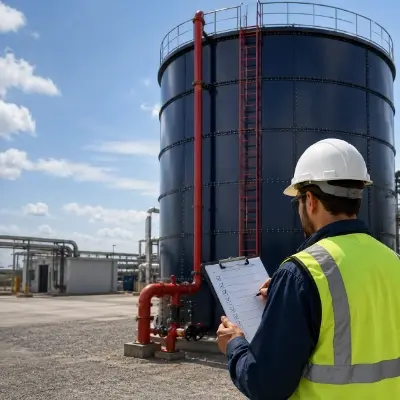
Steel conducts heat readily, so an uninsulated bolted steel tank loses heat to cold air faster than a comparable FRP tank. The practical answer is to specify the heating and insulation package with the tank rather than after it, so heater capacity, insulation value, and shell penetrations are designed as one system. Large bolted tanks hold enough thermal mass to freeze slowly, but reheating a large chilled volume is expensive, which makes maintaining temperature cheaper than recovering it.
Corrugated Steel Tanks
Corrugated steel tanks add a compatibility question to the usual steel considerations. Heater selection and mounting must be compatible with the liner material, and heater penetrations through the liner should be planned at design time, not field-improvised. Ice contact is also a liner concern, since floating ice can abrade or stress liner material as levels change.
Aboveground FRP Tanks
FRP conducts heat more slowly than steel, so aboveground FRP tanks hold stored water temperature somewhat longer under the same conditions. That is a useful head start, not freeze protection. Nozzles, valves, and sensing lines on an FRP tank freeze just as readily as on any other, so the small-component layer of the plan stays the same.
Modular FRP Panel Tanks
Modular FRP panel tanks are frequently installed indoors, in mechanical rooms, basements, or purpose-built enclosures, which removes most direct freeze exposure and shifts the question to the piping that enters and leaves the conditioned space. Where a panel tank is installed outdoors in a freezing climate, insulation and heating should be confirmed as part of the panel system design.
Underground FRP Tanks
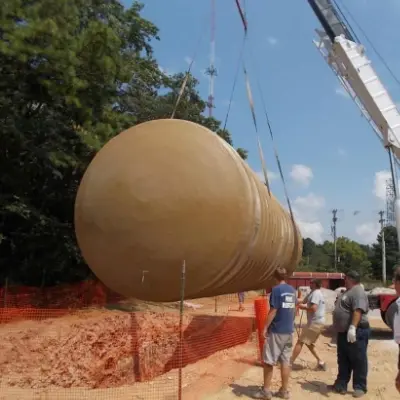
Burial changes the exposure logic entirely. An underground FRP tank installed below the local frost line sits in ground temperatures that stay far more stable than the air above, which protects the stored volume passively. The freeze plan then concentrates on what remains near the surface: risers, manways, vault piping, pumps, and instrumentation. Frost depth varies significantly by region, so burial depth is a local engineering question, not a catalog number.
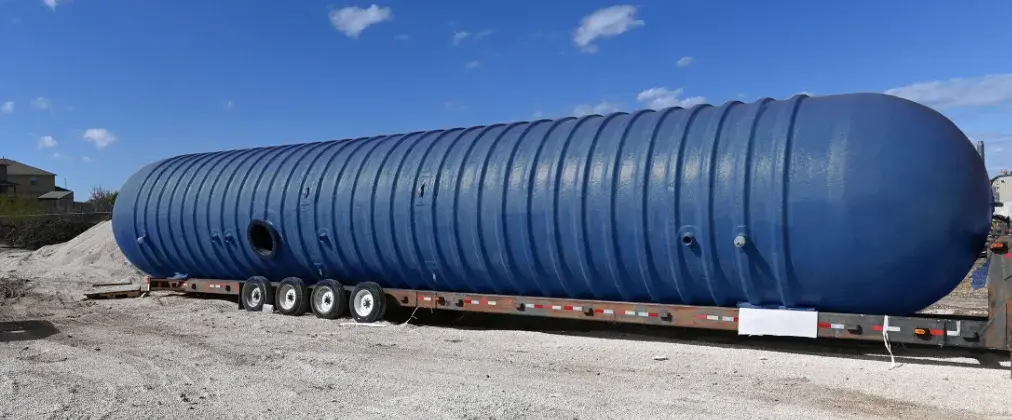
The right freeze plan depends on the tank you are protecting. Material, configuration, and burial all change the math.
Maintenance and Inspection Considerations
Freeze protection is only as good as its condition on the coldest night of the year, and most of it fails quietly. A short seasonal routine catches those quiet failures while they are still maintenance items.
Before the cold season, verify that tank heaters energize and operate, check heat trace circuits for continuity, and confirm that temperature monitoring and low-temperature alarms actually report. Walk the insulation and look for gaps, crushed sections, missing jacketing, and signs of water intrusion. Wet insulation loses most of its value and can hide corrosion developing against the shell, so damaged sections are worth repairing before winter rather than after.
During cold weather, brief walkdowns after hard freezes pay for themselves. Look for ice at nozzles and shell penetrations, icing at vents and overflows, drips or frost trails at valves, and any level or gauge reading that does not match what you expect. Each of those is an early warning from the vulnerable-component list above.
Freeze protection checks fold naturally into the broader inspection routine covered in our fire water tank inspection checklist. As with all inspection activity on water-based fire protection systems, NFPA 25 is the governing standard, and inspection frequencies and documentation should follow the standard, your AHJ, and your insurer rather than any general guide, this one included.
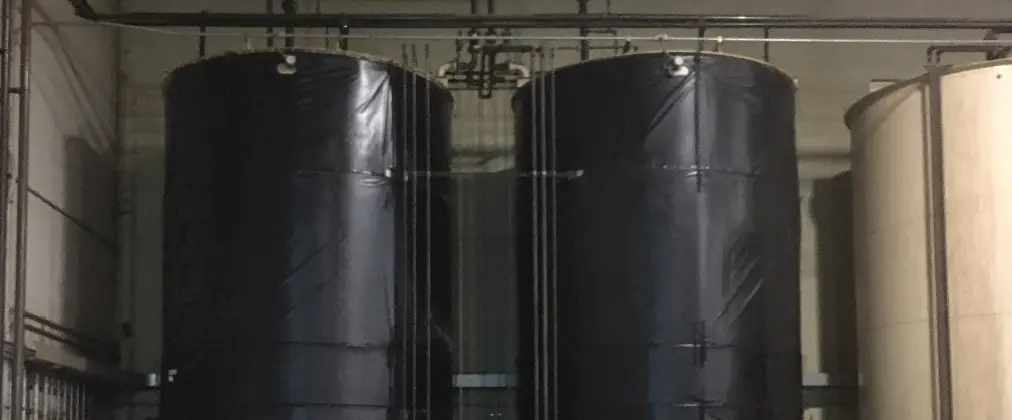
Freeze protection is only as good as its condition on the coldest night of the year.
When to Involve a Specialist
Some freeze protection questions are owner-level. Verifying a heater runs, walking insulation, and watching for ice at penetrations are all things a facilities team can own. Other questions should go to a qualified fire protection engineer or contractor, because they involve code compliance, hydraulic design, or electrical work.
Bring in a design professional when you are planning new fire water storage in a cold climate, since heating, insulation, and monitoring should be engineered with the tank rather than retrofitted onto it. The same applies when adding heating to an existing tank, when a lined tank raises heater compatibility questions, when heater loads affect the site's electrical service, or when a system has frozen before and the cause was never fully resolved. A freeze failure that repeats is a design problem, not a maintenance problem.
One Clarion's role sits on the supply side of that conversation. Our Sales Specialists help match tanks, heaters, insulation packages, and freeze protection equipment to your tank type, climate, and project requirements, and can coordinate specs with your engineer or contractor. If you are working through a cold-weather storage project, we are glad to talk through the equipment options with you.
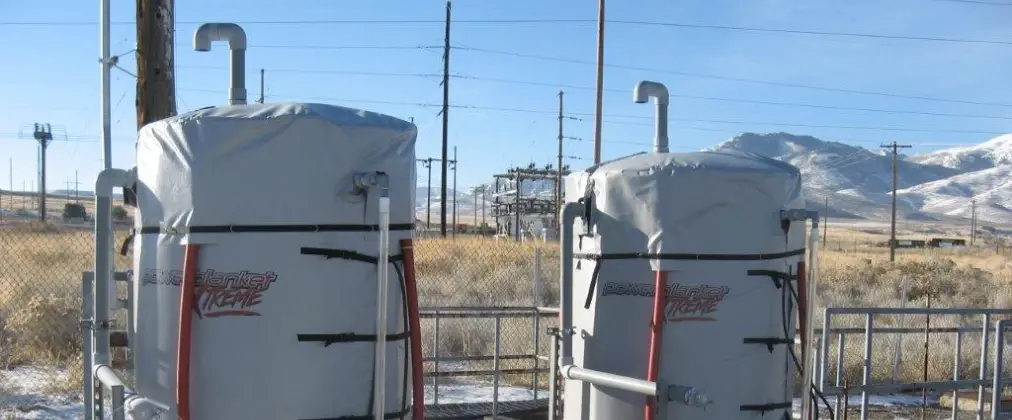
A freeze failure that repeats is a design problem, not a maintenance problem.