Not every commercial site needs its own fire water supply, but when the available water cannot meet the site's protection demand, dedicated storage becomes part of the project. This guide explains when that point is reached, what triggers it, and what your project team should review before anyone starts comparing tanks.
What Fire Water Storage Is
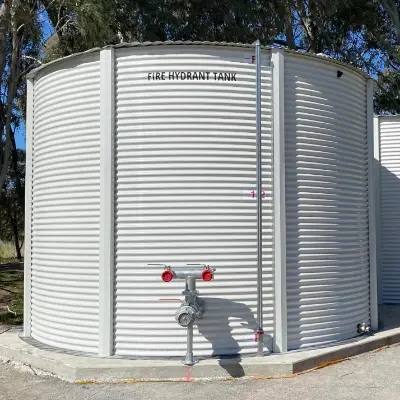
Fire water storage is a dedicated volume of water held on site specifically for fire protection. It supplies sprinkler systems, standpipes, private hydrants, or fire department operations when the water available to the property cannot reliably do that job on its own. On many commercial projects it takes the form of a tank sized to deliver a required flow of water for a required length of time, connected to the fire protection system through a pump or gravity arrangement designed by the project's fire protection engineer.
The important distinction is the word dedicated. Water sitting in a process tank, an irrigation pond, or a domestic supply line is not fire water storage unless the fire protection design formally counts it, and most designs do not. Fire protection water storage exists as its own category because fire codes and insurance carriers generally expect that water to be reserved, reliable, and available at full volume at all times.
One boundary worth stating early: the actual requirements for any specific site are set by the authority having jurisdiction (AHJ), the locally adopted fire code, applicable standards, and the project's engineer of record. This article is planning guidance to help you recognize the question earlier, not a substitute for that review.
When a Commercial Site Starts Needing Dedicated Fire Water Storage
The need for dedicated storage appears at a specific moment in a project: when the required fire flow for the building or site exceeds what the available water supply can reliably deliver. Required fire flow is the amount of water the fire protection design must be able to move, typically expressed as a flow rate sustained over a required duration. It is driven by factors such as building size, construction type, occupancy, hazard classification, and the systems being installed.
On many urban and suburban commercial sites, the municipal main can carry that demand and no storage is needed. The question becomes live when a hydrant flow test, a water authority letter, or the fire protection engineer's calculations show a gap between what the site needs and what the supply can prove. At that point, the design team has to close the gap, and an on-site tank is one of the most common ways to do it.
This is also where the ownership question surfaces. Some sites reserve a tank entirely for fire protection, while others evaluate whether one supply can serve more than one purpose, which carries its own code implications. That decision is covered in more depth in Dedicated vs Shared Fire Water Supply. Where a tank is required, it is generally designed and built to recognized standards for private fire protection tanks; many teams will encounter this under the NFPA 22 umbrella, covered on our NFPA Bolted Steel Tanks page.

Storage enters the conversation the moment required fire flow exceeds what the supply can prove.
Common Triggers for Dedicated Fire Water Storage
Certain site conditions raise the likelihood that a project will need its own fire water supply, and recognizing them early can save a redesign later.
Inadequate municipal flow or pressure is the most frequent trigger. The site may have a water connection, but flow tests show the main cannot sustain the required rate, or pressure drops below what the sprinkler design needs during peak demand. Older distribution systems and fast-growing corridors where development has outpaced utility upgrades both produce this result regularly.
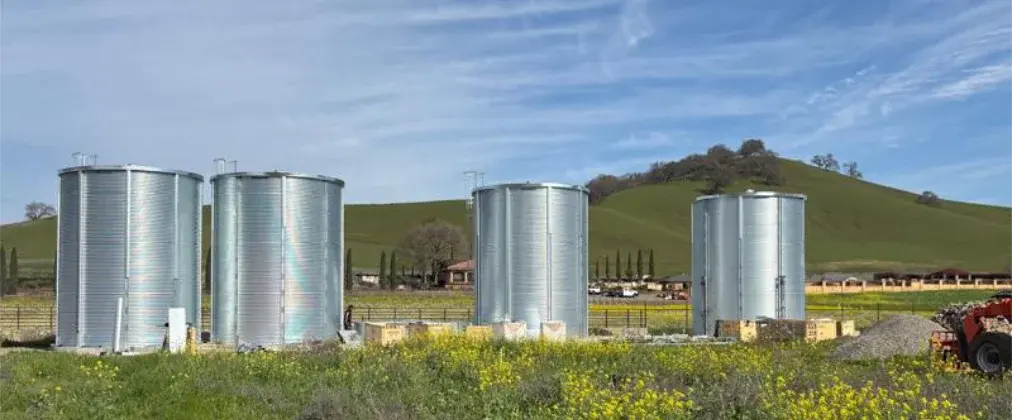
Remote sites are the clearest case. Distribution centers on rural land, agricultural processing facilities, mining and energy sites, and commercial buildings outside a served water district often have no municipal supply to lean on at all. For these projects, on-site storage is usually not a fallback but the primary fire protection supply from day one.
Large facilities and campuses can outgrow a supply that would be adequate for a smaller building. Warehouses with high-piled storage, manufacturing plants, logistics hubs, and multi-building campuses tend to carry higher required fire flows and longer durations, and the gap between demand and supply widens as the site grows.
Institutional and commercial sites with specific protection needs form another group. Schools, healthcare properties, data centers, and facilities with insurance-driven protection standards may face requirements that go beyond the local minimum, and those requirements can push a site into dedicated storage even where municipal service exists.
Finally, temporary or phased infrastructure conditions create short-term needs. Early phases of a development may open before the permanent water infrastructure is complete, and construction fire protection plans sometimes require interim water supply on site until the permanent system is accepted.
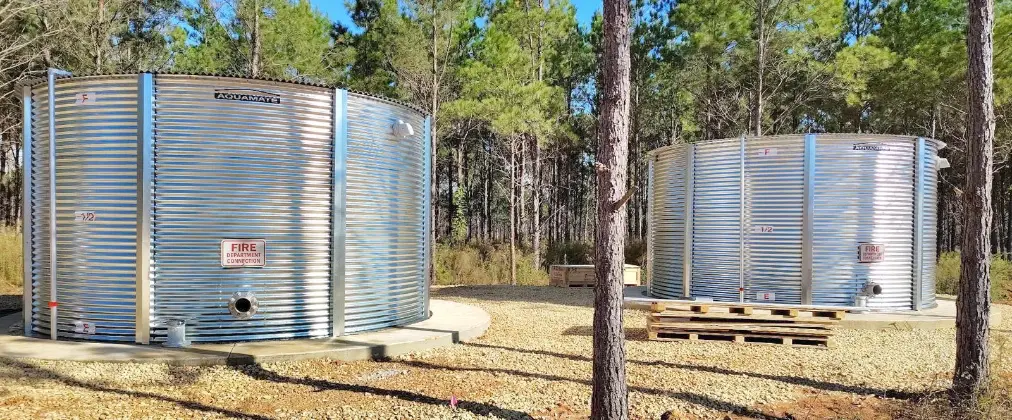
Most fire water storage projects begin with one of five conditions, and spotting yours early can prevent a redesign later.
What the Project Team Should Review First
Before anyone evaluates tanks, the project team should assemble a short list of facts about the site and its protection demand. These six items shape everything that follows.
Required fire flow comes first. This number comes out of the fire protection engineer's analysis and the AHJ's review, and no storage decision can be made without it. Treat it as an input you obtain, not one you estimate.
Duration is the second half of the demand equation. Codes and standards require the supply to sustain the design flow for a defined period, and the required duration varies with occupancy and hazard. Flow multiplied by duration is what ultimately drives stored volume, which is why our How to Size Fire Water Storage for a Site guide treats these two inputs together.
Refill assumptions matter more than teams expect. How quickly can the tank be refilled after a draw, and from what source? A site with a slow well or trucked-in water may need to hold more volume than a site with a reliable, fast refill line, and some jurisdictions set expectations for refill time.
Footprint determines what is physically possible. Available land, setbacks, separation distances from buildings and property lines, and space for access around the tank all constrain the shapes and sizes that can work on the parcel.
Climate and freeze exposure affect both design and cost. Sites in freezing climates need to plan for heating, insulation, or design features that protect stored water and connected piping, and that requirement should be identified before tank options are compared rather than after.
Access and layout close the list. Fire department connections, apparatus access, suction points where drafting is part of the plan, and the routing of piping between the tank, pump house, and protected buildings all influence where storage can go and what configuration makes sense.
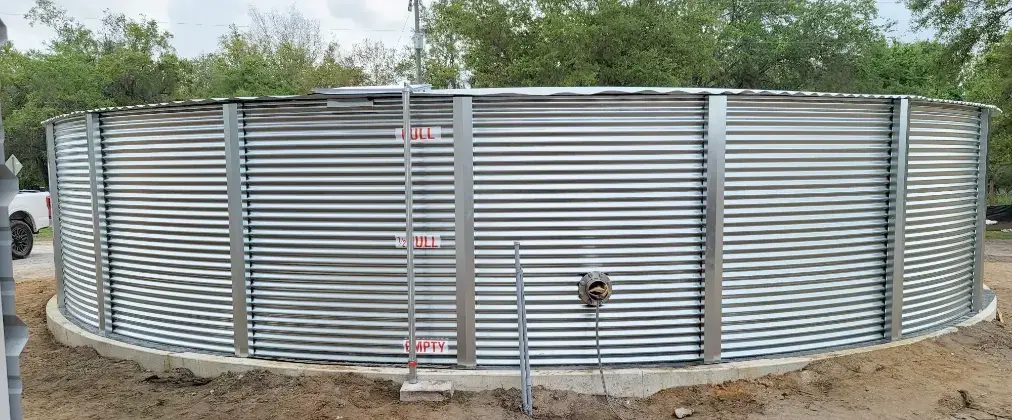
Flow, duration, refill, footprint, climate, and access: six facts that decide what your storage has to be before it decides what it can be.
Why Requirements Come Before Tank Selection
It is tempting to start with the tank, especially when budget conversations begin early. But every meaningful tank decision is downstream of the requirements. Required volume determines the capacity range. Footprint and layout narrow the geometries that fit. Climate shapes material and accessory choices. Refill assumptions influence whether one tank or multiple tanks make sense. A tank chosen before those inputs exist is a guess, and guesses on fire protection tend to be expensive to correct after the AHJ reviews the design.
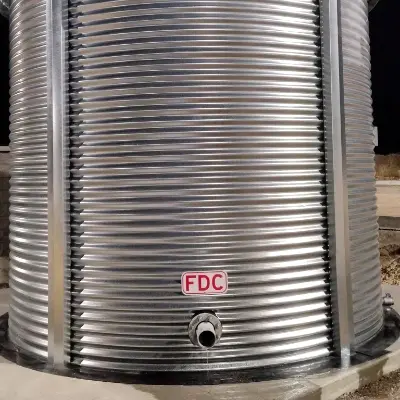
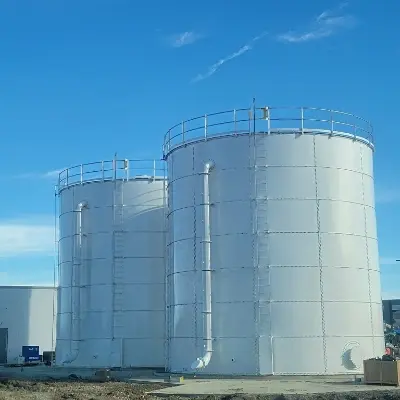
Once the requirements are defined, several proven tank families can typically meet them, and the right fit depends on the numbers rather than on any one type being universally best. Bolted steel tanks are a common choice for large permanent capacity on commercial and industrial sites. Corrugated steel tanks with liners offer field-assembled capacity that suits many remote and rural projects. Aboveground fiberglass (FRP) tanks serve sites where corrosion resistance and factory-built construction are priorities. Modular FRP panel tanks such as HISHITANK can be assembled in constrained footprints and interior spaces where conventional tank shapes will not fit. And for temporary or phased conditions, water trailer tanks can provide mobile interim supply while permanent infrastructure catches up; they are a bridge measure rather than a permanent fire protection solution, and their acceptability for any protection role rests with the AHJ.
The pattern to notice is that each of these answers a different requirement profile. Get the requirements right and the product conversation becomes short and clear.
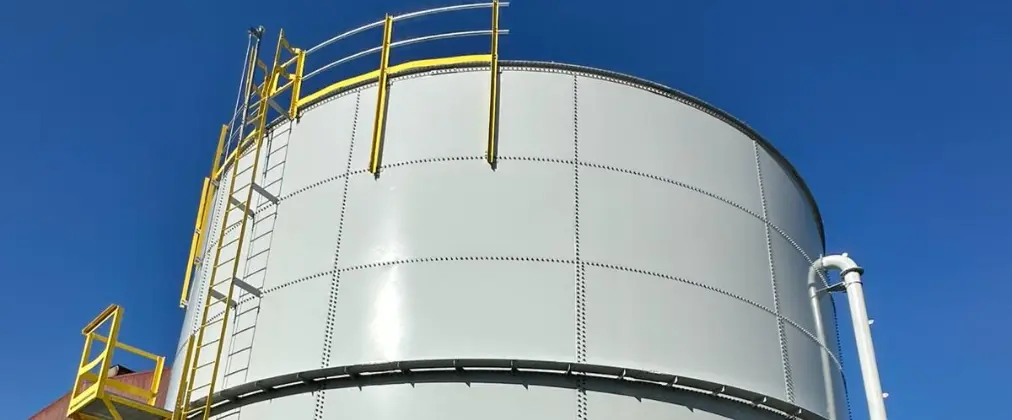
A tank chosen before the requirements exist is a guess, and fire protection is a bad place to guess.
What to Read Next
If this page confirmed that your site likely needs dedicated storage, the next question is how much, and that is a sizing exercise. Start with How to Size Fire Water Storage for a Site, which walks through flow, duration, refill, and design basis in practical terms. If you want a quick starting estimate to frame the conversation, the Tank Volume Calculator can rough out capacity and footprint scenarios in a few minutes; treat its output as a planning aid, with final volumes confirmed by your engineer of record and the AHJ.
If the supply ownership question is still open on your project, Dedicated vs Shared Fire Water Supply explains the tradeoffs. And for the full picture of the category, the Fire Protection Water Storage hub connects requirements, sizing, standards, and product families in one place.
When you are ready to talk through options against your site's numbers, our Sales Engineers can help you review fire water options across tank types and configurations, with no pressure toward any single product family.

You now know whether you need storage. The next page answers how much.