Some sites store fire protection water in its own tank. Others draw fire water from a tank that also serves process, irrigation, or domestic demand. Neither approach is automatically right. This post walks through what each option means in practice, where each one tends to fit, and the questions your project team should settle before committing to a storage direction.
What Dedicated and Shared Actually Mean
A dedicated fire water supply is exactly what it sounds like. The stored water exists for one purpose: feeding the fire protection system. Nothing else on the site draws from it, so the full required volume is there whether the system is called on tomorrow or ten years from now.
A shared supply, sometimes called a combined or dual-use supply, stores fire water in a tank that also serves another demand, such as process water, irrigation, or general site use. The fire portion is protected as a reserve, most commonly by arranging the non-fire outlet so it physically cannot draw the tank below the fire volume. The day-to-day water lives above the reserve line, and the fire water sits untouched beneath it.
This post is about choosing between the two, not about the code details behind them. If you want the requirements side, start with Fire Water Storage Requirements. And one caveat that applies to everything below: the authority having jurisdiction (AHJ) and your insurance carrier have the final say on what your site can do. Treat this as a framework for the conversation, not a substitute for it.
Why the Distinction Matters
This choice looks like a plumbing detail. It is not. It ripples into almost every downstream decision on the water storage side of the project.
Sizing is the most obvious one. A dedicated tank is sized around the fire demand. A shared tank has to hold the fire reserve plus enough working volume for the other use, and the reserve has to stay intact at all times, not just on average. That usually means a larger tank, outlet elevations set with intent, and level monitoring the operations team actually watches. If you are still working out what the fire demand itself looks like, How to Size Fire Water Storage for a Site covers that piece.
The choice also shapes the approvals conversation. A dedicated supply is a simple story to tell an AHJ or insurer. A shared supply is a longer conversation about how the reserve is protected and who is responsible for keeping it that way.
The reason to decide early is cost. Changing direction after the tank is specified, or worse, after it is installed, is one of the more expensive reversals a site can make.
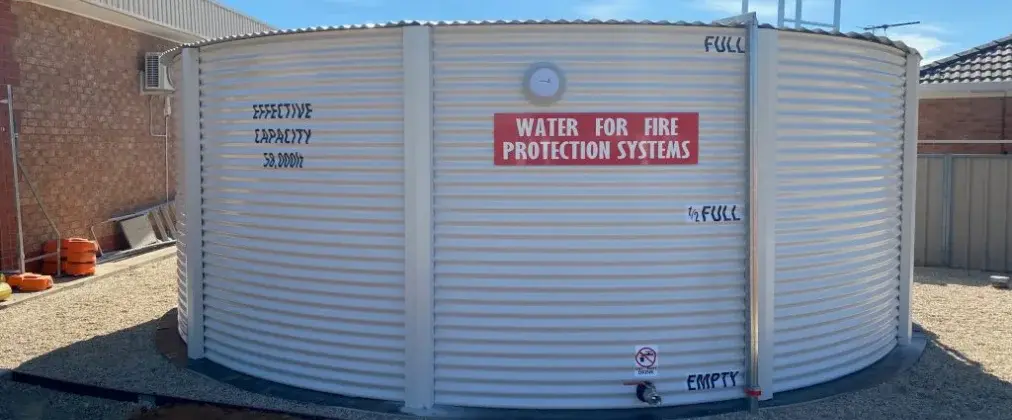
This choice looks like a plumbing detail. It ripples into sizing, budget, approvals, and operations for the life of the site.
When a Dedicated Supply Is Often Preferred
Dedicated supply tends to win out in a few recurring situations:
- The fire demand is large, or the AHJ or insurer expects a clearly separated reserve. A standalone tank removes any question about whether the water will be there.
- Other site demands are unpredictable. If process or irrigation usage swings seasonally or grows over time, keeping fire water out of that equation avoids a moving target.
- The owner wants simple operations. One tank, one purpose, no reserve-level discipline required from whoever runs the site in year fifteen.
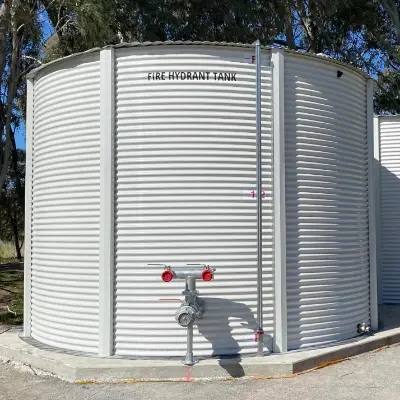
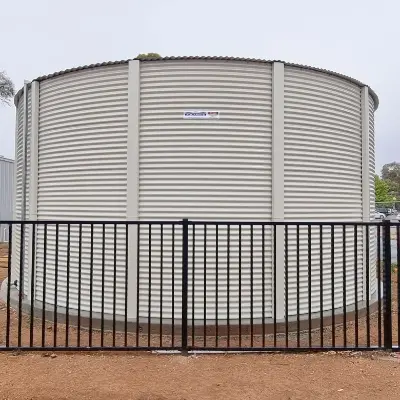
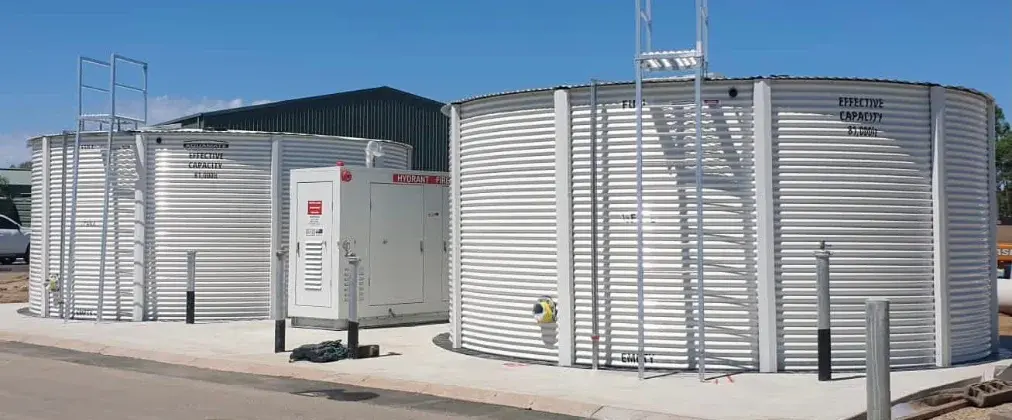
Projects heading this direction are usually looking at permanent storage. Bolted Steel Tanks are a common fit for larger volumes, corrugated steel tanks with liners suit many mid-size sites, and aboveground FRP tanks work where corrosion resistance or a lighter footprint matters.
The tradeoff is straightforward: a separate tank means separate footprint and separate capital. On a tight site or a tight budget, that cost is real, which is exactly why shared supply stays on the table.
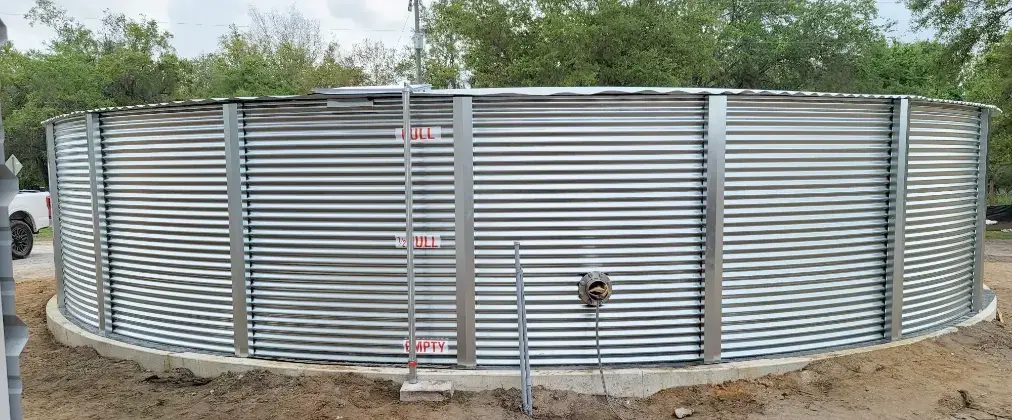
One tank, one purpose. A dedicated supply is the simplest story to tell an AHJ, an insurer, and the operations team in the long run.
When a Shared Supply May Be Workable
Shared supply is not a shortcut or a compromise position. When the conditions fit, it is a legitimate design that some sites run for decades. It tends to make sense when:
- The site already needs a large stored volume for another purpose. If a facility is storing significant process or irrigation water anyway, one properly designed tank can carry both jobs with less footprint and less capital than two.
- Space is genuinely constrained. Some sites simply do not have room for a second tank.
- The reserve can be protected by design, not by promises. That usually means the non-fire outlet is set so it cannot draw below the fire volume, levels are monitored, and refill happens reliably.
Two honest caveats. First, this approach depends on acceptance from the AHJ and the insurance carrier, and that acceptance varies by jurisdiction and by carrier. Have that conversation before the design is far along, not after. Second, a shared tank asks more of the operations team over the long term. If ownership of the site or the water system is likely to change hands, factor in whether the reserve discipline will survive the handoff.
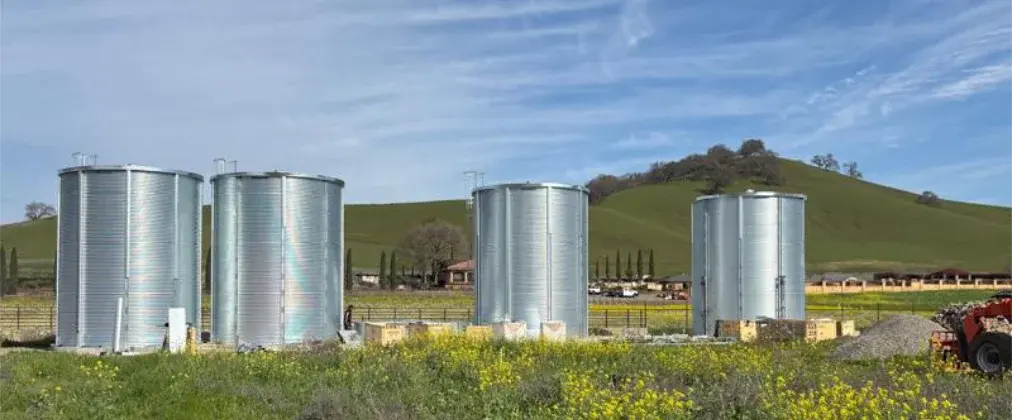
Shared supply is not a shortcut. When the conditions fit, it is a legitimate design that protects the reserve by design, not by promises.
Questions the Project Team Should Ask
If the team can answer these, the dedicated vs shared decision usually answers itself:
- What fire volume does the project actually need? Get this number first, because everything else scales from it. How to Size Fire Water Storage for a Site walks through the inputs, and the Tank Volume Calculator helps translate volumes into real tank dimensions.
- What will the AHJ and the insurance carrier accept? Do not assume. Ask early, in writing where possible.
- What other water demands exist on the site, and how variable are they? Steady, well-understood demand favors sharing. Volatile or growing demand favors separation.
- Who owns the water system long term? A shared reserve needs someone watching it for the life of the site.
- What does the site realistically have room and budget for? Footprint and capital constraints are legitimate inputs, not afterthoughts.
- What covers the gap before the permanent system is online? Some projects arrange interim water on site during construction or phased occupancy, and Water Trailer Tanks are one way teams handle temporary coverage where the AHJ accepts that arrangement.
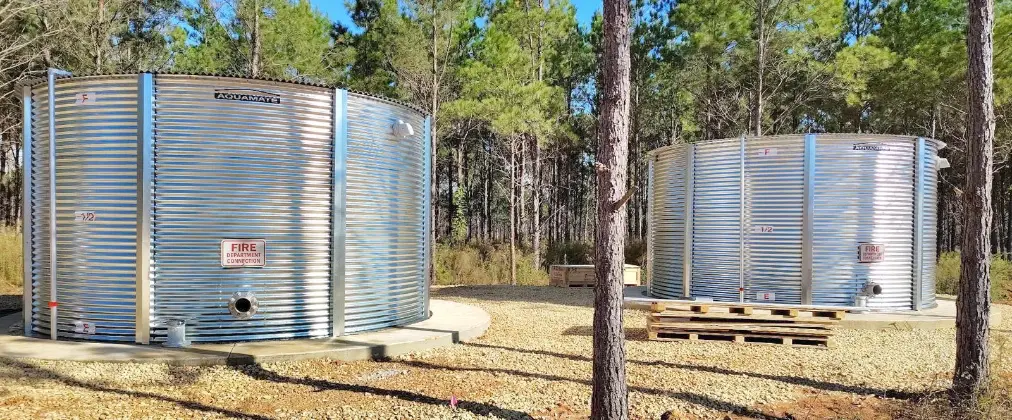
If the team can answer these six questions, the dedicated versus shared decision usually answers itself.
What to Do Next if You Are Still Unsure
If the answer is not obvious yet, that is normal. Most projects land the decision by doing three things:
Rough out both options on paper. For each, sketch the required volume, the tank footprint, and a ballpark budget. Seeing the two side by side often makes the answer clear faster than debating it in the abstract. The Fire Protection Water Storage hub is a good starting point for what the permanent options look like.
Talk to the AHJ and the insurer before you commit. Their answer can eliminate one option outright, which is frustrating to hear late and useful to hear early.
Keep the timeline honest. If permanent storage will not be ready when the site needs coverage, plan the interim step deliberately rather than improvising it at the end.
And if it helps to talk it through, that is what we are here for. A Sales Specialist can walk you through the tank types that fit each direction, compare pricing and lead times, and help you put real numbers next to both options.
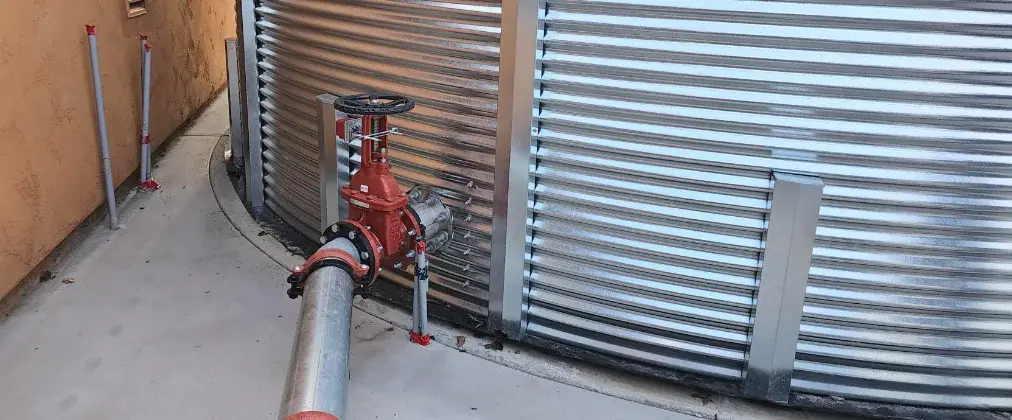
Sketch both options with real numbers. Seeing volume, footprint, and budget side by side beats debating in the abstract.