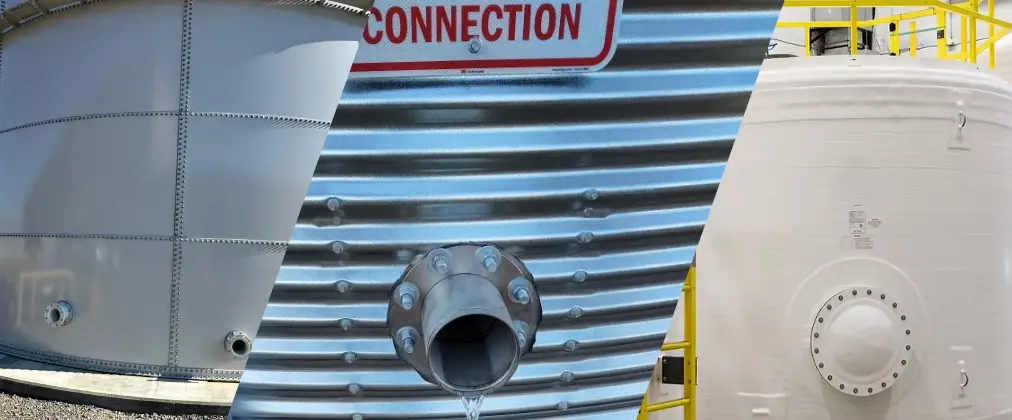
There is no single best material for fire water storage. The right choice depends on required capacity, site corrosion conditions, climate, installation constraints, and whether the water supply needs to be permanent or mobile. This guide compares bolted steel, lined corrugated steel, aboveground FRP, underground FRP, and modular FRP panel tanks, plus mobile fire-support equipment, so you can match the tank direction to your site instead of forcing your site to fit a tank.
There Is No Universal Best Material
If you search for the best tank material for fire water storage, you will find plenty of pages arguing for one answer. In practice, no single material wins across every site. A bolted steel tank that makes sense for a large industrial reserve would be the wrong call for a rooftop fire reserve in a mid-rise building, and the FRP tank that thrives in a coastal environment may be an unnecessary premium inland.
It also helps to be precise about what you are actually comparing. Two of the options below are steel and three are fiberglass reinforced plastic (FRP), so several of these decisions are not material choices at all. Bolted steel and lined corrugated steel differ mainly in construction method and how they manage corrosion. Aboveground and underground FRP are the same material installed two different ways. Treating every option as a separate "material" leads to false comparisons; treating them as configurations of two proven material families leads to better decisions.
This article is part of our Fire Protection Water Storage guides. Here, we focus on one question: given your site conditions, which tank direction deserves a closer look?
Comparison Criteria That Actually Matter
Before comparing products, agree on the criteria. These seven show up in nearly every fire water storage decision.
Capacity. Fire water demand is calculated, not guessed. Required flow rate and duration determine minimum storage volume, and that number narrows your options quickly. Some tank types are built for very large volumes; others are generally sized for smaller reserves. Start with our guide on How to Size Fire Water Storage for a Site before locking in a tank family.
Corrosion environment. Coastal salt air, corrosive soils, aggressive water chemistry, and industrial atmospheres all work against unprotected steel. Steel tanks manage this with coatings, liners, and in some cases FRP tanks largely sidestep these issues.
Climate. A fire water tank that freezes cannot do its job, and it can put a site out of compliance. Cold-climate sites should plan for insulation, Tank Heaters & Freeze Protection, or burial below the frost line from day one.
Installation method. Field-assembled tanks need crane access and laydown space. One-piece tanks need a clear truck route and lift plan. Panel tanks can pass through a doorway. Underground tanks need excavation. Your site access often eliminates options before price ever enters the conversation.
Maintenance. Coated steel calls for periodic inspection and, over time, recoating. Liners have replacement cycles. FRP typically requires comparatively little. Maintenance is a lifetime cost, not a footnote.
Service life. Each of these options is designed for long service when properly specified and maintained, but they get there differently: steel through protective systems that are kept up, FRP through the corrosion resistance of the material itself.
Portability vs. permanence. Most fire protection storage is fixed and commonly specified to standards such as NFPA 22. But construction sites, rural properties, and wildfire-exposed operations often need water that moves. That distinction gets its own section below.
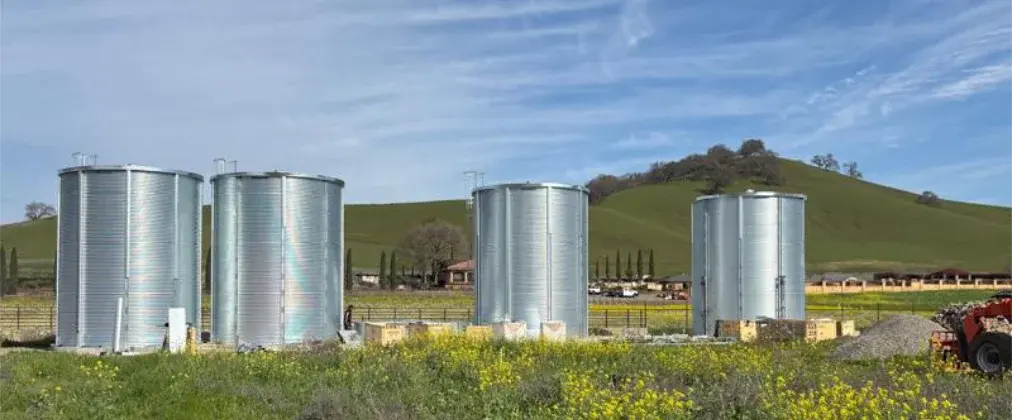
Site access often eliminates options before price ever enters the conversation.
Comparing the Main Fire Water Tank Options
Bolted Steel Tanks
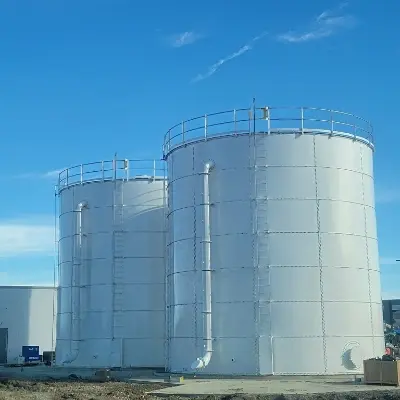
Our Bolted Steel Tanks cover the upper end of the capacity range in this comparison. Factory-coated steel panels are bolted together on site, which allows large diameters without the field welding of traditional welded tanks. Our bolted steel offering through AST spans mid-size commercial reserves up to very large sized permanent storage, and bolted construction is commonly specified to standards such as AWWA D103 and NFPA 22.
Corrosion is managed through factory-applied coatings, and steel tanks in aggressive soils or water conditions can add Cathodic Protection for Steel Storage Tanks to help extend service life. The tradeoff is a real installation footprint: foundation work, crane access, and assembly time. For permanent, high-capacity industrial and municipal fire protection, bolted steel is usually the first option to evaluate.
Corrugated Steel Tanks
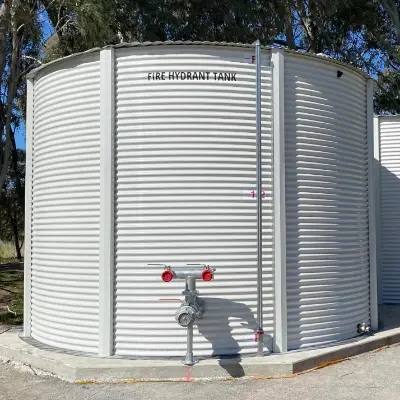
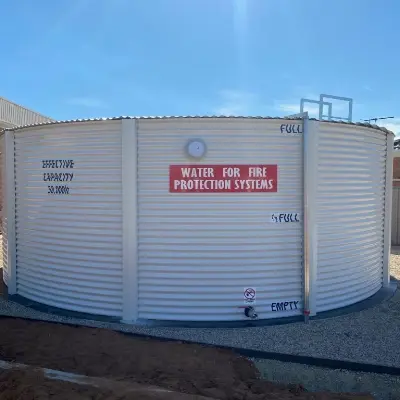
Corrugated Steel Tanks use the same base material as bolted tanks but a different strategy. A galvanized corrugated shell provides the structure, and a flexible liner provides the water barrier. These tanks excel for NSF 61 potable water. Because the liner does the corrosion work, the shell does not depend on interior coatings, and installation is typically faster and more economical than bolted construction at comparable mid-range capacities.
Aboveground FRP Tanks
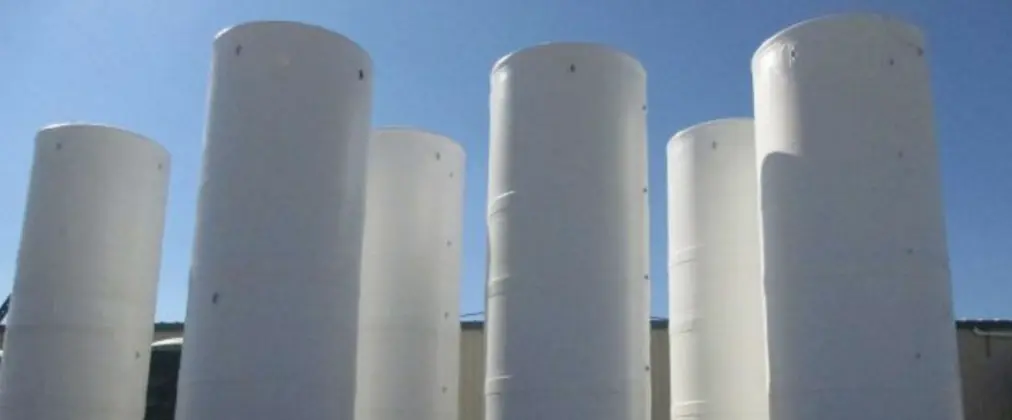
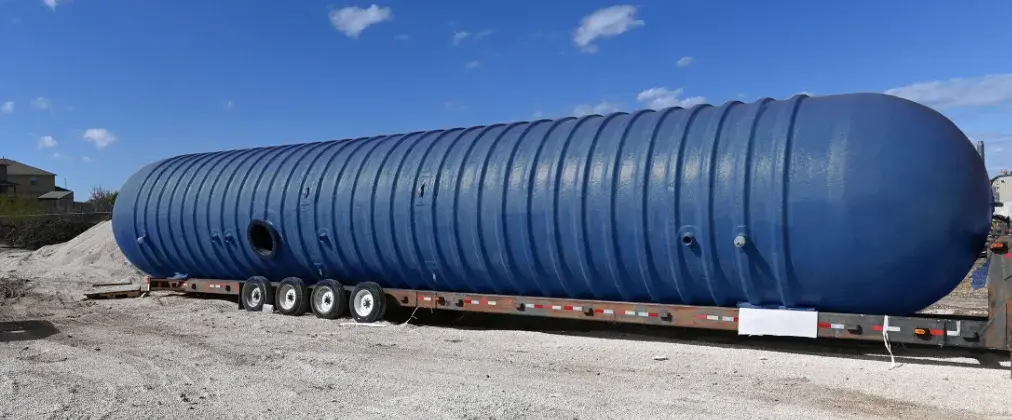
Aboveground FRP Tanks take corrosion largely out of the equation. Fiberglass does not rust the way steel does, so there are typically no coatings to maintain, no liners to replace, and no cathodic protection to monitor. That makes FRP a strong direction for coastal sites, chemical-adjacent facilities, and anywhere aggressive conditions would put steel protection systems on a short inspection cycle.
Underground FRP Tanks
Underground FRP Tanks take the same corrosion-resistant material below grade. Burial addresses two problems at once: it preserves surface footprint on tight sites, and it provides natural freeze protection in cold climates because the tank sits below the frost line. FRP is a leading material for buried water storage because it resists soil-side corrosion without the protective systems buried steel depends on.
The tradeoffs are excavation cost, groundwater and buoyancy considerations during design, and less convenient access for inspection. For fire water at schools, commercial developments, and municipal sites where zoning, aesthetics, or space rule out a visible tank, underground FRP is often the direction to evaluate first.
Modular FRP Panel Tanks
Modular FRP Panel Tanks address an access problem the other options on this page generally cannot. The tank arrives as individual panels that assemble on site into a rectangular vessel, which means it can be built inside a mechanical room, basement, or rooftop enclosure that a one-piece tank could never enter. Capacity is configured by the panel grid, so the tank is sized to the room rather than the other way around.
For building fire reserves, retrofit projects, and interior installations, HISHITANK is often one of the few practical directions. It carries the same corrosion resistance as our other FRP products, with the added note that panel tanks are engineered systems and should be specified with support from our Sales Engineers.
In short, the two steel directions trade construction method against cost: bolted panels are built for the largest permanent reserves, while lined corrugated shells deliver faster, more economical mid-range storage. The three FRP directions share strong corrosion resistance and differ in where they fit: aboveground for delivered whole-tank installations, underground for tight footprints and cold climates, and modular panels for interior spaces the others generally cannot enter.
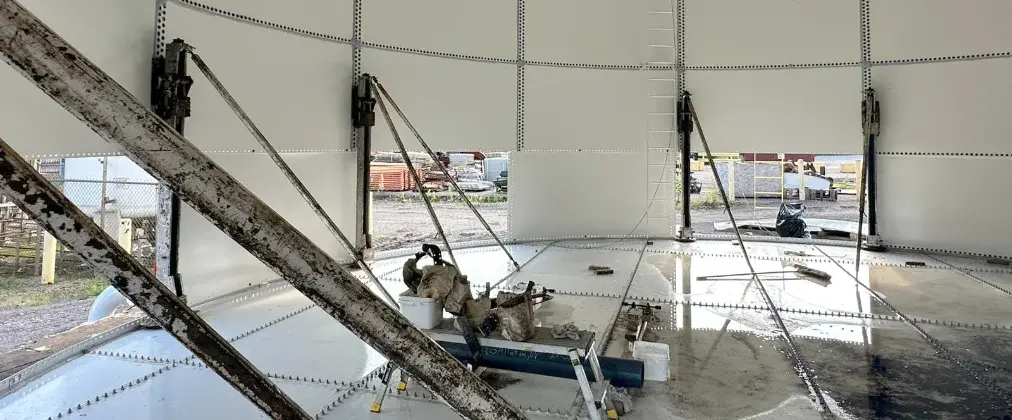
Steel earns long service through protection systems that are maintained; FRP earns it through the material itself.
When Mobile Options Matter
Not every fire water need is a fixed tank. Three situations call for water that moves.
Temporary coverage. Construction sites, remote work camps, and phased developments often need fire water before permanent infrastructure exists. Water Trailer Tanks bring a towable water supply to the site on a short timeline and leave when the permanent system comes online.
Mobile fire support. Ranches, farms, vineyards, and wildfire-exposed properties benefit from equipment that brings water to the fire line. Skid sprayers mount in a truck bed or on a UTV and pair a tank with a pump and hose reel for fire-support work such as controlled burns and hot-spot patrol.
Supplementing fixed storage. Some operations run both: an engineered stationary reserve for code compliance, plus trailers or skid units for perimeter protection and flexibility.
One caution: mobile equipment supports fire protection, it does not replace it. Where a code or insurance requirement calls for engineered fixed storage, trailers and skid sprayers are a complement to that system, not a substitute for it.
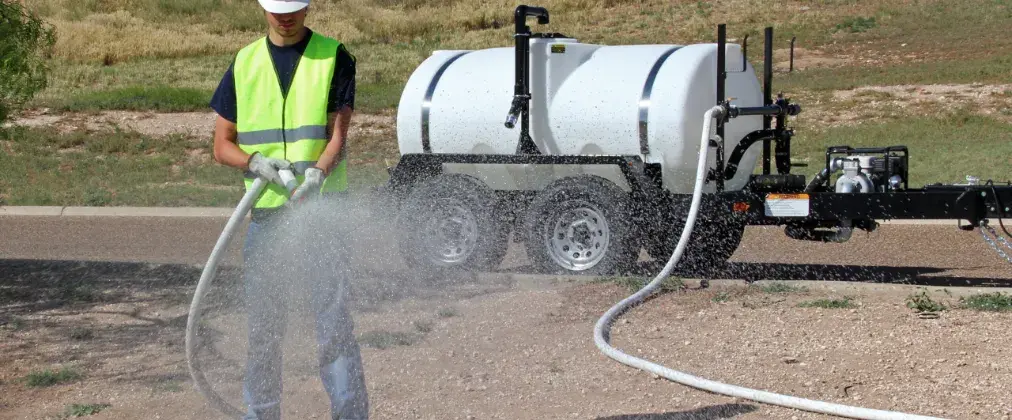
Mobile equipment supports fire protection; it does not replace it.
Best Fit by Scenario
Every site is different, but these patterns hold up across the projects we support.
- Large industrial or municipal reserve, permanent site: Start with bolted steel. It covers the largest capacities in this lineup and is commonly specified alongside established engineering standards.
- Mid-size rural or commercial storage on a practical budget: Lined corrugated steel delivers substantial capacity with faster installation and a lower cost of entry.
- Coastal, corrosive, or maintenance-averse site: Aboveground FRP takes most of the corrosion-management workload off your plate.
- No room for a visible tank, or a cold climate working against you: Underground FRP preserves the surface and gains natural freeze protection below grade.
- Fire reserve inside or on top of a building: Modular FRP panel tanks (HISHITANK) assemble in spaces few other tanks can reach.
- Temporary project or mobile fire support: Water trailers and skid sprayers cover the gap, alongside fixed storage where codes require it.
- Any cold-climate installation above grade: Whatever the tank family, plan Freeze Protection for Fire Water Storage as part of the original design, not a retrofit.
A note on poly tanks. Polyethylene tanks come up often in general water storage conversations, and small rural or residential setups sometimes use them for auxiliary water. For dedicated fire protection storage at the capacities and code requirements most projects involve, the practical comparison comes down to the steel and FRP directions above. If you think a poly direction fits your situation, talk it through with a Sales Engineer before specifying.
Match the tank direction to the site, not the site to the tank.
What to Compare Next
The material question is really a site question. Nail down your required capacity, your corrosion environment, your climate, and your installation constraints, and the field usually narrows itself to one or two serious candidates.
From here, two resources will move your project forward. First, How to Size Fire Water Storage for a Site so you are comparing tanks that can actually meet demand. Second, browse the full Fire Protection Water Storage Guides for standards context, freeze protection planning, and product guidance. When you are ready to put real options side by side, our Sales Engineers can help you compare across the tank families on this page from a single point of contact.
Nail down capacity, corrosion, climate, and access, and the field usually narrows itself.